


Updates to Unified Requirements designed to better align with international welding standards, improve qualification standards, and ensure consistency across IACS rules
The International Association of Classification Societies (IACS) has published revisions to its welding rules for marine and offshore structures.
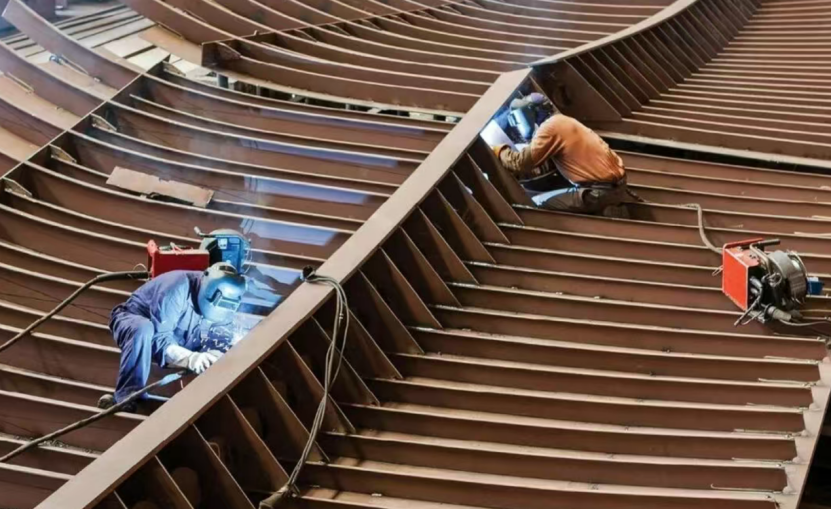
The rules, known as IACS’s Unified Requirements (UR) W11, W16 and W28, have been amended in order to align high heat input welding requirements across all three URs, to improve the qualification standard for welding procedures, and to improve consistency with international standards, such as ISO 15614-1 (from the International Organization for Standardization) and AWS D1.1/D1.1M (from the American Welding Society).
The revisions to these three URs include key updates to welding procedure qualifications for marine and offshore structures. These updates are summarised below:
Harmonization with International Welding Standards
The updated UR W28 Rev. 3 aligns welding procedure qualification requirements with international standards such as ISO 15614-1 and AWS D1.1/D1.1M, ensuring global applicability and improved harmonization with industry best practices.
The revised document also ensures consistency with other IACS Unified Requirements, including UR W11 (Normal and higher strength hull structural steels), UR W16 (High strength steels for welded structures), UR W23 (Approval of welding consumables for High Strength Steels for Welded Structures), and UR W31 (YP47 steels and Brittle Crack Arrest Steels).
Expanded Qualification Requirements for Welding Procedures
The new revision introduces an explicit definition of high heat input welding, expressed in terms of energy input per unit length (kJ/cm), ensuring better control over welding conditions.
The qualification range for welding procedures has been revised to provide clear guidance on applicable base metals, welding consumables, and welding positions. The revised UR also includes updated provisions for post- weld heat treatment, ensuring that procedures remain compatible with new steel grades and their mechanical properties.
Optional Approval Scheme for High Heat Input Welding & Introduction of Annex E in UR W28
Manufacturers now have the option to seek approval for high heat input welding procedures, following a structured qualification framework.
The new Annex E in UR W28 introduces specific provisions for welding procedure qualification tests using plates with approved high heat input grade notation, ensuring that welding procedures are tested under controlled and approved conditions.
However, the qualification for high heat input welding remains valid even when using steels that have not been specifically approved for high heat input grades, provided the welding procedure follows the existing qualification scheme as defined in UR W28.
Clarification of Non-Destructive Testing (NDT) Timing Requirements
The revision of UR W28 now explicitly defines the required timing for NDT based on the yield strength of the steel:
For steels with a specified minimum yield strength of 420 N/mm² to 690 N/mm², NDT must be performed at least 48 hours after welding unless post-weld heat treatment (PWHT) is applied.
- For steels with a specified minimum yield strength of 890 N/mm² to 960 N/mm², NDT must be performed at least 72 hours after welding unless PWHT is applied.
- Introduction of an Optional Manufacturing Approval Scheme for High Heat Input Steels
UR W11 and UR W16 have introduced an optional manufacturing approval scheme for steels intended for high heat input welding, providing manufacturers with the possibility to certify their steels specifically for such applications. The appendices in UR W11 and UR W16 detail the qualification procedures, testing requirements, and acceptance criteria for high heat input steel certification.
Under this scheme, manufacturers may voluntarily apply for certification, confirming that their steel plates meet additional requirements for high heat input weldability. This approval scheme does not impose mandatory qualification but establishes a structured pathway for manufacturers seeking approval of steels for welding processes with heat inputs exceeding 50 kJ/cm (for normal and higher strength steels) and 35 kJ/cm (for QT steels).
Commenting on the revisions to IACS’s welding rules, Dr. Ajay Asok Kumar, IACS General Policy Group (GPG) Chair, said:
“These revisions to our Unified Requirements for welding rules were developed with feedback from steel manufacturers, shipyards, and our classification society members, ensuring practical alignment with real-world welding applications. We are confident that these important changes will ensure better alignment with international standards, greater consistency across IACS’s rules, and improved qualification standards for welding procedures for marine and offshore structures.”