

Samsung Heavy Industries achieved its best performance in 11 years in 2025, but a disagreement has arisen between labor and management over the size and calculation criteria of year-end performance bonuses, potentially leading to delays in ship deliveries. This escalation of labor tensions stems from the 2025 second-half performance target achievement incentive (TAI) paid on December 24, 2025, which amounts to only 50% of monthly base salary—the same as in the first half of 2025 and 2024. This move has sparked strong discontent among Samsung Heavy Industries employees.
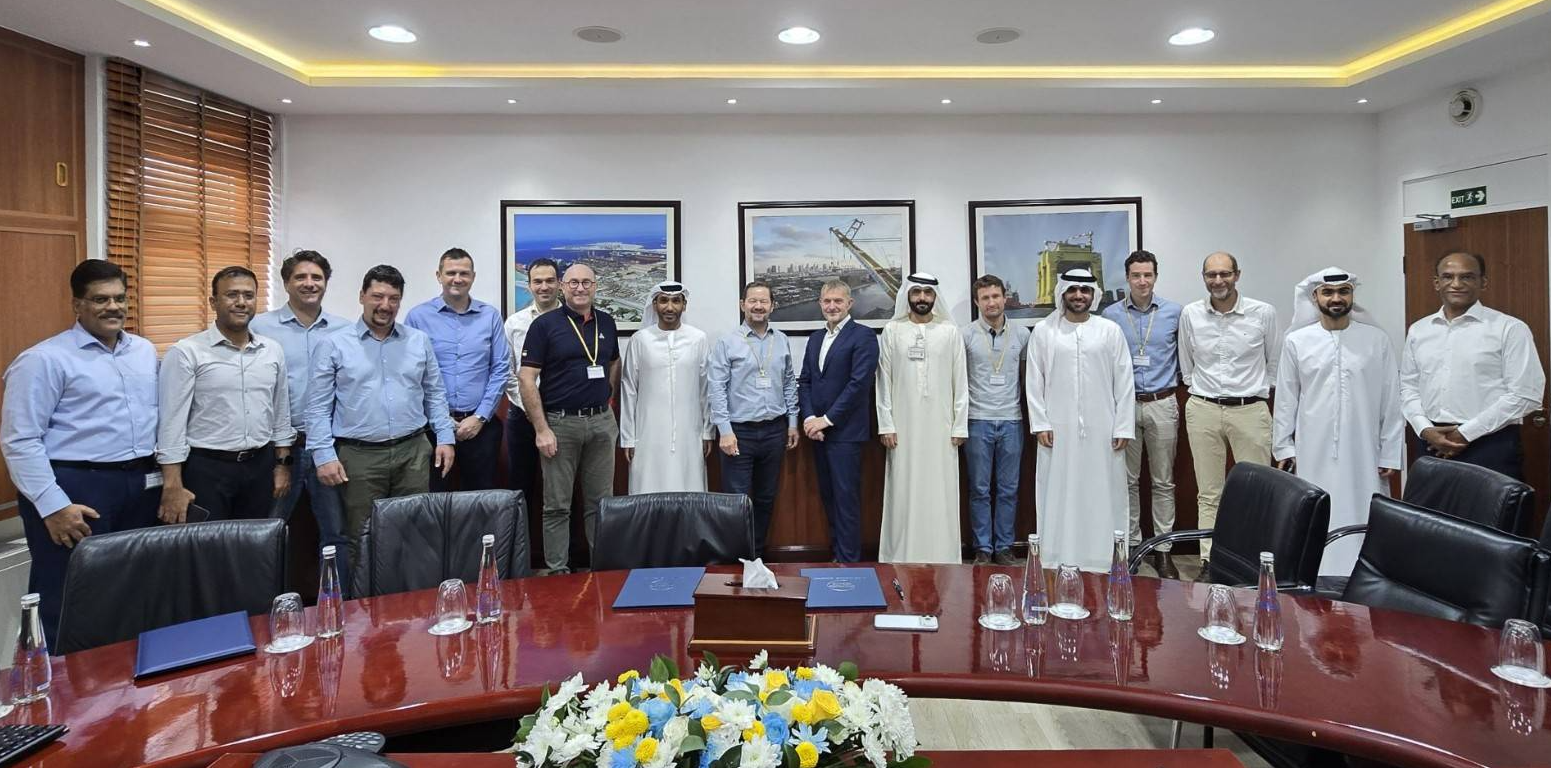
According to South Korean media reports, the Samsung Heavy Industries Workers’ Union has been demonstrating in front of the Samsung Group’s office building since December 29, 2025, demanding reforms to the performance bonus system. The union stated that if the management does not offer a substantial solution, it will escalate its protests from simple strikes to concrete actions such as refusing to hand over ships.
In an interview with South Korea’s mainstream media outlet, Choi Won-young, chairman of the Samsung Heavy Industries union, stated, “After a long period of losses, the company has achieved its best performance in over a decade, yet it continues to disregard employees’ legitimate demands for compensation under the pretext of vague standards. The collaboration of frontline employees is indispensable for the company’s core business to get back on track. If the structure in which management monopolizes the profits is not improved, employees will lose their reason to work with a sense of mission.”
Earlier, the Samsung Heavy Industries union had submitted a formal letter to Choi Sung-an, vice chairman and representative director of Samsung Heavy Industries, demanding the establishment of a negotiation platform for the labor-management performance bonus system and the submission of improvement plans, further escalating the pressure. According to the union’s plan, if the management fails to provide a convincing response by January 9, 2026, it will take escalated protest measures such as work stoppages and delays in ship deliveries.
A 70% profit growth coupled with unchanged performance incentive plans has triggered dissatisfaction among employees
According to forecasts from the South Korean securities market, Samsung Heavy Industries’ operating profit for 2025 is expected to increase by over 70% year-on-year. Data from financial information provider F&Guide shows that as of December 29, 2025, the securities market’s consensus forecast for Samsung Heavy Industries’ full-year operating profit stands at KRW 871.3 billion, with net profit projected at KRW 657.9 billion. This represents a significant improvement compared to the previous year (operating profit: KRW 503 billion, net profit: KRW 64 billion). Notably, Samsung Heavy Industries’ profitability is projected to show a marked upward trend in the second half of 2025, with forecasts indicating a 60% increase compared to the first half of the year.
On December 24, 2025, Samsung Heavy Industries distributed its second-half TAI to employees, amounting to 50% of their monthly base salary, consistent with the first half of 2025 and 2024. As one of Samsung Group’s regular performance bonus systems, TAI is distributed annually in two halves based on evaluation criteria, with a maximum distribution of 100% of the monthly base salary.
During the TAI assessment, Samsung Heavy Industries will use its operating profit margin, earnings per share, and return on investment as benchmarks compared to its peers, and will also consider factors such as safety indicators and the achievement of business targets when calculating the bonus distribution ratio. Samsung Heavy Industries employees are strongly dissatisfied with this: “Compared to 2024 and early 2025, the company’s performance has significantly improved. Yet the practice of uniformly distributing a 50% bonus at year-end using the same benchmarks remains unconvincing.”
Amid mounting internal discontent, Samsung Heavy Industries held an internal briefing session on December 29, 2025, chaired by Chief Financial Officer (CFO) and Vice President Kim Kyung-hee (transliteration), to report on the company’s operational status. Kim Kyung-hee explained the basis for performance bonus calculations during the meeting: “Compared to competitors like HD Hyundai Heavy Industries and Hanwha Ocean, our profit margins remain at just 50% to 77%. Furthermore, due to our 100% foreign exchange hedging policy, we have been unable to capture the exchange gains from favorable currency movements enjoyed by our rivals.”
Amid mounting internal discontent, Samsung Heavy Industries held an internal briefing on December 29, 2025, to communicate its current business status. During the session, the company explained the basis for calculating performance bonuses: “Compared to competitors like HD Hyundai Heavy Industries and Hanwha Ocean, our profit margins have remained between 50% and 77%. Furthermore, due to our 100% foreign exchange hedging policy, we have been unable to capture the exchange gains from favorable currency movements enjoyed by our rivals.”
Employees rejected the management’s explanation: “While adopting a conservative currency hedging strategy, management compares us to competitors who generated exchange gains. Despite achieving our best performance in a decade, they capped bonuses at 2024 levels—a clear attempt to shirk responsibility.”
Samsung Heavy Industries is required to follow the example of HD Hyundai Heavy Industries… Failure to make improvements will result in the delay of vessel delivery.
The report states that the dispute between labor and management at Samsung Heavy Industries over performance bonuses is gradually escalating to the “Overall Performance Incentive (OPI)” planned for distribution in early 2026. The OPI is the core of Samsung Group’s performance bonus system, stipulating that if a business unit exceeds its annual profit target, 20% of the excess profit can be allocated as a bonus, with a maximum payout of up to 50% of the annual salary.
However, since the downturn in the shipbuilding industry began in 2014, Samsung Heavy Industries has not issued any OPI, a period spanning over a decade.
In 2023, Samsung Heavy Industries achieved positive operating profit after eight years, but did not pay out OPI due to a net loss of 148 billion won. Although it successfully achieved positive net profit in 2024, OPI payments failed again due to factors such as the cost of canceling shipbuilding contracts caused by the Russia-Ukraine conflict. Left with no other option, Samsung Heavy Industries distributed a one-time bonus to its employees in early 2025 as a special incentive.
In response, some Samsung Heavy Industries employees have demanded revisions to the performance bonus distribution criteria. The company calculates its Operational Profit Index (OPI) based on Economic Value Added (EVA), which deducts capital costs such as corporate taxes and investment funds from after-tax operating profits. This implies that even with high absolute operating profits, EVA may remain low if cost expenditures are excessive. The EVA calculation formula remains undisclosed as a trade secret.
The Samsung Heavy Industries labor union has made it clear: “We will continue to escalate our resistance until the company introduces a performance-based pay system benchmarked against competitors like HD Hyundai Heavy Industries. The union has already issued an ultimatum: if management fails to present an alternative plan by the deadline, we will implement high-intensity resistance actions—including delayed ship deliveries—starting January 2026.”