


Technology group Wärtsilä will invest approximately EUR 140 million to further expand its production capacity by 35% at its technology centre, Sustainable Technology Hub (STH) in Vaasa, Finland and associated global supply chain.
This expansion will increase Wärtsilä’s industrial capacity and strengthen the capacity of the associated global supply chain, positioning Wärtsilä to meet growing market demand in energy and marine. The expanded capacity will enable Wärtsilä to deliver a higher volume of engines, and better support both customer needs and continued business growth long-term. The new production capacity will be installed within the STH facility expansion announced in April 2025 and is expected to be commissioned in the first quarter of 2028.
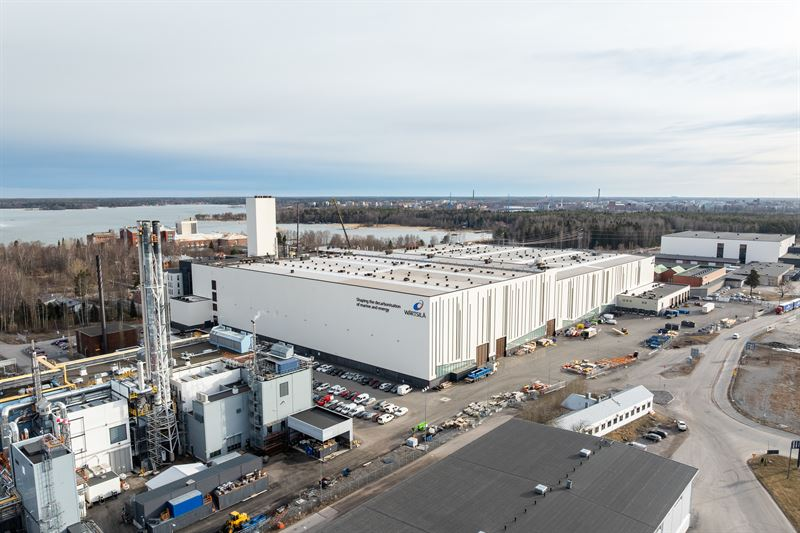
Key facts about the Wärtsilä Sustainable Technology Hub (STH):
- Opened in 2022, the Sustainable Technology Hub currently encompasses 90,000 square meters and employs more than 2,000 professionals.
- STH serves as a centre for collaboration, innovation and partnership, bringing together Wärtsilä experts, customers, technology partners, and academic institutions. Each month, it welcomes around 1,000 visitors, including customers, partners, and influential decision-makers.
- All engine types in Wärtsilä’s portfolio are manufactured at STH, which also houses a dedicated training centre and one of Wärtsilä’s remote monitoring centres, serving customers worldwide.
- Since announcing the plan to establish the Sustainable Technology Hub in 2018, Wärtsilä has invested over 400 million euros into STH. Wärtsilä is currently expanding the Sustainable Technology Hub with an additional office building, co-locating all 3,800 Vaasa-based employees at the site in the first half of 2026. In April 2025, Wärtsilä announced a EUR 50 million investment to expand the R&D testing capabilities and facilities at STH. The over 11,000 square meter extension, expected to be commissioned in early 2028, will include the new production capacity.
- The centre is a cornerstone of Wärtsilä’s ambition to achieve carbon neutrality in its operations by 2030. Designed for energy self-sufficiency, the building generates its own electricity and heat. Excess power is returned to the grid, while the heat from engine tests and other processes is stored in a thermal energy storage tank to efficiently heat the facility.
“Global demand for reliable power is rising sharply as industries electrify, climate warming is driving needs for cooling, and data centres scale at unprecedented speed. In regions like North America and Europe, there are needs to renew ageing power generation infrastructure, while the increasing share of renewables in the global energy mix accelerates the demand for thermal balancing power to secure power system stability. Wärtsilä’s flexible and energy efficient engine technologies are increasingly the trusted choice for customers when addressing evolving power requirements. In parallel, shipowners are prioritising fuel flexibility and fuel efficiency to secure long-term competitiveness and compliance with evolving marine regulation. By expanding production capacity at the Sustainable Technology Hub and the associated global supply chain, we are strengthening our operational readiness for further growth. Additionally, we are reinforcing Wärtsilä’s role as a long-term partner for customers in both energy and marine, supporting the evolving needs and advancing the decarbonisation of these industries,” says Wärtsilä President and CEO Håkan Agnevall.
Notably, alongside announcing its expansion plans, Wärtsilä simultaneously released its financial results for fiscal year 2025. Data shows that the company achieved record-high operating performance and cash flow during the reporting period.
Specifically, Wärtsilä achieved operating revenue of €6.9 billion in fiscal year 2025, representing a 7% year-on-year increase. Combined revenue from the Marine and Energy businesses grew by 12% to €5.5 billion. Orders in the core business segments rose by 17% to €6.8 billion, helping Wärtsilä maintain a substantial order backlog. Continued growth is anticipated for 2026.
Wärtsilä anticipates the shipbuilding market will remain stable in 2026, on par with 2025, while demand in the energy and energy storage sectors is expected to outperform 2025 levels. However, the company cautions that geopolitical uncertainties and tariff structures may impact investment decisions.
Additionally, Wärtsilä outlined initiatives to optimize its business portfolio in 2025, including divesting its automation, navigation control systems, and marine electrical systems businesses and plans to sell its gas solutions business.