


Currently, Chinese shipbuilders are rapidly entering the liquefied natural gas (LNG) carrier market, which was once monopolized by South Korean shipbuilders. Although the scale of LNG carrier orders undertook by Chinese shipbuilders has not yet completely shaken the market position of South Korean shipbuilders, it has already caused concern in the South Korean industry.
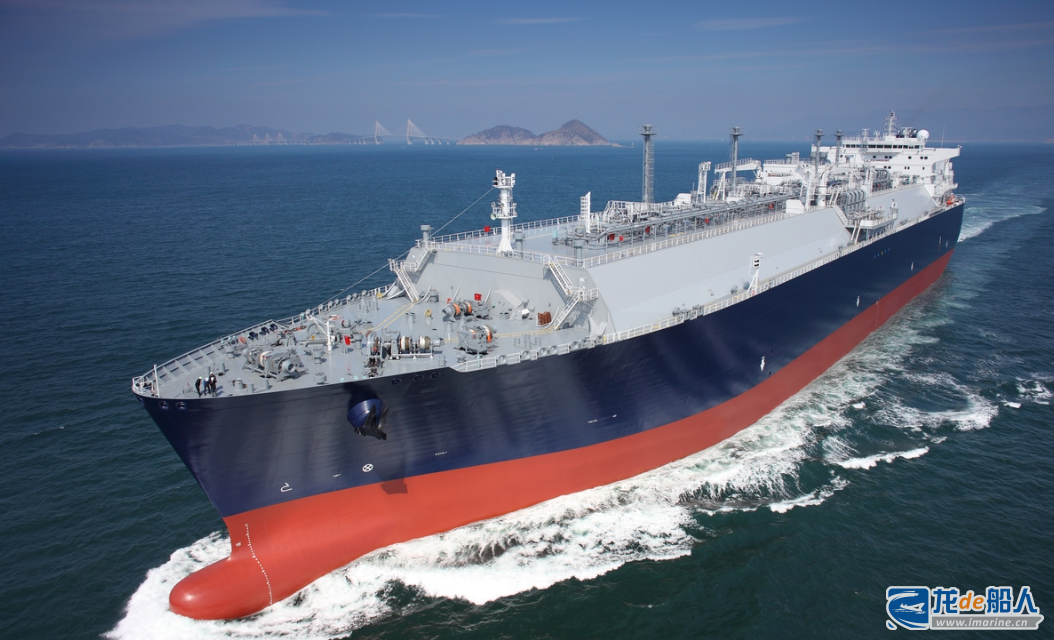
According to industry sources, Chinese shipbuilders have been negotiating or signing orders for as many as 12 LNG carriers since 2026. It is noteworthy that not only Chinese shipowners, but also global shipowners are seeking to build LNG carriers in China.
On January 15, Jiangnan Shipyard announced the signing of a contract with Singapore-based East Pacific Shipping for two 175,000 m³ LNG carriers. This marks the first LNG carrier order secured by a Chinese shipbuilder in 2026 and represents East Pacific Shipping’s inaugural direct order for LNG carriers.
On January 21, Hudong-Zhonghua announced a contract with TMS Cardiff Gas, owned by Greece’s George Economou, for 4+2 174,000 m³ LNG carriers. This brings Hudong-Zhonghua’s global order book for this vessel type to 45 units, setting a new world record for orders of this specific LNG carrier design. This marks TMS Cardiff Gas’s first order for LNG carriers from a Chinese shipyard. It also signifies Hudong-Zhonghua’s successful entry into the European market for large LNG carriers as China’s leading LNG shipbuilder, earning recognition from major European shipowners.
In addition to orders already secured, industry sources indicate that global energy giant Shell has signed a charter agreement with Shandong Shipping, which is currently negotiating with a Chinese shipbuilder for the construction of four LNG carriers.
Given that these LNG carriers are all linked to global shipowners, an analyst at SK Securities in South Korea noted: “Overseas shipowners have been placing LNG carrier orders with Chinese shipbuilders one after another, which is cause for concern from a medium-to-long-term perspective.”
Regarding the impressive track record of Chinese shipbuilders securing contracts for LNG carriers, the South Korean shipbuilding industry believes that the core factor driving global shipowners’ choice of Chinese shipbuilders is their “price advantage”. Recently, South Korean shipbuilders have quoted approximately $250 million per LNG carrier, while Chinese shipbuilders, though not publicly disclosing their prices, are estimated by the industry to be $230 million per vessel, about 8% less than the South Korean price.
South Korean industry insiders believe: “Chinese shipbuilders securing LNG carrier contracts at lower prices will negatively impact South Korea’s shipbuilding sector. Should newbuilding prices for LNG carriers decline overall in the future, it will directly worsen the profitability of orders secured by South Korean shipbuilders… However, with the launch of North American LNG projects, newbuilding prices for LNG carriers are expected to rebound.”
Industry insiders explain: “The decline in LNG carrier orders in 2025 will drive down newbuilding prices. Should LNG projects advance in 2026, surging orders coupled with yard shortages will naturally push prices higher… However, if other vessel types besides LNG carriers perform poorly in the market, freeing up yard capacity, shipyards may accept orders at lower prices.”
Notably, concerns within South Korea’s shipbuilding industry over Chinese shipbuilders securing successive LNG carrier orders have also been directly reflected in the South Korean stock market.
On January 26, shares of core shipbuilding stocks like HD Hyundai Heavy Industries continued to decline during intraday trading. Market capital shifting from the Korea Composite Stock Price Index (KOSPI) to the Korea Securities Dealers Automated Quotation (KOSDAQ) index is also seen as a variable affecting cyclically sensitive shipbuilding stocks. South Korea attributes the “intraday plunge” in its shipbuilding stocks to global shipowners’ sustained orders for LNG carriers from Chinese shipbuilders.
According to data from the Korea Exchange, as of 10:49 a.m. on the 26th, HD Hyundai Heavy Industries’ stock price plummeted 3.03% from the previous trading day, closing at 608,000 won. During the same period, the stock prices of other shipbuilding companies, including HD Korea Shipbuilding & Offshore Engineering (HD KSOE) (-1.72%), Samsung Heavy Industries (-1.15%), Hanwha Ocean (-0.93%), STX Engines (-2.11%), DH Shipbuilding (-1.42%), and Sejin Heavy Industries (-1.18%), also declined.
As of 11:12 a.m. on the 26th, the South Korean shipbuilding index had fallen 1.53%. During the same period, the KOSPI dropped 0.80% from the previous trading day, closing at 4,950.12 points.