

To improve its chances of winning the Canadian Patrol Submarine Project (CPSP), HD Hyundai has proposed a cooperation proposal to Canada covering shipbuilding and energy sectors.
In light of the Canadian government’s “Industrial and Technical Benefits” (ITB) policy, which requires that when importing overseas weapons and equipment, the contractor must receive consideration such as technology transfer from the contracting party, HD Hyundai has developed a comprehensive industrial cooperation plan to support the cooperation proposal put forward by Hanwha Group between the two countries.
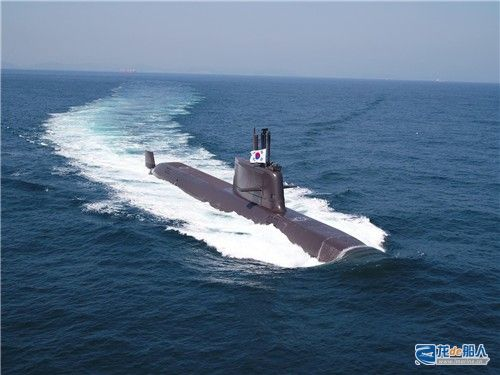
Recently, HD Hyundai announced that the group has submitted a multi-trillion won package proposal to Canada as a compensation trade plan for bidding on a submarine project. The specific amount of this comprehensive deal
Currently, HD Hyundai’s core shipbuilding subsidiary, HD Hyundai Heavy Industries, has formed a consortium with Hanwha Ocean to compete in the final bidding for the Canadian submarine project against German naval shipbuilder TKMS. The Canadian government has designated the Hanwha Ocean-HD Hyundai Heavy Industries consortium and TKMS as the final candidates for the submarine project in September 2025.has not yet been disclosed and is expected to be finalized during subsequent negotiations.
Specifically, HD Hyundai plans to provide comprehensive consulting services to Canada through this package of solutions, leveraging its submarine overhaul capabilities in the shipbuilding sector to ensure the stable operation and maintenance of its submarines. At the same time, it will transfer ship and submarine technology and shipbuilding technology to Canadian shipyards to help enhance the competitiveness of Canada’s shipbuilding industry.
HD Hyundai also stated that the group will advance joint collaborations with Canada’s top universities and research institutions in cutting-edge R&D fields including shipbuilding, artificial intelligence (AI), and biotechnology to enhance the future competitiveness of industries in both countries. In the energy sector, centered around HD Hyundai Oilbank, it is working with Canadian crude oil companies to develop plans for importing trillions of won worth of crude oil during the submarine project cycle.
As the other party in the consortium, Hanwha Group has signed five business cooperation memorandums of understanding (MOUs) through Hanwha Ocean with Algoma Steel, Canada’s largest steel producer. These agreements cover: joint construction of a local steel plant; establishment of a supply system for steel products required for submarine maintenance, repair, and overhaul (MRO) infrastructure; and other related initiatives.
Hanwha Group and HD Hyundai’s initiatives concretely demonstrate an industrial cooperation model aligned with the “Buy Canadian” policy emphasized by the Canadian government in its bid evaluation—specifically, expanding local industry participation and implementing offset arrangements.
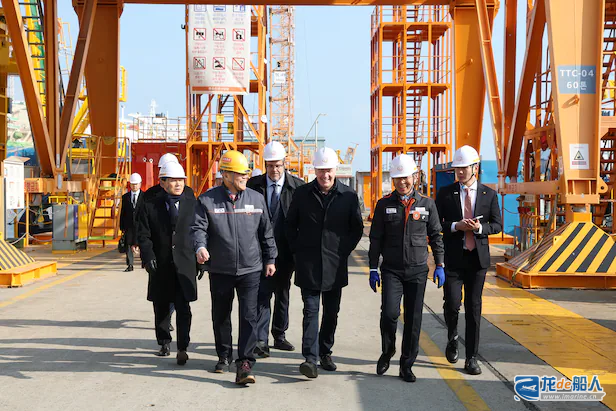
According to South Korean media reports, Stephen Fuhr, Canada’s Special Envoy for Defense Procurement overseeing and the highest-ranking official overseeing Canadian Next-Generation Submarine Program (CPSP), led a delegation of over 30 Canadian government and corporate officials on a visit to Hanwha Ocean’s Geoje Shipyard on February 2 local time. The delegation conducted an on-site inspection of the assembly workshop utilizing welding robots and the automated production facilities.
As Canada’s defense procurement policy coordinator, Stephen Fuhr plans to meet with major South Korean companies including Hanwha Ocean during his week-long visit to discuss offset trade cooperation—a mechanism requiring equipment exporting nations to provide compensation through technology transfer or local production. The Canadian government is expected to award higher scores to countries proposing “economic reciprocity programs,” which must contribute to job creation and advance the development of Canada’s shipbuilding industry.
It is understood that Canada initially announced in the third quarter of 2024 its plan to procure up to 12 conventionally powered submarines of 3,000 tons. South Korean media revealed the project’s estimated scale to reach 60 trillion won (approximately $40.956 billion at current exchange rates), positioning it as a mega-scale initiative. Under the plan, the construction contract for the 12 submarines will be awarded by 2028, with the first submarine expected to be delivered by 2035. This timeline aims to ensure a seamless transition between different submarine classes without creating capability gaps.
Currently, the Royal Canadian Navy operates four Victoria-class submarines. The first three were delivered between 2000 and 2003, while the fourth was delayed until 2015 due to a fire during transport. The existing Victoria-class fleet is scheduled for decommissioning in the mid-2030s.
Canada’s proposed new submarine fleet will possess deployment capabilities in the Arctic region, featuring extended range and endurance. It will prioritize three core capabilities: stealth, sustained operational capability, and strike capability. Canada plans to generate economic benefits for the country’s maritime and defense industries through this submarine project during the fleet’s service life.