


Investment in alternative-fueled shipping continues to climb despite broader market headwinds, with the global dual-fuel fleet reaching 400 container ships and vehicle carriers in service as of December 2025, according to the World Shipping Council’s latest Dual-Fuel Fleet Dashboard.
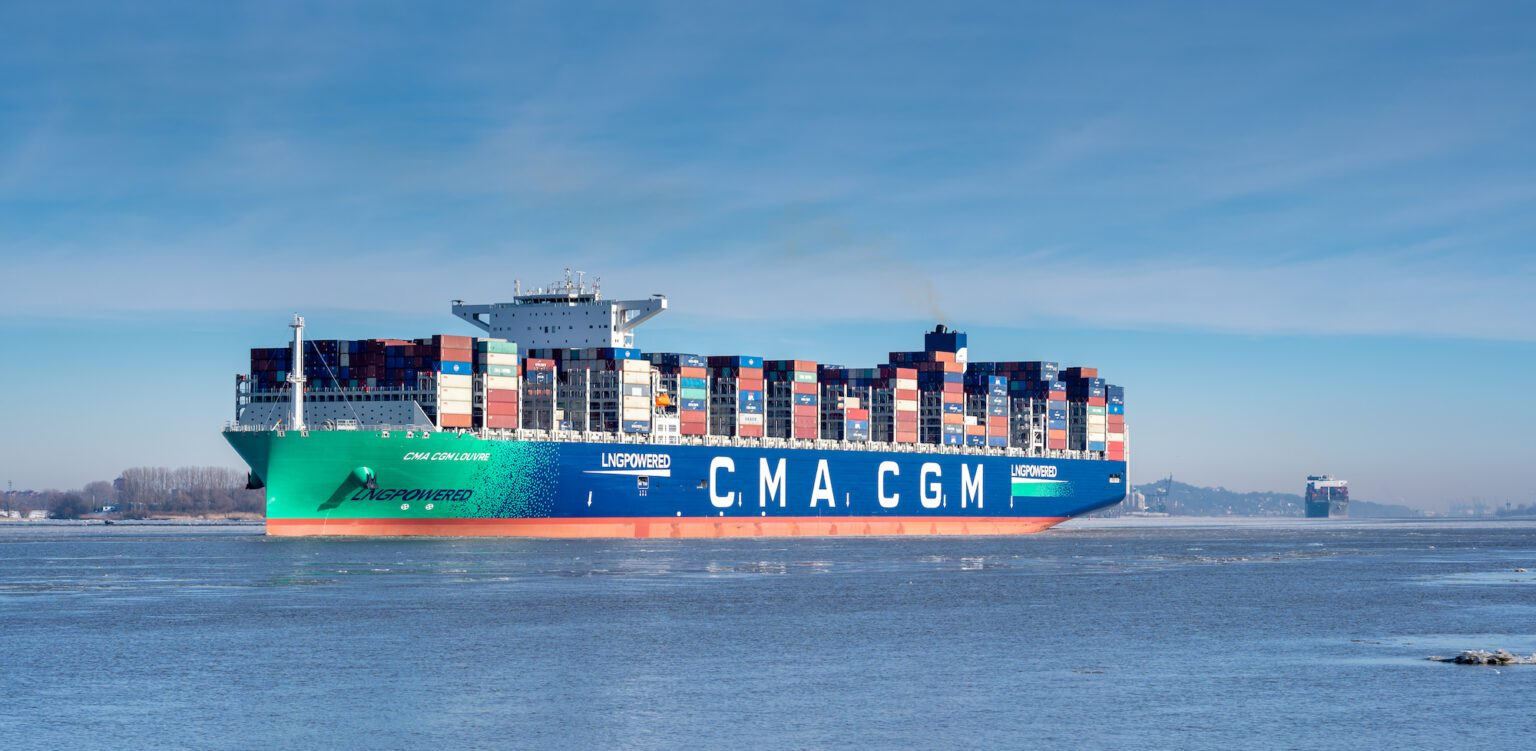
The figure marks an 83% jump from the 218 dual-fuel vessels operating in 2024 and highlights the scale of capital still flowing into next-generation tonnage. With another 726 dual-fuel ships on order, the combined delivered and contracted fleet now stands at 1,126 vessels—representing more than $150 billion in commitments by liner operators.
That momentum has held even as overall ship ordering slowed sharply. Total newbuild orders across all segments fell from 4,405 vessels in 2024 to 2,403 in 2025, according to DNV’s Alternative Fuels Insight platform. Alternative-fueled ships, however, maintained a 38% share of gross tonnage in the global orderbook.
Container shipping stood out as the clear exception. Orders in the segment rose from 447 vessels in 2024 to 547 in 2025, reinforcing its role as the primary engine of maritime decarbonization, DNV’s data shows.
“The resilience of the alternative-fuels orderbook in 2025 is mainly driven by cargo owners who have set their own emissions-reduction targets despite market slowdown and regulatory uncertainty,” said Jason Stefanatos, DNV’s Global Decarbonization Director. “They are prioritizing investments where fuel infrastructure, regulatory clarity, and commercial viability align—particularly in container shipping, where LNG and methanol benefit from established supply chains and customer demand.”
Within the container orderbook, LNG-fueled vessels dominated, accounting for 58% of gross tonnage. Conventional-fuel ships made up 36%, while methanol-fueled tonnage represented just 6%. Overall, container ships accounted for 49% of total gross tonnage on order and 68% of all alternative-fuel newbuilds placed in 2025.
Momentum carried into the new year. DNV’s Alternative Fuels Insight platform recorded 20 new alternative-fuel vessel orders in January 2026, including 16 LNG-fueled container ships. The remaining orders comprised one methanol-fueled offshore vessel and three LPG carriers.
“This is a relatively positive start to the year in the alternative-fueled space,” Stefanatos said. “LNG continues to lead, with container shipping driving activity. Owners are pressing ahead with their own decarbonization strategies, even as market and regulatory uncertainty persists.”
Outside container shipping, the picture was far less optimistic. New orders for LPG and ethane carriers fell 73% in 2025, while car carrier contracting dropped 90% compared with the previous year. Bulk carriers, crude tankers, and oil and chemical tankers also saw steep declines as owners focused on cost control rather than fleet renewal.
Methanol-fueled newbuilds fell sharply, dropping from 149 orders in 2024 to just 61 in 2025. Ammonia- and LPG-fueled vessels saw only limited uptake across all segments.
DNV Maritime CEO Knut Ørbeck-Nilssen described 2025 as a difficult year for long-term investment decisions. “The slowdown reflects a turbulent market environment, but also a natural cooling after several years of extraordinary ordering activity,” he said. “Looking ahead, progress will depend on global regulations that incentivize alternative fuels, create a level playing field, and support fair competition.”
Across the container ship and vehicle carrier orderbook, 74% of vessels on order are now dual-fuel capable. Designed to switch to renewable and near-zero fuels as they become commercially viable, these ships position operators to meet tightening regulations and rising cargo-owner expectations.
The data points to an industry navigating competing pressures. Regulatory uncertainty and market volatility are slowing investment in some sectors, while firm cargo-owner commitments and established fuel infrastructure continue to sustain momentum elsewhere. For now, container shipping remains the clear driver of the maritime energy transition, with LNG-fueled tonnage leading the charge.
Source from : gCaptain