


New orders for Very Large Crude Carriers (VLCCs) have been pouring in, and with Singapore-based East Pacific Shipping’s latest order for two VLCCs, global VLCC orders for January 2026 have approached the highest monthly record on record.
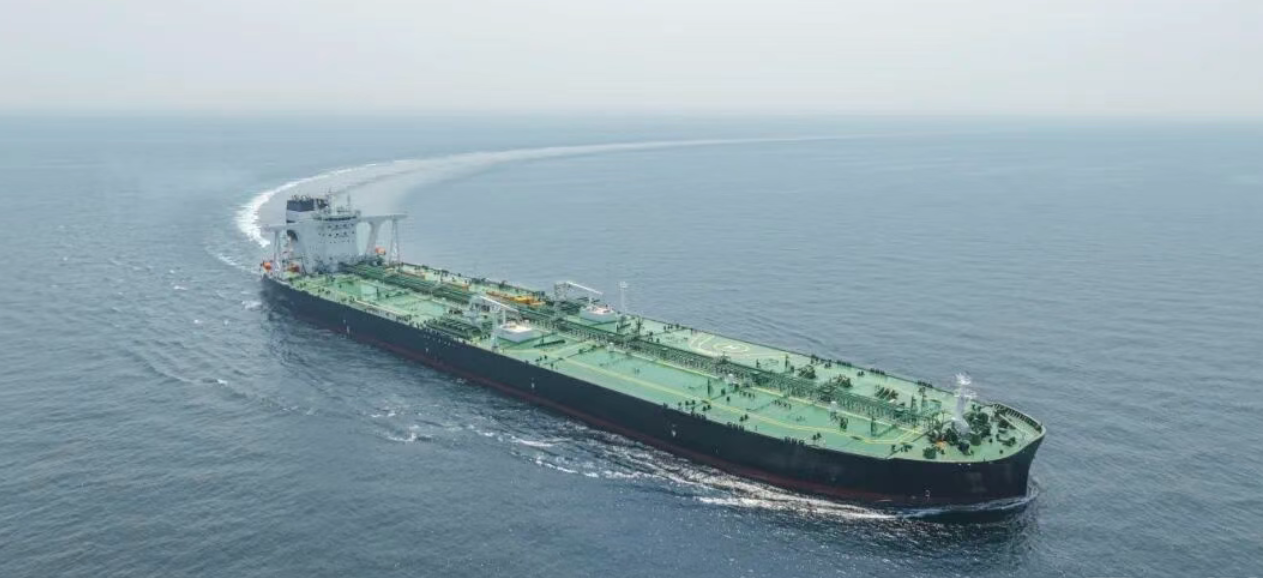
As of January 22, 2026, global shipowners have placed orders for 13+1 Very Large Crude Carriers (VLCCs) this year. Hengli Heavy Industries ranks first with 8 vessels, while Greece’s Dynacom Tankers Management, East Pacific Shipping and Norway’s Seatankers’ Frontline have ordered 4, 2 and 2 vessels respectively.
The remaining 5+1 VLCCs were secured by Hanwha Ocean, Beihai Shipbuilding and Japan Marine United (JMU), with order quantities of 3 vessels, 1+1 vessels, and 1 vessel respectively. The shipowners are Oman’s Asyad Shipping, Greece’s Cape Shipping, and Japan’s Kyoei Tanker.
Regarding the surge in VLCC orders in January 2026, Ralph Leszczynski, head of research at shipping consultancy Banchero Costa, said that although the number of VLCC orders in January this year did not reach a record high, it was “among the top monthly signings in recent years.”
Data indicates that global shipowners placed orders for at least 60 VLCCs in 2025, including 13 vessels ordered in September and 9 in December. With this significant surge in VLCC orders, at least 142 newbuildings are scheduled for delivery between 2026 and 2028. This represents an order backlog equivalent to 17% of the current active fleet.
Ralph Leszczynski noted that despite the surge in new VLCC construction activity, this wave of VLCC orders does not raise supply concerns: “The VLCC fleet contains a significant number of aging vessels, with approximately 20% of the global VLCC fleet exceeding 20 years of age. For most international oil majors, vessels of this age typically no longer meet operational requirements.”
Meanwhile, over the past year, “mainstream” VLCC charter rates have surged, while seaworthy VLCCs have become increasingly scarce in the second-hand market.
Banchero Costa data indicates that secondhand VLCC prices have reached an all-time high, with five-year-old VLCCs currently selling for nearly $120 million—just about 6% below the approximately $128 million quoted by Korean shipyards for newbuilds.
Ralph Leszczynski concluded: “In the current market environment, it is indeed more reasonable to order new vessels if you want to invest in VLCCs.”