


Seatrium AmFELS, a US shipyard under Singapore-based offshore vessel company Seatrium, has delivered the trailing suction hopper dredger “FREDERICK PAUP” to Manson Construction. The vessel complies with the US Jones Act and is the largest self-propelled trailing suction hopper dredger in US history. Ordered in 2020, its construction period is at least five years.
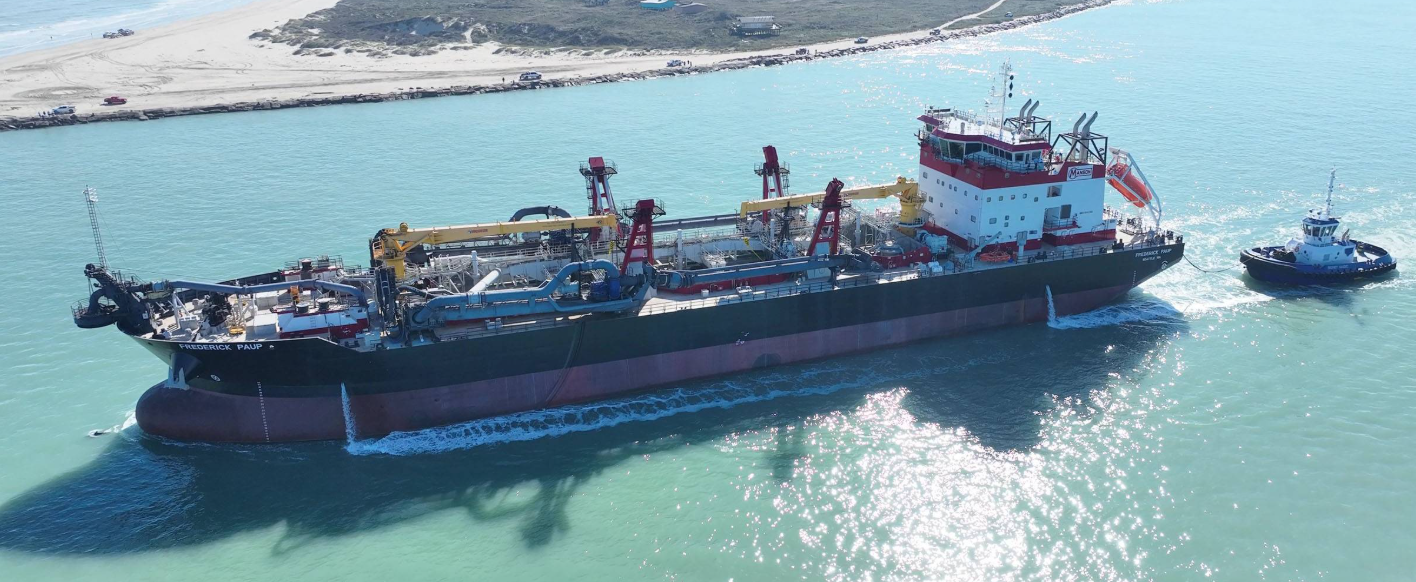
The “FREDERICK PAUP” measures 420 feet in length overall, 81 feet in beam and 32.5 feet in depth. With a design draft of 31.02 feet, it carries a deadweight tonnage of 16,870 tons and is designed for a service speed of 14 knots. Its hopper capacity exceeds 15,000 cubic yards. Classed by American Bureau of Shipping (ABS), the vessel was specifically designed and constructed to meet the demands of the U.S. dredging market.
The vessel is equipped with three Wabtec 16V250MDC engines and two Wabtec 12V250MDC engines, with a total power of 25,000 horsepower. It features three azimuth thrusters and two bow thrusters, enabling it to maneuver and dredging operations in extremely narrow waterways. Even if a single thruster or bow thruster experiences a mechanical failure, the vessel can still maintain its operational performance, effectively reducing operational delays. It is powered by Wabtec Tier 4 emission standard diesel-electric engines and adopts an advanced hull design to achieve emission reduction and improved fuel efficiency.
According to reports, the intelligent dynamic positioning system equipped on the vessel will significantly improve operational flexibility, allowing the vessel to remain anchored at a fixed point or navigate along a designated route during dredging operations; the underwater sealed motor can shorten the suction distance between the rake head and the pump body, significantly improving dredging efficiency.
Additionally, the FREDERICK PAUP is equipped with two built-in pump units, enhancing Manson Construction’s competitiveness in beach maintenance and coastal restoration projects while supporting the U.S. Army Corps of Engineers’ goal of achieving 70% resource recovery and reuse of dredged materials by 2030.