


Despite the container newbuilding market continuously breaking order records, major global liner operators have not slowed their pace of shipbuilding. Yang Ming Marine Transport Corp. (Yang Ming), the second-largest liner operator in Taiwan, China, has officially announced its first container ship order of 2026.
On March 12, Yang Ming Marine Transport announced via its official website that, to accommodate ongoing business development and facilitate the renewal of its existing operating fleet, Yang Ming held its 411th Board Meeting today (12th) and approved a plan to add six 13,000 TEU class full container LNG dual-fuel vessels. Subsequent procurement procedures will be executed in accordance with the Company’s internal regulations.
According to TradeWinds, the total construction cost amounts to $1.26 billion; based on this calculation, the cost per vessel is approximately US$210 million.
Committed to delivering comprehensive and efficient global transportation services, Yang Ming continues to adapt to economic and trade developments, striving to achieve its mid- to long-term goals of a 124-vessel fleet, 1.25 million TEU in operating capacity, and a 3.0% to 3.5% share of the global container market by 2032. To reach these targets, the Company is enhancing fleet competitiveness and optimizing its service network. The strategic fleet planning project for next-generation mainstream vessels will replace aging units and upcoming charter-expiry vessels ranging from 4,250 to 6,500 TEU. The replacement aims to strengthen the operational advantages of Yang Ming’s primary service routes. The new-generation 13,000 TEU class is highly compatible with the existing 10,000 TEU fleet and is expected to serve as the backbone of Yang Ming’s East-West services.
These vessels offer optimal economies of scale and deployment flexibility across key trade lanes, including Asia to/from North America (both East and West Coasts), South America, and the Mediterranean. These new vessels will incorporate advanced energy-saving designs to deliver immediate benefits by reducing fuel consumption and lowering greenhouse gas emissions. Furthermore, the adoption of LNG dual-fuel design aligns with Yang Ming’s goal to gradually reduce carbon intensity. By utilizing this relatively mature and economically viable alternative fuel, the Company is actively navigating the transition toward Net Zero. With the delivery of Yang Ming’s LNG fleet beginning this year, these vessels are expected to increase the company’s low-carbon fleet ratio and strengthen its environmental competitiveness.
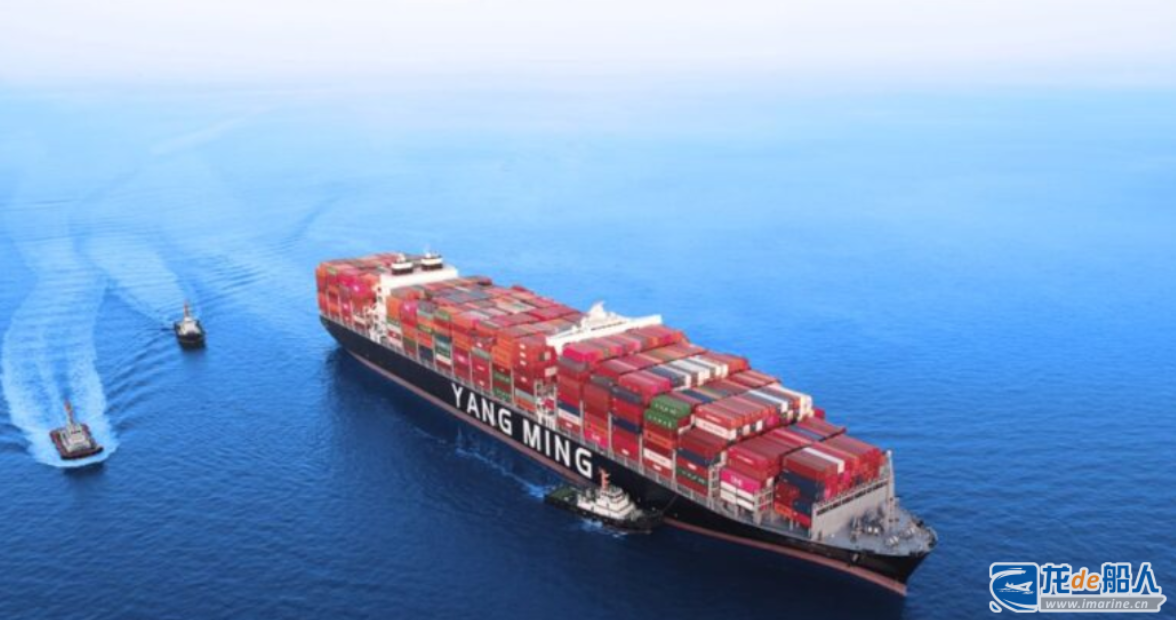
In the face of global supply chain restructuring and an uncertain market environment, Yang Ming remains focused on the steady development of its core container shipping business and the reinforcement of operational resilience. Through the vessel deployment, Yang Ming aims to rejuvenate its fleet and address the requirement to reduce emissions driven by climate change trends. This strategic move enables Yang Ming to fulfill its commitment to providing customers with comprehensive and efficient global transport services.
On the same day, Yang Ming released its “2025 Financial Report.” During the reporting period, Yang Ming generated operating revenue of NT$16.356 billion (US$524 million) and achieved an after-tax profit of NT$1.7 billion (US$154.8 million), marking its sixth consecutive year of profitability.
Influenced by various factors—including geopolitics and trade policies—container shipping freight rates have continued to decline; however, this has in no way dampened container shipowners’ interest in new shipbuilding. According to BIMCO data, 102 container ships—totaling 665,000 TEU in capacity—were ordered globally during the first two months of 2026. As of the end of February, the global container ship orderbook stood at 1,350 vessels with a combined capacity of 11.8 million TEU—a year-on-year increase of 28%—setting a new record once again.
Industry analysts suggest that the 11.8 million TEU of capacity currently under construction implies that, even if all active container ships aged 22 years or older are completely scrapped by the end of 2030, the fleet size will still maintain the average annual growth trajectory of 6.1% observed throughout this decade.
In terms of fuel selection, LNG remains the preferred choice for leading container shipowners. With the exception of Yang Ming, Ocean Network Express (ONE) is planning to order 6+6 container ships of the 13,000 TEU class and 6+4 vessels of the 15,000 TEU class—totaling US$4.2 billion in construction costs—all of which are slated to be equipped with LNG dual-fuel propulsion systems.
Leading liner operators that have confirmed new orders this year have similarly opted for LNG as their preferred transitional fuel solution. Examples include COSCO Shipping Lines placing an order with Jiangnan Shipyard for 18,000 TEU LNG dual-fuel container ships; MSC ordering eight 11,500 TEU LNG dual-fuel container ships from Jinglu Shipyard; and Maersk commissioning 18,600 TEU LNG dual-fuel container ships from New Times Shipbuilding.
LNG fuel holds a dominant position among alternative fuels, owing to its relative maturity and economic viability. This is particularly evident in the container ship market; although new fuels such as methanol and ammonia have garnered significant attention, uncertainties regarding their commercialization timelines and fuel supply infrastructure lead shipowners to favor LNG when making their choices.