


Following the announcement of a merit-based remuneration system, Hanwha Ocean has adjusted its employee benefit standards once again, with this round of adjustments primarily benefiting staff from its affiliated partner enterprises (outsourced workers).
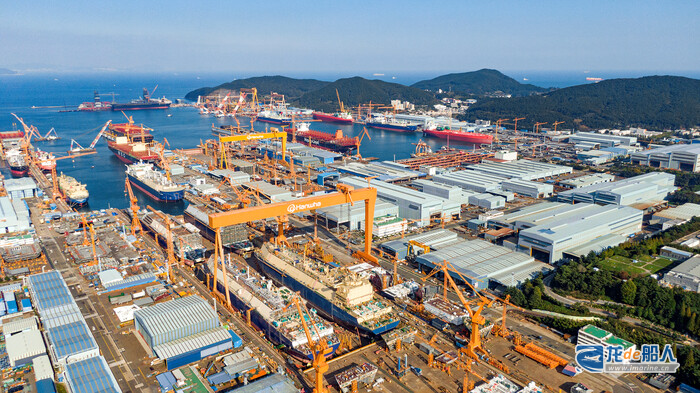
On December 12, Hanwha Ocean announced that it would align the performance bonus distribution ratio for outsourced workers with that of Hanwha Ocean headquarters employees.
In 2024, Hanwha Ocean headquarters employees received performance bonuses equivalent to 150% of their base salary, while outsourced workers received bonuses amounting to 75% of their base salary—just 50% of the headquarters employees’ rate. Following this adjustment, over 15,000 outsourced workers at Hanwha Ocean will now receive performance bonuses at the same percentage rate as headquarters employees.
Hanwha Ocean stated that this initiative aims to share the company’s operational achievements with outsourced workers. By granting all outsourced workers within the shipyard equal performance-based compensation, production processes can be managed more stably, thereby enhancing productivity. The company added, “This adjustment enables the equitable sharing of business outcomes between prime contractors and subcontractors, pioneering a new model of cooperative win-win partnerships in the shipbuilding industry.”
South Korean media reports that the shipbuilding industry has long been plagued by widespread skepticism: outsourced workers receive lower performance bonuses than regular employees, making it difficult for companies to recruit and retain skilled local workers.
Hanwha Ocean’s adjustment to its performance bonus distribution ratio is expected to help its affiliated companies increase the number of local workers. This is because performance bonuses are calculated based on base salary, meaning employees with longer tenure receive higher rewards. This approach will help prevent the loss of skilled technical personnel while promoting the development of local skilled technical workers.
Foreign workers account for 20 to 30 percent of the workforce at major South Korean shipyards, including Hanwha Ocean, with a total exceeding 10,000 individuals. Hanwha Ocean stated: “Previously, a significant number of local skilled technicians left due to compensation issues, with their positions filled by foreign workers. This performance bonus increase is expected to boost local employees’ willingness to pursue careers in the shipbuilding industry.”
To alleviate disparities in treatment and conflicts between the main contractor and subcontractors, Hanwha Ocean has recently implemented multiple measures to address this issue. For instance, Hanwha Ocean has withdrawn a damages lawsuit seeking 47 billion won in compensation. This lawsuit stemmed from a 51-day dock occupation and strike in June 2022 (during the Daewoo Shipbuilding & Marine Engineering period), which involved demands for wage increases and collective bargaining with the main contractor.
In June this year, the head of the Geoje Tongyeong Goseong Shipbuilding Outsourcing Union under the Korean Metal Workers’ Union staged a high-altitude sit-in protest demanding Hanwha Ocean eliminate the bonus disparity between main contractors and subcontractors. Hanwha Ocean ultimately agreed to this demand through negotiations with representatives of its internal partner companies.
Notably, Hanwha Ocean has implemented a significant reform this year in adjusting its employee compensation system: by introducing a job-difficulty-based pay structure and substantial wage increases guided by base salary, the company is moving away from a compensation model based solely on seniority and rank. Instead, it will adopt an approach centered on “job difficulty” and “position importance.” This has been one of the core topics of discussion between Hanwha Ocean’s labor and management over the past decade, with a concrete framework being established for the first time in 2025.
The South Korean industry is highly optimistic about Hanwha Ocean’s “merit-based remuneration system” system, believing this initiative “will effectively address the issue of low wages across the entire South Korean shipbuilding industry.”