


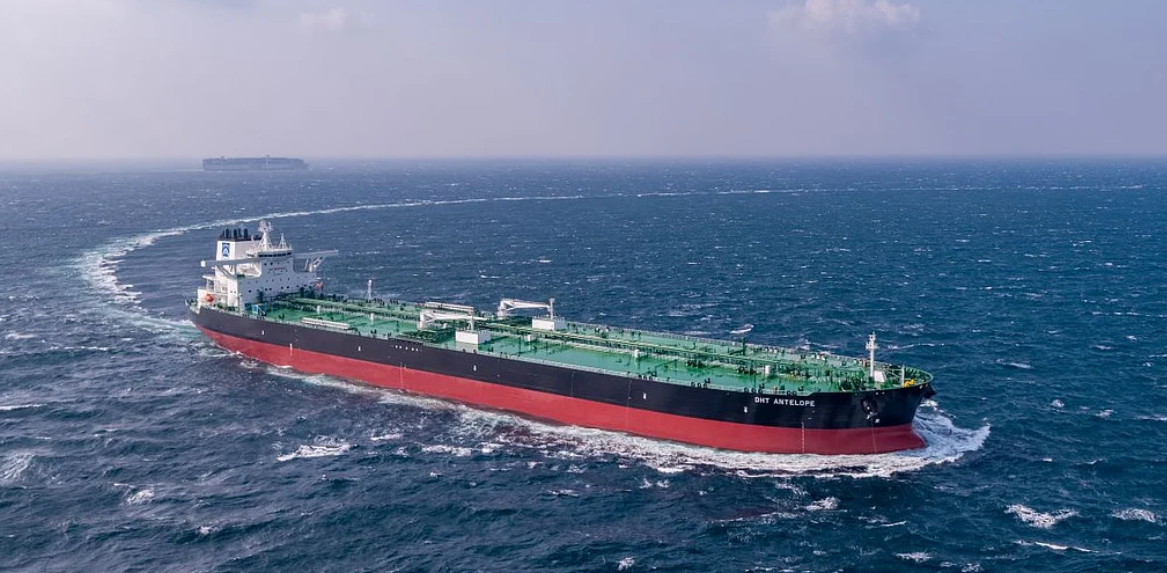
The construction of Very Large Crude Carriers (VLCCs) has entered a historic phase, with the total volume of new orders placed between the fourth quarter of 2025 and the first quarter of 2026 already exceeding the highest annual order volume on record.
Data from shipbroker Hartland indicates that, in a span of just 15 months, the ratio of new VLCC orders to the size of the existing fleet surged from 10% to 15%—a figure that had stood as low as 1% in mid-2023.
Hartland noted that between the fourth quarter of 2025 and the first quarter of 2026, global shipowners placed orders for approximately 125 VLCCs; orders placed in just six months exceeded the total number of orders recorded in any single year on record. The previous historical high was set in 2006, when global shipowners placed orders for 108 VLCCs—a record that has stood for 20 years.
Data from shipping analytics firm Veson Nautical highlights the scale of the market upheaval driving the current surge in VLCC orders. Driven by disruptions to shipping through the Strait of Hormuz, aggressive fleet expansion plans by the long-established South Korean shipowner Sinokor Merchant Marine, and shifts in supply dynamics caused by sanctions, average daily earnings for VLCCs reached approximately $175,000 in the first quarter of 2026, setting a new record high.
Taking Sinokor Maritime’s “staggering” expansion as an example, recent data shows that Sinokor Maritime currently owns or charters approximately 130 to 150 VLCCs, accounting for about 14% to 17% of the global fleet of 880 VLCCs. It is the only operator in the world with a VLCC market share exceeding 10%, and the shipping brokerage BRS has described the company as a “super-operator” in the VLCC sector. Reports indicate that Sinokor Maritime plans to eventually acquire 100 VLCCs.
According to Veson Nautical data, new ship orders in the first quarter of 2026 reached 33.3 million deadweight tons, marking a further increase from the already impressive 27.2 million deadweight tons recorded in the fourth quarter of 2025. Crude oil tankers accounted for 90% of total new ship orders in the first quarter of 2026, which is five times the volume of orders during the same period in 2025. Meanwhile, the cost of building new large crude oil tankers and medium-sized product tankers rose by approximately 7% in the first quarter.
Take Hengli Heavy Industries, a leading Chinese private shipbuilder, as an example: in the first quarter of 2026, the company secured orders for a total of 108 new vessels, with oil tankers accounting for as much as 70% of the total—76 vessels; Breaking down the tanker orders further, they included 54 VLCCs, 18 Suezmax tankers, and 4 LRII product tankers. VLCC orders accounted for 50% of the total orders in the first quarter and 71% of the total tanker orders.
Commenting on this wave of VLCC orders, Singapore-based shipbroker Sentosa stated: “This surge in orders is the combined result of various structural factors, such as consistently strong earnings for crude oil tankers from the second half of 2025 through 2026, the severe aging of the VLCC fleet, and growing market confidence in the long-term outlook for oil demand.”
Data from the Baltic and International Maritime Council (BIMCO) also confirms that numerous records in the tanker sector are being broken. Based on adjusted gross tonnage, the total volume of new ship orders in the first quarter of 2026 rose by 40% year-over-year to 17.6 million adjusted gross tons, driven by a threefold surge in tanker orders and a recovery in orders for liquefied natural gas (LNG) carriers.
Overall, tanker orders accounted for 32% of total orders in the first quarter of 2026, marking the highest proportion since the second quarter of 2017. Industry experts note that the current market performance of the tanker sector represents “the highest single-quarter order volume for crude oil carriers on record.”