


As South Korea’s first shipbuilding company, HJ Heavy Industries (formerly HANJIN Heavy Industries & Construction) achieved profitability in 2025, ending 11 consecutive years of losses. In the first quarter of 2026, HJ Heavy Industries once again saw a surge in performance, with operating profit increasing by more than 300% year-on-year. At the same time, HJ Heavy Industries plans to expand its production capacity by acquiring HD Hyundai Heavy Industries’ Gunsan Shipyard.
HJ Heavy Industries recently released its Q1 2026 financial report, reporting revenue of 541.4 billion won (approximately US$360 million), a year-on-year increase of 32%; operating profit of 24.6 billion won (approximately US$16 million), a year-on-year surge of 350.7%; net profit of 25.5 billion won (approximately RMB17 million), a year-on-year surge of 59.2%; and an operating profit margin that increased from 1.3% to 4.5% year-on-year.
HJ Heavy Industries stated that the significant improvement in performance during the reporting period was mainly due to its shipbuilding business, with the delivery volume of high-value-added vessels such as environmentally friendly container ships already reflected in operating revenue. Regarding new ship orders, HJ Heavy Industry secured its first order for large container ships exceeding 10,000 TEU. These new ships were ordered by European shipowners, with a unit price of approximately US$122.5 million.
Data shows that HJ Heavy Industries’ current new shipbuilding order backlog has reached a record high. In 2025, HJ Heavy Industries’ shipbuilding and construction businesses received orders totaling 4.7 trillion won, a record high, with shipbuilding orders valued at 1.75 trillion won. By the end of 2025, HJ Heavy Industries’ two core businesses will have an order backlog of 9.3 trillion won, exceeding the scale of HJ Heavy Industries’ heyday.
Based on its order book, HJ Heavy Industries’ shipbuilding business saw a significant surge in performance in the first quarter of 2026, achieving revenue of 268.6 billion won (approximately US$179 million), a year-on-year increase of 69.9%; and operating profit of 22.3 billion won (approximately US$15 million), a staggering year-on-year increase of 3422.3%. In contrast, HJ Heavy Industries’ construction business achieved revenue of 269.3 billion won during the same period, a year-on-year increase of 8.6%, but operating profit was only 1.7 billion won, a year-on-year decrease of 60.2%.
A representative from HJ Heavy Industries stated, “Both of our company’s core businesses have a stable order backlog of over three years. The company will continue to steadily promote structural optimization and cost structure innovation to maintain stable growth and is committed to enhancing the company’s sustainable value.”
In the first quarter of this year, HJ Heavy Industries’ most noteworthy move was the announcement of its acquisition of HD Hyundai Heavy Industries’ Gunsan Shipyard. The South Korean shipbuilding industry believes that this move will expand production capacity and accelerate order diversification.
In March, Eco Prime Marine Pacific, the largest shareholder of HJ Heavy Industries, reached an agreement with HD Hyundai Heavy Industries to acquire the Gunsan Shipyard. South Korean media estimated the transaction amount to be between 700 billion and 1 trillion won (approximately US$466 million to US$666 million). The two parties plan to sign the final contract after completing due diligence.
This asset transfer may allow this once-leading shipyard to truly restart. According to the plan, Eco Prime Marine Pacific intends to jointly operate the Gunsan Shipyard with HJ Heavy Industries to create a world-class shipbuilding group.
Following the completion of the transaction, HJ Heavy Industries’ Yeongdo Shipyard and the newly acquired Gunsan Shipyard will have a clear division of labor. The former will be responsible for building environmentally friendly and special-purpose vessels, while the latter will serve as a construction base for large commercial ships such as VLCCs and a MRO base for large warships. It will no longer be limited to hull sections and will strive to deliver its first complete ship by 2028.
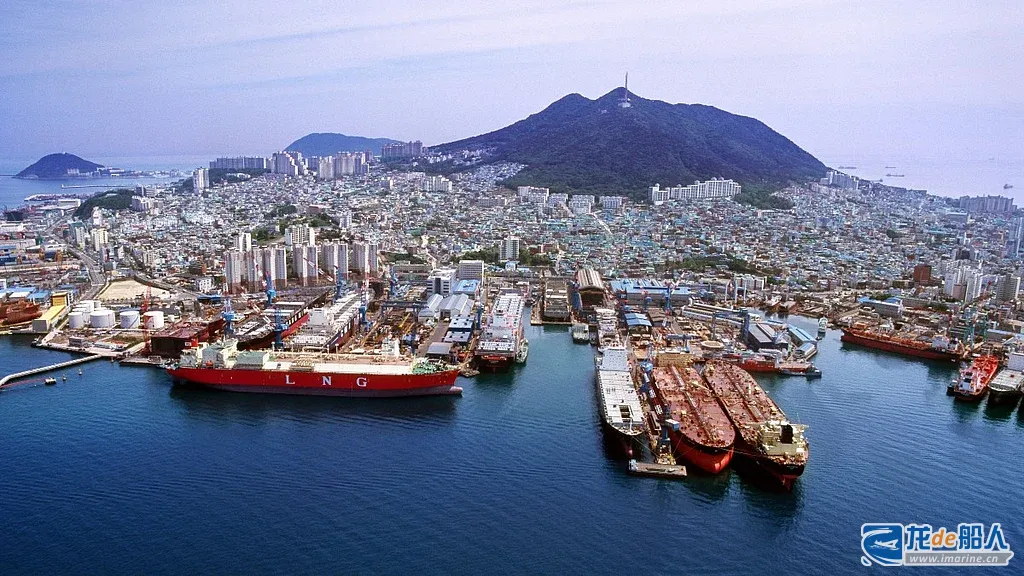
It is reported that HJ Heavy Industries’ Yeongdo Shipyard, established in 1937, was South Korea’s first shipyard and remains an iconic site in the country’s modern shipbuilding industry. However, constrained by a site area of approximately 260,000 square meters and a dry dock length of only 300 meters, Yeongdo Shipyard is unable to build large commercial vessels of 100,000 tons or more. Its primary focus is on specialized vessels such as naval ships and research vessels, as well as small- and medium-sized high-value-added vessels.
The South Korean industry believes that the site area of the Gunsan Shipyard, along with its shipbuilding facilities—including large dry docks and cranes—fully meet the requirements for building medium- and large-sized vessels. Therefore, the acquisition of this shipyard will serve as a breakthrough for HJ Heavy Industries’ shipbuilding business, helping it enhance its capacity to secure and deliver orders.
Although the South Korean shipbuilding industry views the acquisition of the Gunsan Shipyard very favorably, there are also significant concerns: the biggest variable is the time and cost required to restore the shipyard to normal operations. Given that the Gunsan Shipyard has been idle for many years, substantial funds may be needed for equipment maintenance and production line commissioning; secondly, the South Korean shipbuilding industry is currently facing a severe labor shortage, making it difficult to recruit skilled technical workers.
A South Korean industry official stated: “For HJ Heavy Industries, acquiring the Gunsan Shipyard effectively means launching a new engine of growth. Given that production expansion is clearly limited by relying solely on the existing Yeongdo Shipyard system, the Gunsan Shipyard is highly likely to become a core hub for medium- to long-term growth.”