


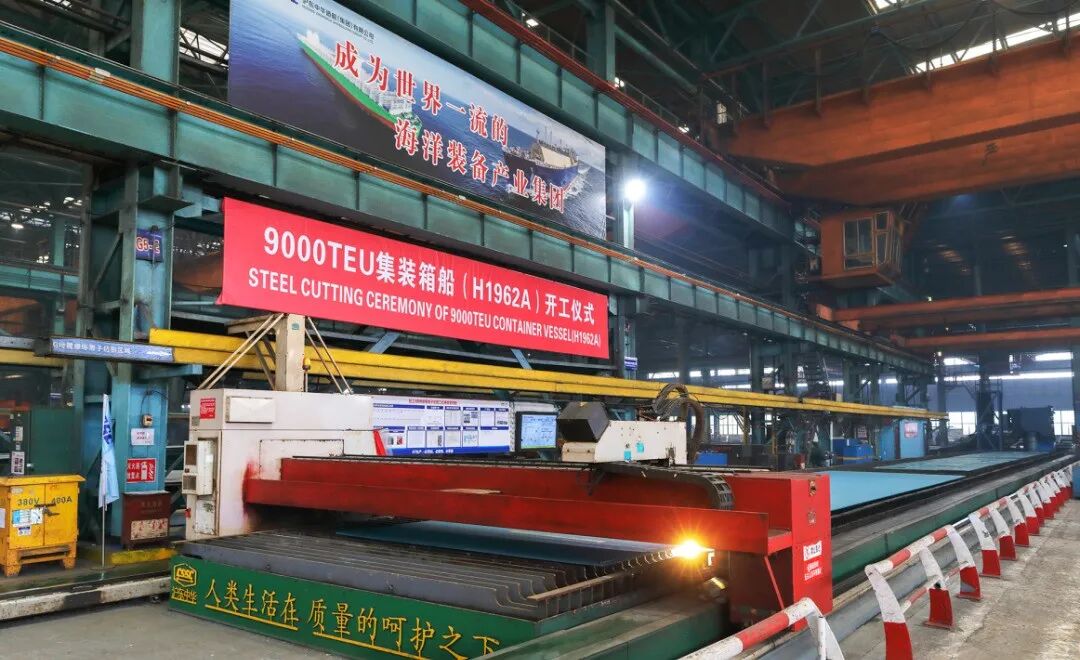
On February 5, the second 9,000 TEU container ship (H1962A) constructed by Hudong‑Zhonghua Shipbuilding (Group) Co., Ltd. under China State Shipbuilding Corporation (CSSC) for Singapore’s Pacific International Lines (PIL) commenced construction at the Second Manufacturing Department of the Western Workshop.
The 9,000 TEU dual-fuel container ship is a green and environmentally friendly vessel independently developed and designed by Hudong-Zhonghua Shipbuilding, specifically tailored to the operational characteristics of PIL. With an overall length of approximately 274 meters and a beam of 45.6 meters, the vessel boasts a maximum container capacity of 9,040 TEU and can carry 1,308 refrigerated containers. Equipped with an LNG dual-fuel propulsion system and featuring a 7,600-cubic-meter Type B LNG fuel tank developed in-house, the vessel ensures a range of 13,000 nautical miles when operating in gas mode.
This vessel also marks the third practical application of Hudong-Zhonghua’s independently designed Type B LNG tank. Incorporating the latest design concepts, it demonstrates enhanced green and eco-friendly performance. The vessel is equipped with a high-efficiency main engine, energy-saving devices, shaft-driven generators, and a high-voltage shore power system. A proprietary wind deflector is installed at the bow to further reduce navigation resistance.
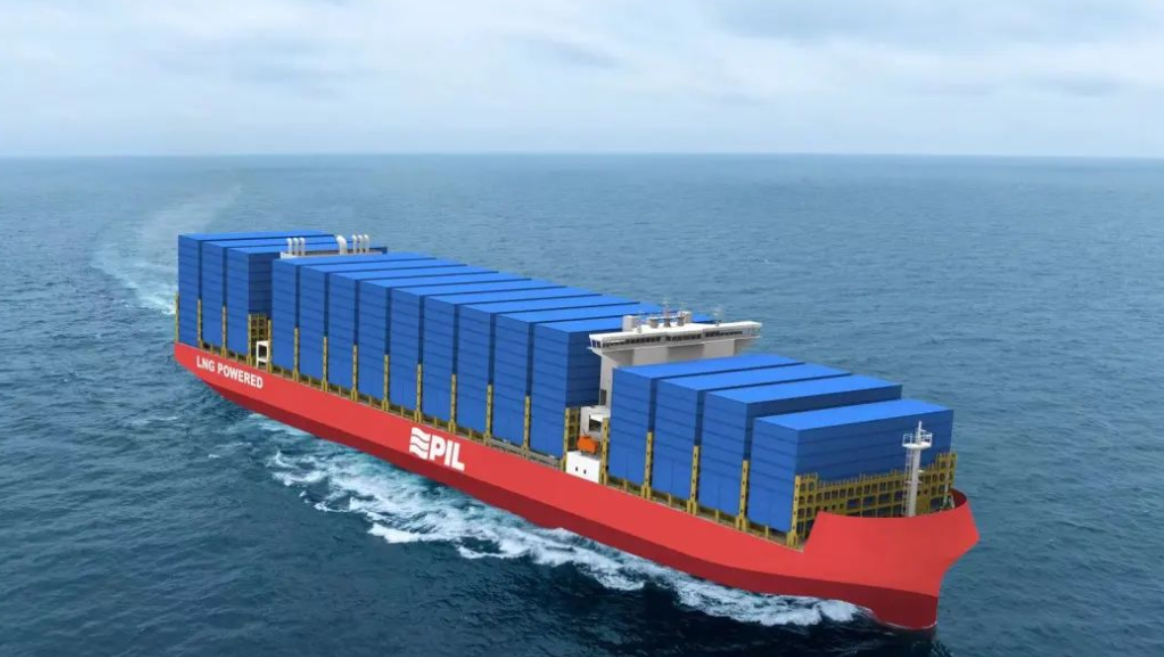
Notably, the inclusion of a scrubbing tower enables shipowners to flexibly switch fuel types based on market conditions, significantly enhancing operational flexibility. This series of innovative designs endows the vessel with low comprehensive energy consumption, high speed performance, and outstanding environmental sustainability.
Hudong-Zhonghua Shipbuilding stated that during the construction of the second vessel, it will focus on two key dimensions: construction efficiency and construction quality. The company will solidify the foundation for rhythmic production, ensure scientific coordination between processes, and promote the timely and high-quality completion of critical milestones.