


According to the latest monthly report from AXSRoRo, the once-feverish order surge for new PCTCs (pure car and track carrier) has cooled significantly, with the PCTC market now facing widespread concerns over excess capacity.
Following four consecutive years of record-breaking order surges, new PCTC orders plummeted to their lowest level in years in 2025, while vessel deliveries reached a historic peak of 75 units during the same period. AXSRoRo data indicates that 133 PCTCs were delivered over the past three years, totaling nearly 1 million Car Equivalent Units (CEU) in capacity. An additional 67 vessels are expected to be delivered this year, remaining close to historical highs.
AXSRoRo noted: “The PCTC market has entered a phase where fleet expansion is increasingly outpacing trade growth.” It warned that “the current rate of vessel capacity growth far exceeds the growth rate of global automobile trade volumes.”
The consultancy emphasized that while China’s auto exports continue to post robust double-digit growth, this expansion is reshaping rather than expanding the global automotive trade landscape. The report stated: “The growth in China’s auto exports is replacing shipments from traditional automotive manufacturing nations.”
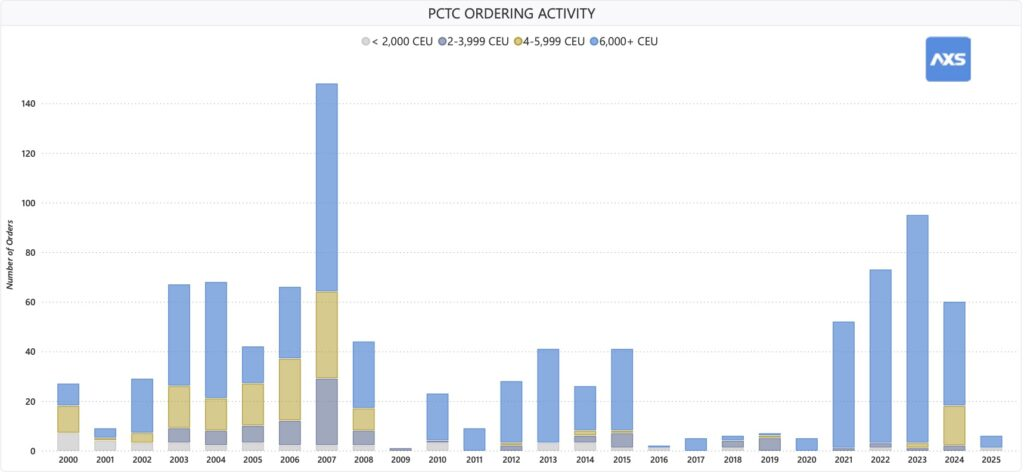
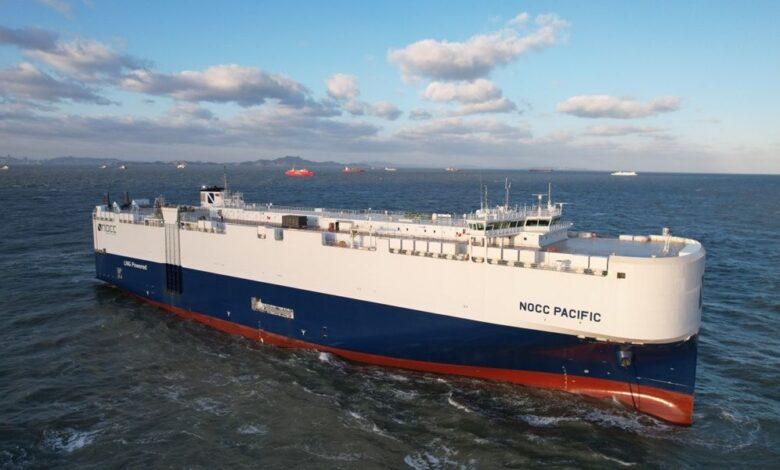
Chinese shipyards dominate the current PCTC fleet construction, accounting for nearly 80% of the 276 PCTCs delivered or scheduled for delivery between 2023 and 2028. With global PCTC orders still representing over one-fifth of total shipping capacity, the industry faces increasing pressure to balance supply and demand.
AXSRoRo warned: “Persistently sluggish scrapping activity is exacerbating the imbalance between supply and demand. Unless scrap volumes rebound significantly, vessel utilization rates and profitability levels are likely to face downward pressure.”
AXSRoRo predicts that after years of aggressive investment by established operators and new entrants, the next phase of the PCTC market “may no longer be one of further expansion, but rather an adjustment period.”