


Recently, VesselsValue released its latest ranking of the world’s top ten shipowning nations for 2026. This list updates the asset value of active and under-construction fleets across countries and regions, using beneficial ownership as the statistical dimension.
The rankings reveal significant shifts among the world’s top ten shipowning nations in 2026: Switzerland surged to sixth place, driven by Mediterranean Shipping Company (MSC)‘s rapid fleet expansion. Hong Kong and Taiwan, China entered the top ten for the first time, replacing Norway’s previous positions. Over the past year, the U.S. cruise industry and Singapore’s diversification of their fleets propelled robust growth in the asset value of both nations’ shipping fleets.
The top five nations in 2026 remain unchanged from last year:
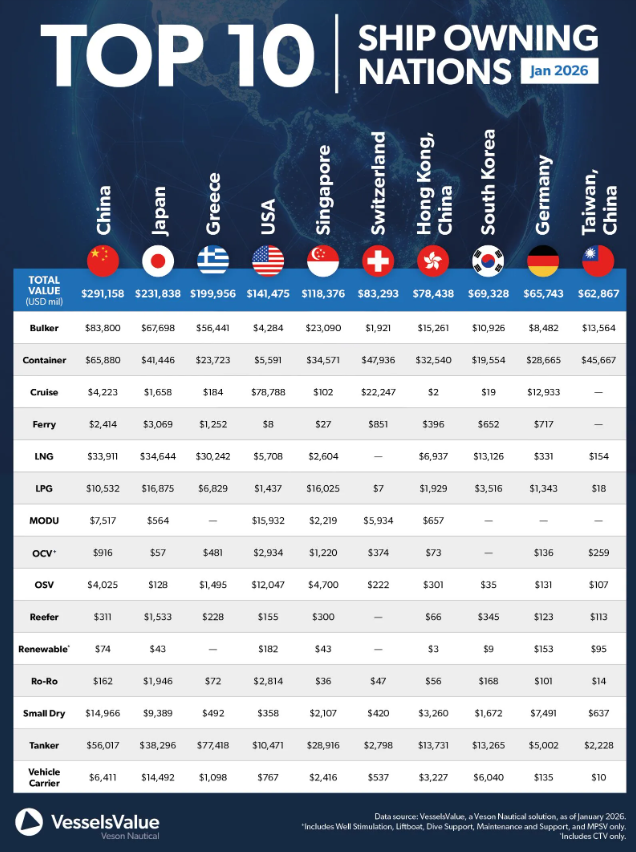
Data indicates that China ranks first globally in both fleet value and vessel count, with a total fleet value of approximately $291.1 billion corresponding to 9,375 vessels. This represents a year-on-year increase of about 4% compared to the $255 billion recorded in 2025. China possesses the world’s most valuable fleets in bulk carriers, container ships, and small dry bulk carriers, with asset values for these vessel types all experiencing growth over the past year.
The asset value of older containers has also seen a significant increase, with the value of a 15-year-old 2,500 TEU container ship rising from $27 million to $31 million, representing an 18% year-on-year increase.
Japan ranks second with a fleet value of approximately $231.8 billion, remaining largely unchanged from 2025.
Greece ranks third with a fleet value of approximately $199.9 billion and also holds third place based on the number of vessels.
The United States ranked fourth with a fleet value of approximately $141.4 billion, an increase of over $25 billion year-on-year.
Singapore ranks fifth with a fleet value of $118.4 billion and fourth based on the number of vessels.
Although the top five rankings remained unchanged, the latter half of the top ten saw significant shifts:
Switzerland ranked sixth with a fleet value of approximately $83 billion, marking a year-on-year increase of about 22%. This represents another leap forward following its return to the top ten shipowning nations in 2025 (ninth place).
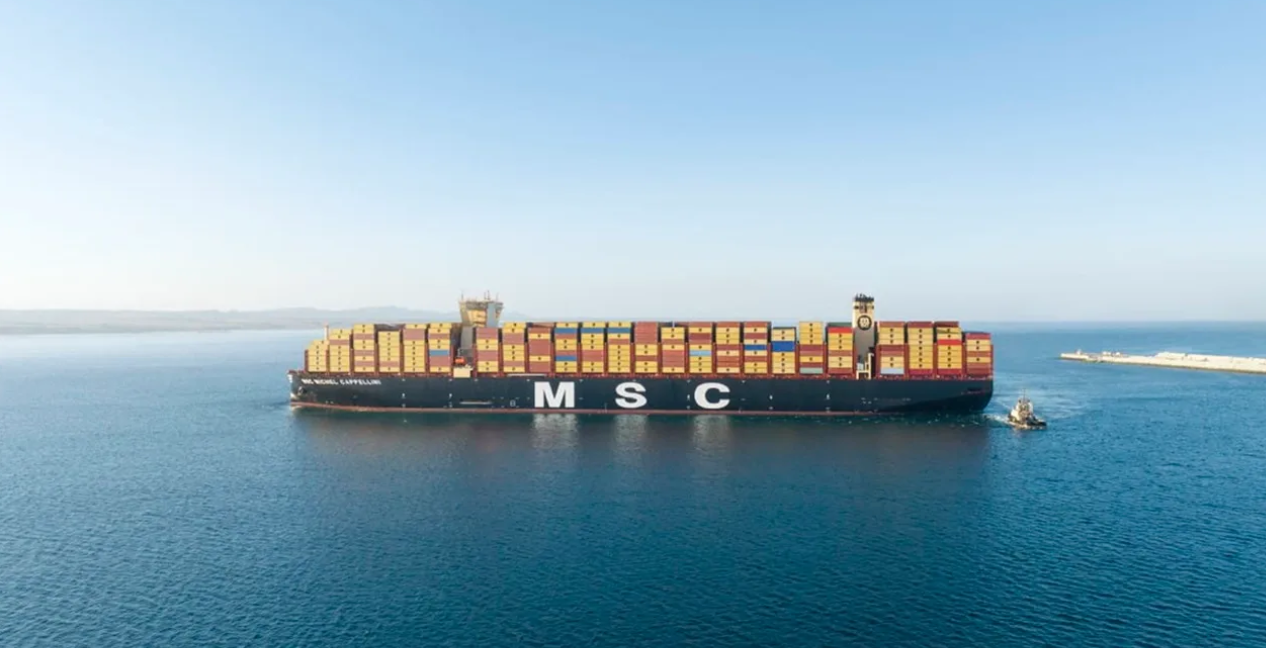
VesselsValue notes that container ships were the key driver behind Switzerland’s ranking surge, accounting for over half of the Swiss fleet’s value at $47.9 billion; the cruise sector also made a significant contribution at $22.2 billion. Both major drivers are linked to MSC. By 2025, MSC has expanded its existing order book with 58 additional secondhand vessels and 36 newbuild orders. All newbuild orders are for large container ships, exclusively constructed by Chinese shipyards with delivery scheduled between 2027 and 2029.
Hong Kong, China made its debut in the top ten, ranking seventh with a fleet value of approximately $78 billion. The region’s portfolio spans multiple sectors and is highly diversified, with container ships accounting for the largest share at around $33 billion.
South Korea ranked eighth with a fleet value of approximately $69 billion, slipping two places from its 2025 position.
Germany ranks ninth with a fleet value of approximately $65.7 billion. The German fleet has been declining in global rankings for several consecutive years but is projected to climb one position by 2026. Historically centered on container ships, Germany currently operates the world’s second-largest container fleet with 586 vessels. With a container fleet value of $29 billion, Germany ranks sixth globally in this segment.
For the first time, Taiwan, China has entered the top ten, ranking tenth with a fleet value of approximately $63 billion and 1,297 vessels, displacing traditional shipping powerhouses like Norway. In the container ship sector, Taiwan, China ranks third globally with a fleet value of $46 billion, but sixth in terms of vessel count, highlighting the modernization of its fleet. In 2025, Taiwanese shipowners placed orders for a total of 63 container ships.