

On March 13, the first WinGD 6X62DF-M-1.0 HPSCR methanol dual-fuel main engine, manufactured by Dalian Marine Diesel Engine Co., Ltd. (DMD), a subsidiary of CSSC Engine Co., Ltd. (CSE), successfully passed type approval tests and bench tests under the joint supervision of eight classification societies, including ABS, BV, CCS and DNV.
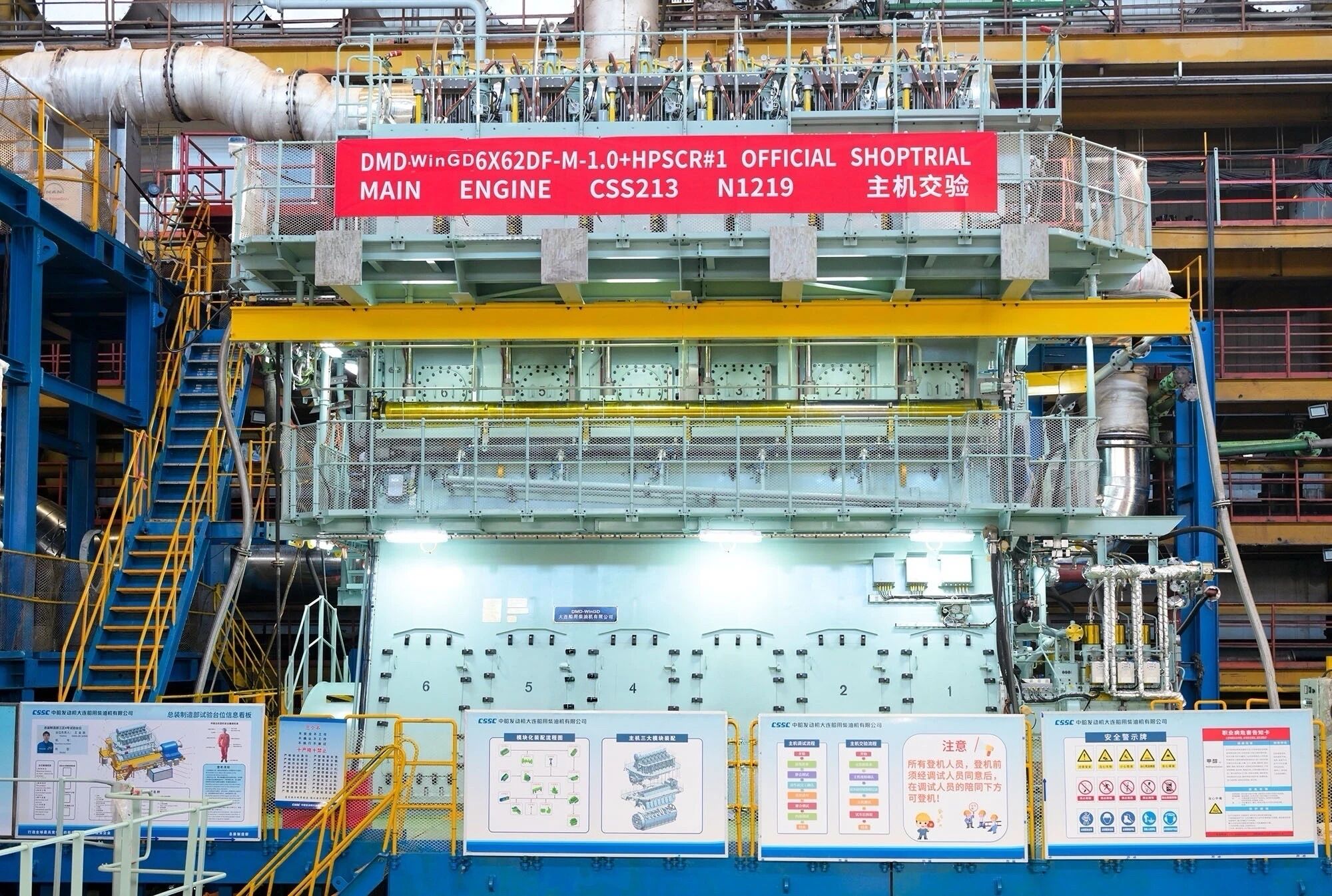
The 6X62DF-M-1.0 methanol dual-fuel engine delivered in this shipment has a rated power of 11,100 kW and a maximum speed of 77 rpm. It is a medium-bore methanol engine and will be installed on an 114,000 DWT Aframax oil tanker being built by COSCO Shipping Heavy Industry (Yangzhou) Co., Ltd. for COSCO SHIPPING Energy Transportation Co., Ltd.
This engine features a state-of-the-art control system that meets the most stringent international emissions regulations. Building upon a proven and reliable conventional design, the methanol-related systems have undergone extensive optimization and integrated innovation.
Equipped with a methanol fuel supply system, a new actuator oil system, a water-flushing system, and a next-generation WiCE control system, it ensures a stable fuel supply, precise injection, and safe operation. In particular, the methanol piping features a double-wall design and is equipped with liquid level switches, as well as methanol vapor sensors located at the bottom of the piston and along the return line. This creates a multi-layered active safety protection system that effectively prevents the risks of leakage, explosion, and poisoning, comprehensively ensuring the engine’s reliability, economy, and environmental performance.
DMD stated that as the global shipping industry faces increasingly stringent environmental requirements, methanol-powered engines, with their advantages of being clean, low-carbon, and adaptable to existing ship retrofits, are considered one of the most promising marine power solutions for the next decade, boasting a broad market prospect. Since delivering China’s first methanol dual-fuel engine in May 2024, DMD has focused on industrial transformation and upgrading, continuously overcoming various technical challenges, and constantly improving its production and testing capabilities for methanol dual-fuel engines to enhance its market competitiveness. In the future, the company will continue to strengthen its investment in technological innovation, establish advantages in the field of marine green power, and contribute to the high-quality and sustainable development of the global shipping industry.