


Following several rounds of intensive new ship orders, the global shipyard order backlog has climbed to its highest level in 15 years.
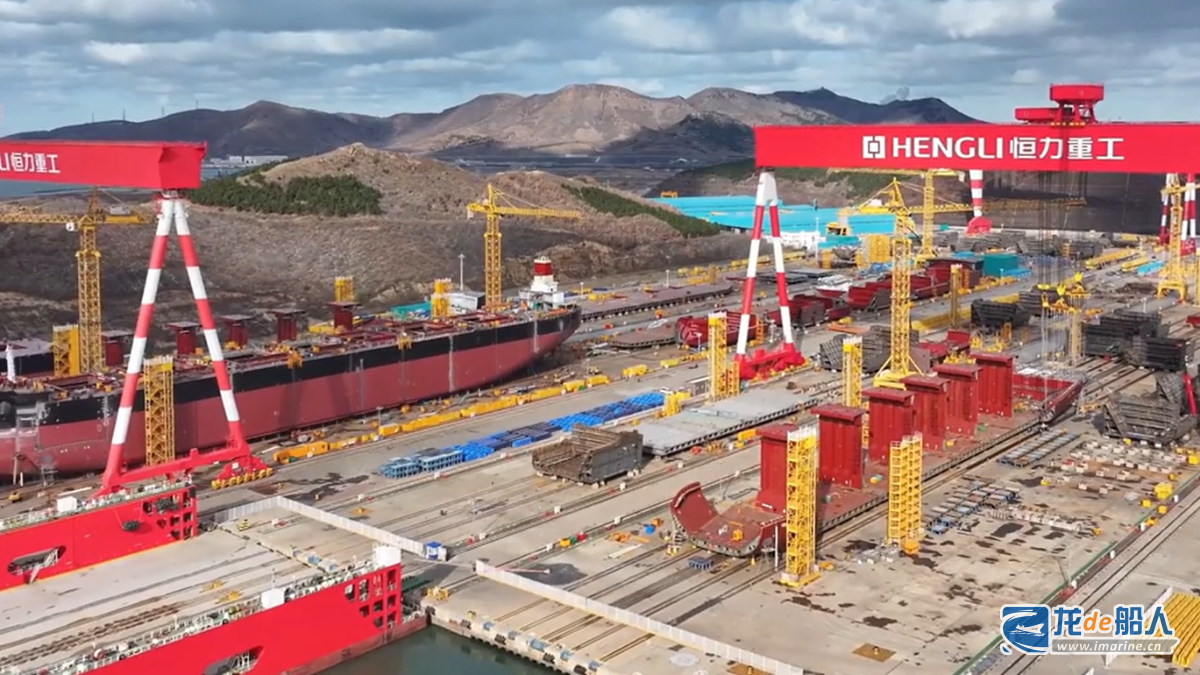
Although the growth momentum in the new shipbuilding market is expected to slow down in 2025, it will still remain well above historical averages. According to data from Clarkson’s Global Fleet Monitor report, as of early December 2025, the global order book for new ships totaled 7,560 vessels, amounting to 316 million gross tons, reaching a new high since 2010 in terms of gross tonnage.
From January to November 2025, new building deliveries reached 70 million deadweight tons, representing a year-on-year increase of approximately 7%.
According to Xclusiv Shipbrokers’ analysis of data, as of the end of November, the order book for bulk carriers stood at 117 million deadweight tons, representing approximately 11% of the total capacity of the active fleet. By comparison, this ratio was around 10% during the same period in 2024.
The tanker sector’s order backlog stands at 119 million deadweight tons, accounting for 17% of the active fleet—up from 14% in November 2024.
The container ship sector, as one of the primary drivers of newbuilding activity in recent years, has seen its order volume continue to grow. The current order backlog stands at 11 million TEUs, accounting for approximately 33% of the active fleet, compared to just 26% during the same period last year.
For the LNG carrier sector, Xclusiv estimates the order backlog at 51 million cubic meters, representing approximately 39% of the active fleet. This proportion has decreased from 52% during the same period in 2024.
Finally, the order backlog for liquefied petroleum gas (LPG) carriers stands at 19 million cubic meters, accounting for 37% of the active fleet—down from 40% during the same period last year.
2025 order volume decline, excluding container ships
The Clarkson report indicates that 1,919 new vessels were contracted between January and November 2025, totaling 88 million deadweight tons. This figure represents a 24% increase over the average of the past decade, demonstrating that despite a decline from last year’s peak, market demand for newbuildings remains robust.
Veson Nautical’s year-end report indicates that new building orders accelerated in the second half of 2025. However, overall order volumes remain below previous peak levels, with the exception of the container ship sector.
According to Veson Nautical, new bulk carrier orders for 2025 totaled 396 vessels, marking the lowest annual figure since 2019. Despite orders rising from 169 in the first half to 227 in the second half, this trend could not be reversed. The agency analyzed: “Amid macroeconomic uncertainty, weak freight rate expectations, and unclear profit prospects, shipowners have adopted a cautious investment stance, leading to sluggish newbuilding orders.”
According to Veson Nautical, new bulk carrier orders for 2025 totaled 396 vessels, marking the lowest annual figure since 2019. Despite orders rising from 169 in the first half to 227 in the second half, this trend could not be reversed. The agency analyzed: “Amid macroeconomic uncertainty, weak freight rate expectations, and unclear profit prospects, shipowners have adopted a cautious investment stance, leading to sluggish newbuilding orders.”
Orders for oil tankers fell 43% year-on-year to 291 vessels, a significant contraction from the 511 orders placed in 2024. Veson Nautical attributes this decline to constrained shipyard capacity, extended delivery cycles extending into 2028-2029, and increasingly cautious shipowner sentiment following rapid fleet expansion in recent years.
In contrast, container ship orders surged by 42% year-on-year, with new ship orders projected to reach approximately 600 vessels by 2025—far exceeding the 413 vessels ordered in 2024.
Orders for gas carriers have plummeted significantly. According to Veson Nautical data, liquefied petroleum gas (LPG) carrier orders for 2025 stand at just 44 vessels, a 70% plunge from 148 in 2024. Orders for large liquefied natural gas (LNG) carriers fell 48% year-on-year to just 35 vessels, down from 69 in 2024. Meanwhile, orders for small LNG carriers remained stable at 26 vessels, essentially unchanged from 25 in 2024.