

German shipowner Hartmann Group has partnered with fellow German company Heidelberg Materials’ Nordic division to jointly develop a new methanol dual-fuel powered cement carrier. The two companies have also placed a contract with a Chinese shipyard to build 1+1 new vessels of this type.
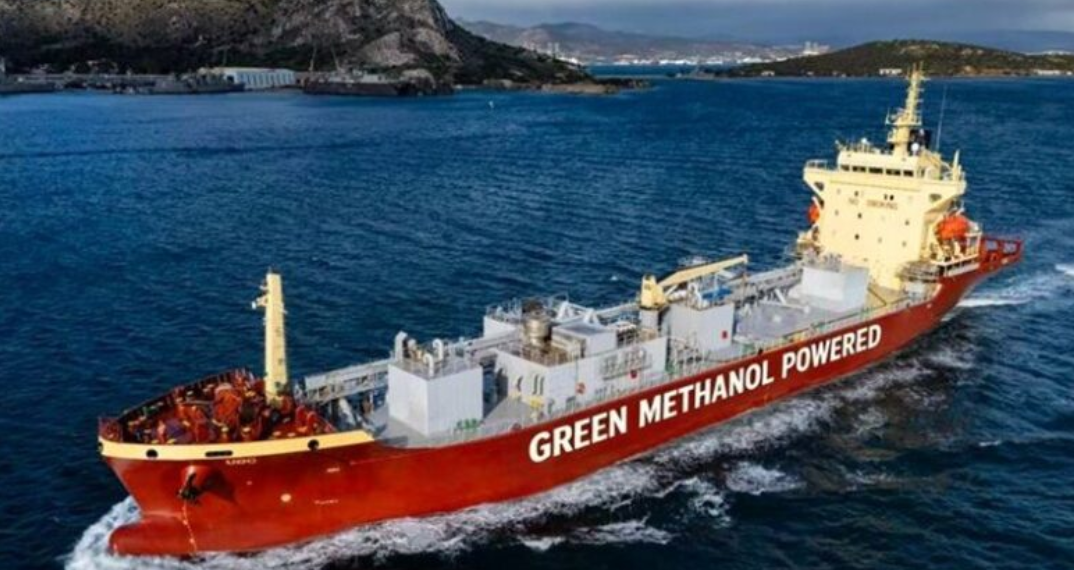
According to Lloyd’s List, the order was secured by Zhenjiang Shipyard in Jiangsu Province and is expected to enter service in early 2028. The vessels will operate under a 10-year charter agreement for Heidelberg Materials Group, marking a significant milestone in decarbonizing Norway’s coastal cement transport operations.
The new vessel is specifically designed for Norwegian coastal shipping, primarily for cement transport. Hartmann Reederei, a subsidiary of the Hartmann Group, is responsible for the vessel’s design, while United Bulk Carriers USA, a subsidiary of the Hartmann Group, is responsible for operations; InterMaritime Shipmanagement, formerly a Hartmann Group subsidiary, is responsible for technical management. All three companies have a long history of collaboration with Heidelberg Materials Group in the field of low-emission shipping projects.
The new vessel has a deadweight capacity of approximately 9,000 tons, representing an increase of about 1,000 tons over its replacement vessel. Through optimized hull structure and propulsion configuration, the new vessel achieves significantly reduced energy consumption. Featuring a diesel-green methanol dual-fuel design, it is projected to cut carbon dioxide emissions by approximately 80% compared to traditional fossil fuel-powered vessels, equivalent to a maximum annual reduction of 6,000 tons.
Heidelberg Materials representatives stated: “This contract underscores our long-term commitment to clean transportation. The new vessels will reduce emissions by 80% while enhancing overall transport efficiency. The 10-year agreement demonstrates our determination to support innovation and build enduring partnerships. Our dedication to investing in environmentally friendly technologies to reduce shipping’s carbon footprint exemplifies how collaboration drives innovation in low-emission transportation.”
Notably, the Norwegian Nitrogen Oxides Fund (NOx Fund) has approved NOK 60 million (approximately US$6 million) in funding for this project. Tommy Johnsen, CEO of the fund, stated: This grant is crucial for ensuring the economic viability of the new methanol dual-fuel cement carriers. These vessels represent a tangible outcome of public-private collaboration and will set a new benchmark for low-emission bulk transport.”