


In November, global new ship orders saw a significant month-on-month increase, though they still lagged slightly behind the same period last year. The year-to-date order volume continued its downward trend. Notably, Chinese shipyards maintained their position as the global leader in both monthly and cumulative orders!
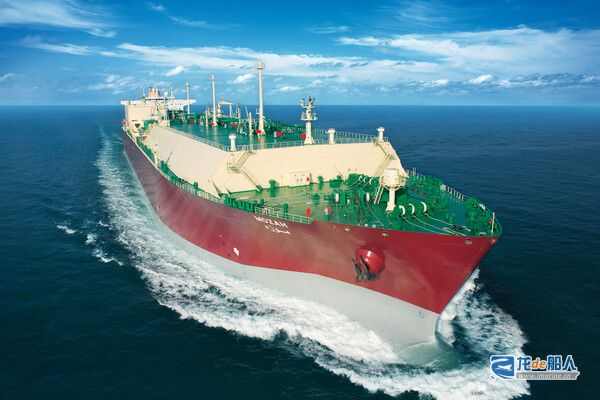
According to Clarkson data released on December 5, global new ship orders in November totaled 5.13 million compensated gross tons (CGT) across 152 vessels. Measured in CGT, this represents a slight 1% decrease compared to the same period last year (5.17 million CGT) and a 72% increase month-on-month (from 2.99 million CGT).
By country, Chinese shipbuilders secured new orders totaling 2.58 million CGT (100 vessels), capturing a 50% market share to rank first. South Korean shipbuilders followed closely with new orders of 1.97 million CGT (40 vessels), accounting for a 38% market share.
The cumulative order volume for the year has experienced a significant decline. Data indicates that from January to November this year, the global total for new ship orders reached 44.99 million CGT (1,627 vessels), representing a 37% decrease compared to the same period last year (71.52 million CGT, 2,994 vessels). During this period, Chinese shipyards secured orders totaling 26.64 million CGT (1,067 vessels), accounting for a 59% market share. Their order volume decreased by 47% year-on-year, maintaining the top position. South Korean shipyards secured orders totaling 10.03 million CGT (223 vessels), representing a 22% market share. Their order volume decreased by 5% year-on-year, ranking second.
As of the end of November, the global new shipbuilding order backlog stood at 168.4 million CGT, a decrease of 1.2 million CGT month-on-month. By country, Chinese shipbuilders held an order backlog of 103.69 million CGT, an increase of 8.48 million CGT compared to the same period last year, but a decrease of 10,000 compensated gross tons month-on-month, maintaining their leading market share at 62%. South Korean shipbuilders held an order backlog of 33.76 million CGT, a decrease of 3.66 million CGT compared to the same period last year, and a decrease of 420,000 CGT month-on-month, ranking second with a market share of 20%.
As of the end of November, the Clarkson Newbuilding Price Index stood at 184.33, marking a slight decrease of 0.54 points from the previous month (184.87) and maintaining a stable trend. Compared to the level in November 2020, it has risen by 47%, indicating that the upward trend in ship prices continues.
By vessel type, the newbuilding price for 174,000 m³-class large liquefied natural gas (LNG) carriers stood at approximately $248 million, unchanged from the previous month; The newbuilding price for Very Large Crude Carriers (VLCCs) stands at approximately $127.5 million, up $1.5 million from October; The newbuilding price for Very Large Container Ships (22,000 TEU-24,000 TEU) is about $264 million, down $2.5 million from October.
Market analysis indicates that the reasons for the continued high cost of new ships include: special design requirements to meet decarbonization regulations, fuel transition (ammonia, LNG, methanol), engines, desulfurization devices, and the installation of low-carbon equipment. Due to the significantly higher unit price of equipment compared to traditional ship types, the “fixed ship price” structure has been maintained.