


Offshore support vessels (OSVs) ordered in 2023-2024 will begin to be delivered in 2026, but market uncertainty, high new ship construction costs and tight shipyard capacity have led to a significant contraction in new ship orders in 2025.
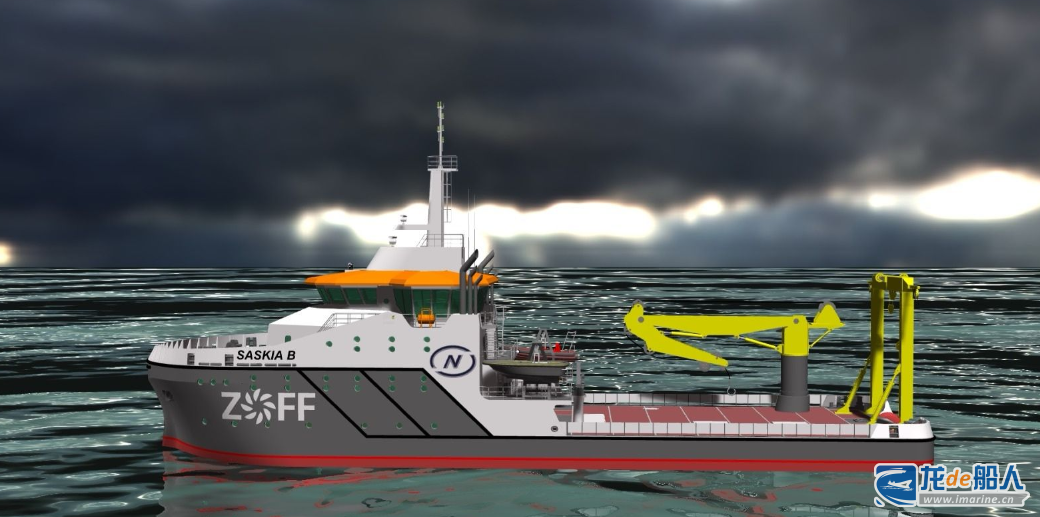
As a result, new OSV capacity additions will be limited in the next 12 months, new ship orders will be sluggish, and the market will continue to be under pressure. Despite the aging of the global fleet of Platform Supply Vessels (PSVs) and Anchored Hoisting Tugs (AHTSs), the market still faces a tight capacity situation.
According to recent data disclosed by Tidewater, the global fleet currently comprises 1,554 PSVs, with 1,280 vessels in active service, representing an 82% utilization rate. The AHTS fleet totals 1,256 vessels, with 1,074 in active service, achieving an 86% utilization rate.
Among these, the average age of active PSVs stands at 17.5 years, while AHTS vessels average 16.4 years. The situation for idle fleets is even more concerning—PSVs average 27.5 years and AHTS vessels average 23.2 years. Should these vessels be returned to service, they would require significant overhaul and upgrades.
New ship orders decline
According to VesselsValue’s “2025 OSV Newbuild and Second-hand Ship Transactions Annual Report” published by Veson Nautical, in 2025, a total of 37 PSVs, AHTSs, and high-speed supply/crew transport vessels were ordered, with 13, 17, and 7 vessels respectively, representing a 58% year-on-year decrease. In 2024, 88 new ship orders were placed, including 49 PSVs, 18 AHTSs, and 21 high-speed supply/crew transport vessels. Taking PSVs alone, a total of only 13 new vessels were ordered in 2025, a sharp drop of 73% year-on-year.
VesselsValue data indicates that global shipyards currently hold approximately 247 OSV orders (including those under construction). The aforementioned report does not cover offshore construction vessels (OCVs), which include: accommodation vessels, cable-laying vessels, crane vessels, barges, floating accommodation platforms, diving support vessels, multi-purpose support vessels, jack-up rigs, and multi-purpose vessels. Currently, around 180 OCVs are either ordered or under construction.
New shipbuilding costs remain high
In 2025, newbuilding prices for offshore support vessels (OSVs) continued to climb. Market quotations for 5,200 DWT platform supply vessels (PSVs) reached $60 million, marking a 7.1% year-on-year increase. Quotations for 24,000-horsepower anchor handling tug supply vessels (AHTS) rose to $82 million, reflecting a 6.8% growth.
By order region, Southeast Asia accounted for 54% of the total OSV orders in 2025 with 20 new vessels. Singapore shipyards and Malaysian shipyards secured 14 and 6 vessels respectively.
Brazil led the market in 2024 with orders for 18 OSVs, but orders for 2025 are projected to drop to just 4 vessels due to delays in Petrobras’ bidding process.
Additionally, the UK’s implementation of a 78% energy profits tax and ban on new North Sea licenses has cast a shadow over the region’s short-term outlook, with drilling activity plummeting to historic lows.
The market faces multiple downward pressures
In 2025, global annual investment in offshore oil and gas development fell to $94 billion, the lowest level since 2022. However, the market expects investment commitments to rebound, potentially increasing to $103 billion in 2026 and $170 billion in 2027. This is a positive forecast for offshore drilling contractors and OSV owners.
Analysis indicates that the key factors behind the slowdown in the offshore oil and gas industry’s growth rate are rising costs and falling oil prices. Over the past two years, the monthly average price of Brent crude has declined by approximately 21%, dropping from $86 per barrel in August 2023 to $68 per barrel in August 2025.
In 2026, the offshore oil and gas industry may face increased downward pressure. As the U.S. moves to overthrow the Maduro government and attempts to seize control of Venezuela’s state-owned oil company (PDVSA), Brent crude prices may face increased downward pressure—with the benchmark oil grade trading around $60 per barrel in early 2026.
President Trump, who campaigned on lowering consumer energy costs, aims to push Brent crude oil down to $50 per barrel, a move that could dampen oil developers’ willingness to invest.