


Interested in having a new cruise ship built? You might have to wait more than a decade.
Given cruise operators’ optimistic outlook on market demand and record-high profit levels, the new cruise ship construction market has accumulated a massive order backlog. The International Cruise Association revealed that global shipyards currently hold a total of 89 cruise ship orders, representing an investment of up to $99.8 billion. However, because the world’s major cruise shipyards are highly concentrated in Europe and face capacity constraints, this has resulted in an exceptionally long order backlog, with the furthest delivery dates extending to 2039.
Bud Darr, CEO of the International Cruise Association, said, “For large cruise ships, which take up to four years to build, the shipyards of the world’s major cruise shipbuilders are essentially fully booked through 2036.”
In particular, the contract for the construction of three large cruise ships—finalized earlier this year between the Italian shipbuilding group Fincantieri and Princess Cruises, a subsidiary of the Carnival Corporation—has delivery dates extending as far as 2039. Thanks to this contract, the Carnival Corporation has become the shipowner with the longest order backlog for cruise ships.
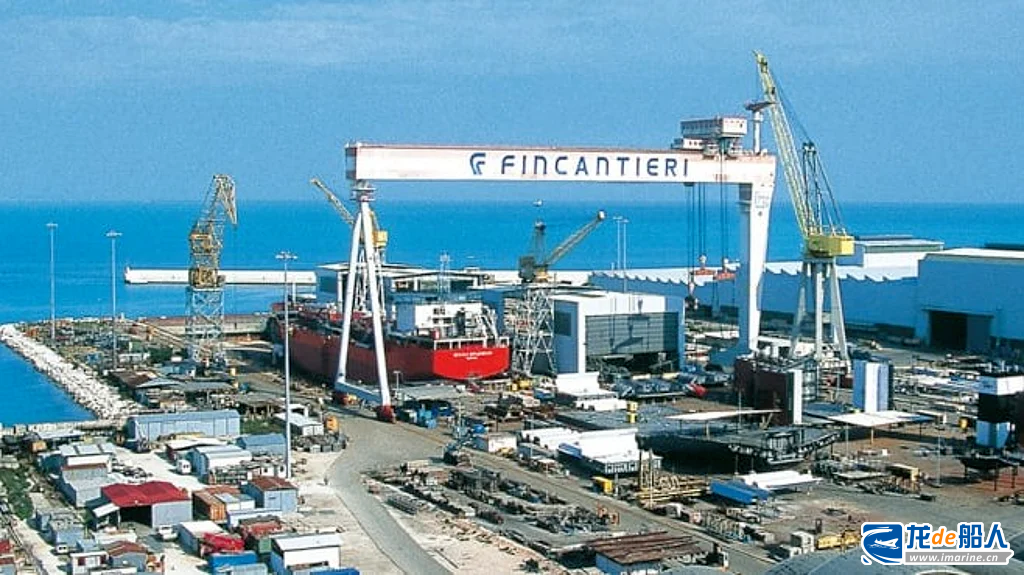
In 2026, cruise line operators were very active in placing orders for new ships. Industry data shows that cruise line operators have confirmed orders for a total of 16 cruise ships this year. Fincantieri, Chantiers de l’Atlantique, Meyer Turku, and Waigaoqiao Shipbuilding—a subsidiary of China State Shipbuilding Corporation—have all publicly announced new orders, with the vast majority of these orders awarded to Fincantieri.
Optimism is fueling a surge in new ship orders. Bud Darr notes: “Frequent announcements of new ship orders in the cruise industry are not limited to cruise operators themselves. If the capital and credit markets do not share the cruise operators’ optimistic market outlook, shipowners’ new ship orders cannot truly be finalized and take effect. Therefore, this is an exciting phase for the cruise industry—one that not only focuses on the present but also offers a clear view of future prospects.”
A Fincantieri executive stated: “The current strong demand for new cruise ships is not a ‘temporary spike.’ The Cruise Lines International Association forecasts that passenger demand will grow at an annual rate of 4 percent. Driven by this demand, shipowners are committed to finding new ship designs and are scrambling to secure shipyard slots for the coming years. Over the past year, Fincantieri has secured a large number of cruise ship orders, but demand has not yet peaked.”
Although demand is the primary driver of order growth, Fincantieri executives also noted: “Cruise ships built in the early 1990s are now in need of replacement, and shipowners are inclined to replace older vessels with new ships that are more energy-efficient and capable of running on alternative fuels. At the same time, the design of new ships must better align with the preferences of today’s passengers. From the passengers’ perspective, ships need to offer more eye-catching and memorable experiences.”
With cruise ship owners placing orders through 2039, Fincantieri executives have expressed concern that this trend will result in ongoing capacity constraints in the cruise shipbuilding sector. To alleviate these capacity constraints, major European cruise shipyards, including Fincantieri, are accelerating the modernization and upgrading of their facilities to increase shipbuilding capacity.
Although production capacity constraints have affected shipyards’ ability to secure orders, Bud Darr believes: “A few large cruise shipyards in Europe are operating at full capacity, and the impact of their production bottlenecks is a mixed blessing. On the one hand, while capacity constraints mean that the growth in supply cannot keep pace with potential demand, on the other hand, these constraints help prevent a severe imbalance between supply and demand.”