


Ferguson Marine, the UK state-owned shipbuilder currently mired in a financial crisis, has entered a period of business transformation and announced a voluntary redundancy scheme. Up to 70 employees—representing approximately one-quarter of the workforce—are expected to leave the company.
As the last remaining commercial shipyard on the Lower Clyde in Port Glasgow, Scotland, Ferguson Marine has long struggled to maintain operations and alleviate financial pressure.
The company currently faces two critical operational challenges. First, it is grappling with severe delays regarding the UK’s first order for LNG dual-fuel ferries—commissioned by Scottish island ferry operator CalMac and its parent company, CMAL. Although originally scheduled for delivery in 2018, the lead vessel was not delivered until 2024—after a six-year delay—and was subsequently found to have technical faults. Second, the project delays have tarnished the shipyard’s reputation, making it difficult to secure new shipbuilding orders.
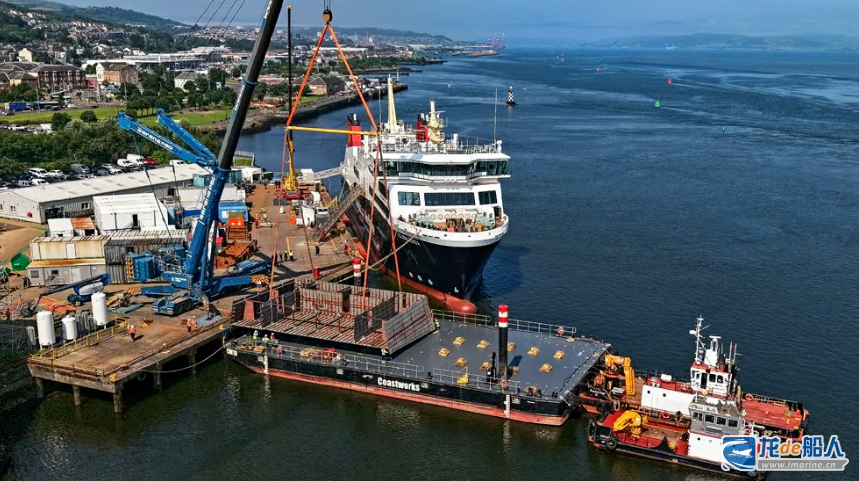
According to the latest shipbuilding progress report from Ferguson Marine, the second LNG dual-fuel ferry, “Glen Rosa”, has—after significant delays—entered the dry-docking phase as of mid-June 2026 for operations including the cleaning of the hull, thrusters, and propellers. The shipbuilder stated that the current priority for “Glen Rosa” is the completion of internal outfitting; sea trials and final delivery are scheduled for the fourth quarter of 2026, marking a delay of eight years beyond the original delivery date.
Notably, the vessel’s prolonged construction period has resulted in corrosion of the stern tube and the deterioration and peeling of the hull coating, thereby extending the duration of this second dry-docking maintenance cycle.
Representatives from Ferguson Marine stated: “Our immediate priority is ensuring the safe delivery of the “Glen Rosa” in the fourth quarter of 2026. As we are set to complete the block construction for the UK’s Type 26 frigates by July 2026—a milestone that would otherwise lead to capacity constraints—we are collaborating with the Scottish Government to advance negotiations on new contracts. Meanwhile, we are making every effort to ensure the shipyard’s operational structure can provide stable, long-term employment once these new shipbuilding projects commence.”
Ferguson Marine noted that the projects for these new vessels are currently undergoing due diligence and have not yet been formally finalized. The company hopes that the planned workforce reductions will allow it to right-size operations and optimize its internal skills mix, ensuring the yard is ready to launch production immediately once the contracts are secured.