


Following the announcement that it had secured its first letter of intent, the Gunsan Shipyard—a facility closely watched by South Korea’s shipbuilding industry—has released further significant news: with the backing of its new owner, the shipyard is steadily getting back on track.
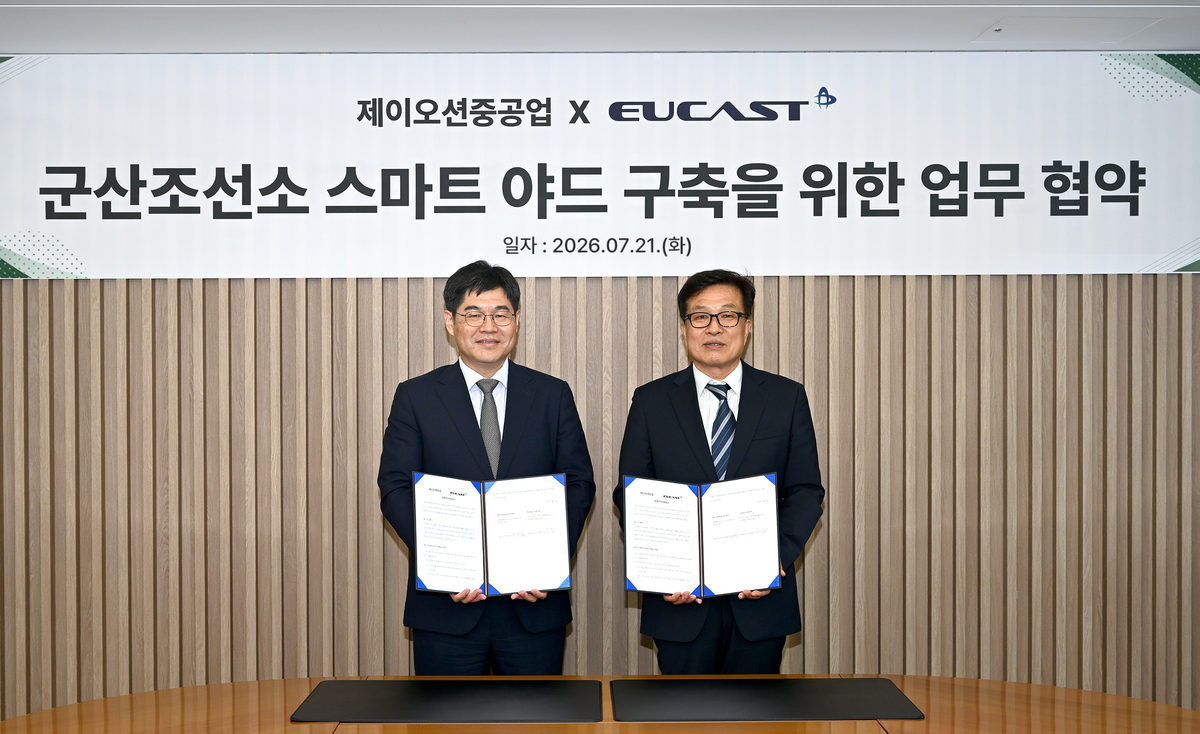
On July 21, JE Ocean Heavy Industries announced the signing of a Memorandum of Understanding (MoU) with Ucast, a South Korean private 5G network service provider, for the “smart shipyard construction and 5G-based physical AI solution implementation” at the Gunsan Shipyard, thereby officially launching the shipyard’s smart transformation project.
JE Ocean Heavy Industries is a new company established with funding from Ecoprime Marine Pacific—the largest shareholder of the South Korean mid-sized shipbuilder HJ Heavy Industries—for the purpose of acquiring the Gunsan Shipyard.
This collaboration focuses on transforming the Gunsan Shipyard into a next-generation smart shipyard by combining JE Ocean Heavy Industries’ shipbuilding and offshore engineering capabilities with Ucast’s technologies—specifically private 5G, AI-driven all-encompassing transformation (AX), IoT, and robotics—thereby enhancing production efficiency and safety while jointly participating in the South Korean government’s AX pilot project.
Under the agreement, JE Ocean Heavy Industries will provide a demonstration site, production facilities, and shipbuilding process data at its Gunsan shipyard to establish a test platform for smart shipyard construction technologies. Ucast will be responsible for the project’s overall planning and, while deploying the shipyard’s dedicated 5G network, will simultaneously build three major digital systems: a 3D digital twin platform for real-time shipyard-wide management and control, an asset management system based on high-reliability IoT sensors, and a paperless operations management platform.
At the same time, the partners have decided to strengthen the shipyard’s safety management system by establishing an integrated control system that links AI monitoring with IoT sensors—which track gas levels and environmental conditions—in confined spaces, thereby preventing major accidents. The project also plans to deploy industrial robots, collaborative robots, autonomous transport robots (AGVs and AMRs), and physical AI across welding, coating, and transport processes, ultimately achieving fully autonomous, intelligent manufacturing throughout the shipyard’s operations.
JE Ocean Heavy Industries stated: “This partnership marks the starting point for applying advanced dedicated 5G networks and physical AI technology at the Gunsan Shipyard… The company will accelerate its digital transformation to establish a benchmark for next-generation smart shipyards that combine production efficiency with safety.”
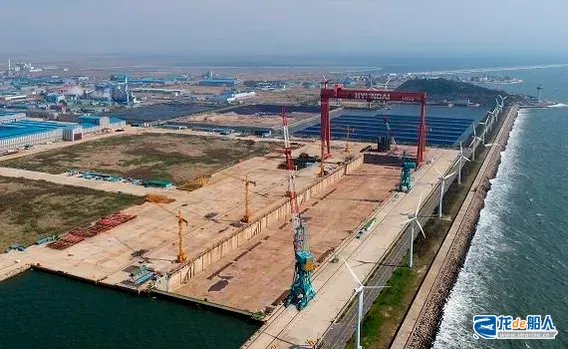
Data indicates that the Gunsan Shipyard was once the newest shipyard under HD Hyundai Heavy Industries; established during the shipping market’s peak prior to the global financial crisis with a total investment of 1.2 trillion won, it officially commenced operations in late 2009. As one of the world’s largest single shipyards at the time, it had the capacity to build approximately 20 vessels annually during its prime.
Due to the prolonged downturn in the global shipbuilding market, orders for the bulk carriers and container ships that formed the core of Gunsan Shipyard’s business shrank drastically; the yard was ultimately forced to halt production in 2017 and did not resume operations until October 2022. However, in the nearly four years since restarting, the shipyard has been limited to constructing hull sections, lacking the capability to build complete vessels or secure orders for them.
In March 2026, the Gunsan Shipyard saw a new dawn as HD Hyundai Heavy Industries signed an agreement with Ecoprime Marine Pacific regarding the acquisition of the shipyard’s assets. In June of the same year, HD Hyundai Heavy Industries formally sold the Gunsan Shipyard to JE Marine Heavy Industries for 780 billion KRW, marking the arrival of a new owner; the transaction encompasses all relevant tangible assets of the shipyard and is expected to be completed by December 31, 2026.
Shortly after the acquisition agreement was reached, JE Ocean Heavy Industries announced it had secured letters of intent for four 114,000 DWT crude/product oil tankers for the Gunsan shipyard. If finalized, this deal would mark the shipyard’s first new shipbuilding contract in nearly a decade, potentially signaling a genuine “restart” for the facility, which was once a leading player in the industry.
According to the plans of JE Ocean Heavy Industries, the Gunsan Shipyard is set to commence shipbuilding in early 2027—following the completion of facility overhauls and equipment upgrades—with the delivery of the first newly built vessel scheduled for 2028. The shipyard will be operated jointly with HJ Heavy Industries’ Yeongdo Shipyard, with the aim of establishing a world-class shipbuilding group.