


On October 23, the 80,000 DWT multi-purpose grain carrier “Guoli Hai,” built by COSCO Shipping Heavy Industry (Dalian) for COSCO Shipping Development, was officially named. The vessel, which is chartered and operated by COSCO Shipping Bulk, is the tenth ship in the series.
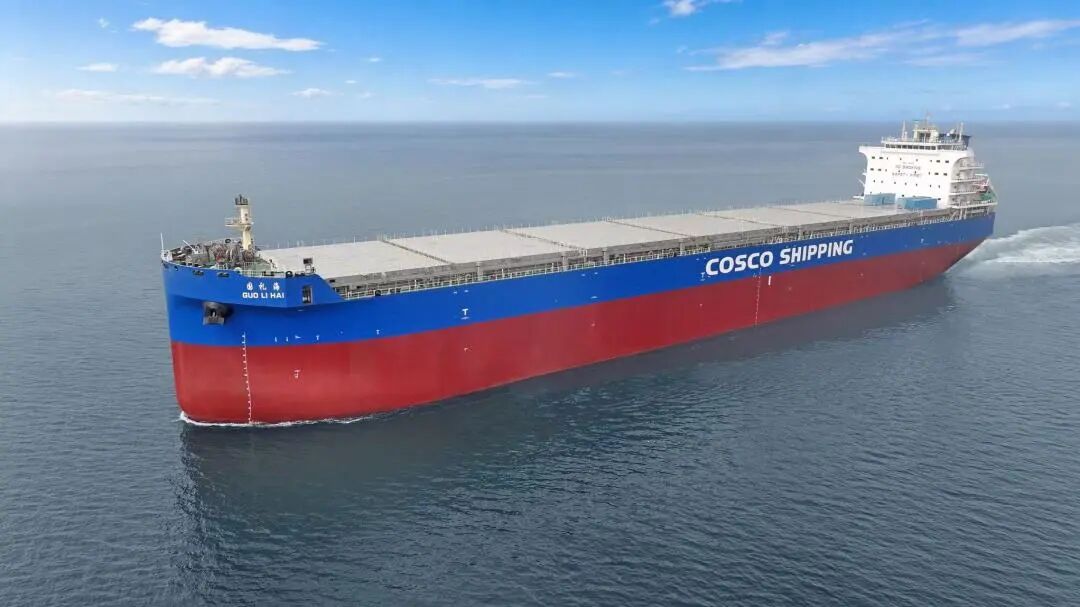
This series of multi-purpose grain carriers was independently developed and designed in China. It is the first multi-purpose vessel specifically customized for specialized grain transportation, with a total length of 229.95 meters, a beam of 32.26 meters, and a draft of 21 meters. The hull features a large-capacity, open-top box-type cargo hold design with no bilges or steps inside, making it fully suited for grain loading, unloading, and hold cleaning operations. It is capable of carrying various grains such as soybeans, corn, and wheat, as well as other dry bulk cargoes.
This vessel type features a low-drag hull design, is equipped with a high-efficiency propulsion system, and utilizes low-carbon construction processes. It is fitted with shaft generation, shore power, SCR, and exhaust gas cleaning systems, and comes standard with intelligent navigation assistance, real-time cargo monitoring, and a comprehensive safety management system covering the entire operation process. Additionally, the vessel can accommodate the transportation needs of various cargo types, including standard containers, wind power equipment, and heavy engineering machinery, and is suited for the “outbound containers, inbound dry bulk” two-way intermodal transport model, helping to enhance the overall operational efficiency of the route.
As the tenth vessel in this series, the design and construction of the “Guoli Hai” have fully incorporated the operational insights gained from the first nine sister vessels. The experience in optimizing seaworthiness and grain-carrying capabilities, accumulated through actual vessel operations, has been comprehensively integrated into every stage of the design and construction process. The reliability and adaptability of this vessel type have been thoroughly validated through large-scale operations.
The construction side has maintained a consistent pace of efficient delivery. Building upon standardized, mass production, this series of vessels has undergone continuous iteration and upgrades, while simultaneously establishing an end-to-end system covering construction schedule management, optimization of grain-compatible hold configurations, and coordination between port and shipping operations. This has enabled the simultaneous maturation of the vessel’s adaptability and the logistics operation model.