


Due to the conflict in the Middle East, QatarEnergy, a state-owned enterprise in Qatar, has postponed some long-term charter contracts for new liquefied natural gas (LNG) carriers, a move that will put pressure on shipowners.
According to TradeWinds, QatarEnergy has exercised the deferral option in some of its long-term LNG carrier charter contracts to postpone the delivery of new vessels. Citing the contractual provision allowing for a deferral of up to two years with six months’ notice prior to delivery, QatarEnergy announced the postponement of the delivery dates for some of the new vessels.
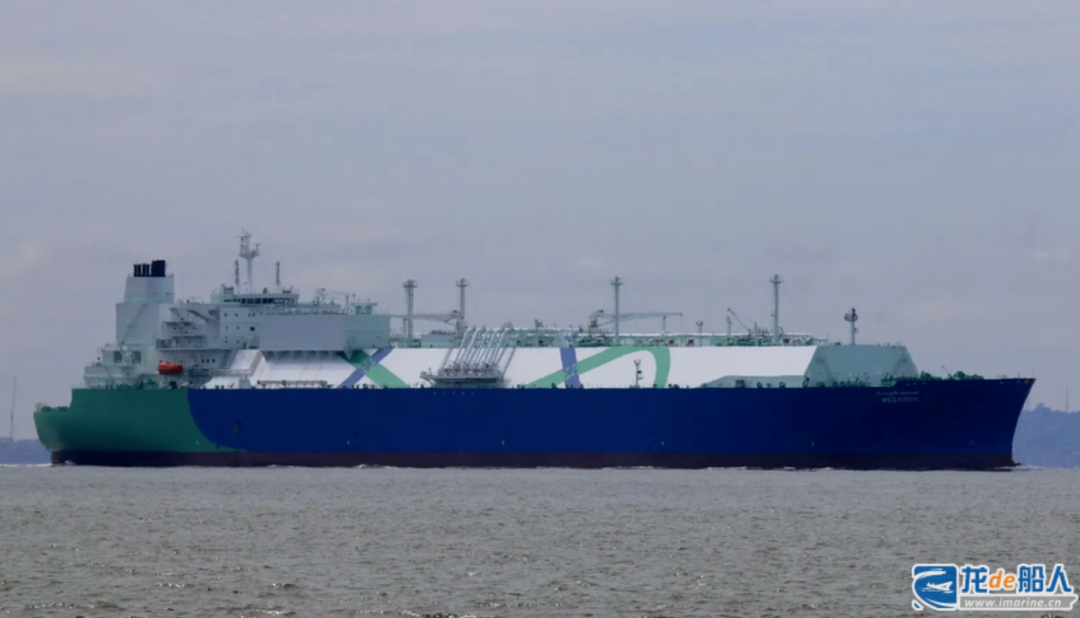
Specifically, the long-term charter contracts for LNG carriers signed by QatarEnergy include an “Indefinite Delay Option,” which allows for the postponement of vessel delivery in the event of force majeure. This clause permits adjustments to charter rates and delivery milestones, enabling both the postponement of the vessel’s acceptance and flexible adjustments to the commissioning date based on QatarEnergy’s operational circumstances.
Due to geopolitical tensions in the Middle East, such as those in the Strait of Hormuz, and damage to certain gas field facilities, Qatar’s normal LNG production and transportation have been disrupted, prompting QatarEnergy to postpone its chartering plans.
With QatarEnergy’s request to delay vessels delivery, shipowners’ expected cash flows and operational plans have been adversely affected.
Because LNG carriers are extremely expensive to build, shipowners typically order newbuilds under long-term charter contracts so that the vessels can be put into service immediately upon delivery to recoup their investment. Although QatarEnergy is adjusting the delivery and performance schedules in accordance with the contract terms, shipowners face significant financial pressure if they are unable to charter out the vessels on time, as they must bear financial costs, insurance premiums, crew wages, and management fees.
Furthermore, since the shipbuilding contracts between shipowners and shipbuilders specify delivery dates, if a shipowner cannot find a short-term charterer to replace QatarEnergy and leaves the new vessels at the yards, additional costs will be incurred. During the 2008 financial crisis, there were instances where shipowners were unable to take delivery of new vessels due to broken capital chains.
Currently, QatarEnergy has ordered 128 new LNG carriers for the Qatar North Gas Field expansion project. These orders have been allocated to shipyards in China and South Korea, with over 40 vessels already delivered. Deliveries are scheduled to continue at a rate of one vessel every three weeks starting in 2026. QatarEnergy’s decision to postpone the charter agreements means that some of these new vessels will face delivery challenges even if they are completed on schedule.
The 128 new LNG carriers ordered by QatarEnergy involve a total of 16 shipowners, including Mitsui O.S.K. Lines (MOL), Nakilat, COSCO SHIPPING LNG Investment (Shanghai) Co., Ltd. (CSLNG), China Merchants Energy Shipping (CMES), and Shandong Marine Energy.
Additionally, prior to announcing the postponement of these charters, QatarEnergy was seeking to charter out 10 LNG carriers anchored near the Strait of Hormuz, including four 210,000-cubic-meter Q-Flex vessels and six 174,000-cubic-meter conventional vessels. Qatar Energy decided to charter out the LNG carriers because production disruptions left them with no cargo to transport, and the company aims to generate revenue through vessel chartering. The chartered vessels will be redeployed to other LNG production sites.
Due to the conflict in the Middle East, QatarEnergy’s LNG production facilities, with an annual capacity of 77 million metric tons, have suspended operations. On March 4, QatarEnergy invoked force majeure on its LNG shipping operations and suspended gas supplies. Data shows that Qatar ranks third globally in natural gas reserves, with production capacity accounting for 20% of the world’s total. In 2025, Qatar’s LNG exports reached 82.2 million metric tons.
It is worth noting that earlier this year, QatarEnergy announced plans to place an additional order for at least 70 LNG carriers to support the expansion of the North Field project in Qatar. Given the current international situation and risks such as potential project suspensions, this major LNG carrier order—which Chinese and South Korean shipyards had been counting on—is likely to fall through.