


Despite the severe blow to the container shipping industry in 2025, South Korean shipowner Hyundai Merchant Marine (HMM) successfully maintained profitability, achieving an operating profit margin of 13.4%. On the other hand, freight rates on major global trade routes collapsed across the board, causing many global competitors to suffer losses.
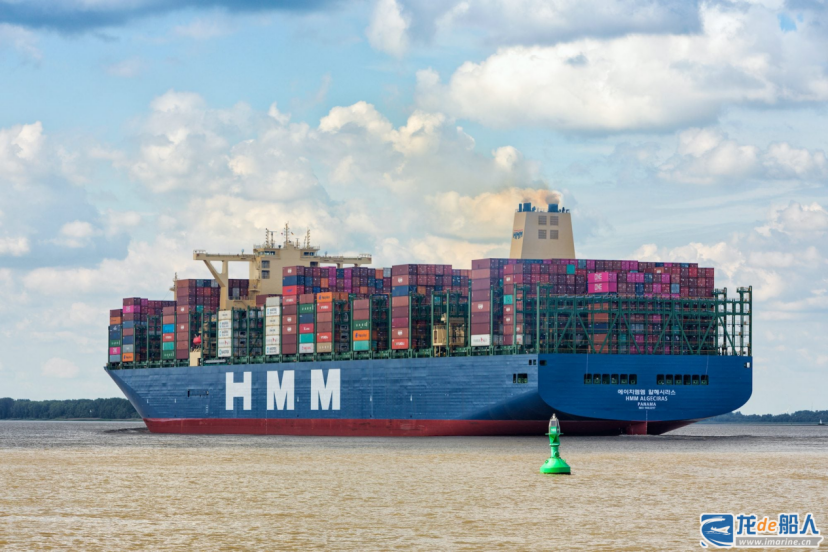
According to HMM’s annual data, in 2025, the company achieved operating revenue of 10.891 trillion won (US$8.38 billion) and net profit of 1.879 trillion won (US$1.45 billion / approximately RMB10.02 billion), a year-on-year decrease of 50.3%.
Despite a significant decline in net profit, HMM will still maintain profitability in 2025, a year in which many competitors will struggle.
In 2025, the global container market continued to face pressure. The Shanghai Containerized Freight Index averaged 1581 points, a 37% decrease from the 2024 average of 2506 points. Freight rates on major routes plummeted: spot rates on the US West Coast fell by 49%, those on the US East Coast by 42%, and those on European routes by 49%.
Major global shipping companies were not spared either. Despite an 8% increase in freight volume, Maersk’s ocean shipping business suffered a loss of US$153 million in the fourth quarter of 2025, marking its first quarterly loss in several years, due to continued overcapacity suppressing freight rates.
German shipping giant Hapag-Lloyd is also under pressure, with its full-year EBITDA falling to US$3.6 billion from US$5 billion in 2024, and EBIT dropping to US$1.1 billion from US$2.8 billion. The company cited rising costs as stemming from continued route adjustments around the Cape of Good Hope and start-up costs associated with launching the “Twin Star Network” in partnership with Maersk.
Ocean Network Express (ONE) reported a return to a net loss in the third quarter of fiscal year 2025.The company posted revenue of US$4.07 billion and a net loss of US$88 million.It cited the challenging operating environment, partly driven by the continuous delivery of new vessels, which has led to shipping supply persistently outpacing demand.
In terms of quarterly performance, HMM has shown signs of stabilization, with operating profit increasing by 6.9% quarter-on-quarter in the fourth quarter, net profit increasing by 19.7%, and operating revenue remaining basically flat at 2.708 trillion won (US$2.08 billion).
However, HMM still warns that oversupply of vessels remains a major risk, and the delivery of a large number of newly built container ships will further exacerbate the supply-demand imbalance against the backdrop of weak demand growth.