

With the completion of low-priced orders and the implementation of an order selection strategy focused on high-value-added vessels in recent years, Samsung Heavy Industries’ operating profit has improved significantly. Based on this, Samsung Heavy Industries has once again issued an Overall Performance Incentive (OPI) for the first time in 12 years.
Samsung Heavy Industries recently disclosed that it distributed OPI to its employees and those of affiliated companies on January 30. OPI is the core system of the Samsung Group’s performance bonus scheme, stipulating that 20% of excess profits may be allocated as bonuses when a business unit exceeds its annual profit targets set at the beginning of the year. The maximum bonus amount can reach up to 50% of the recipient’s annual salary.
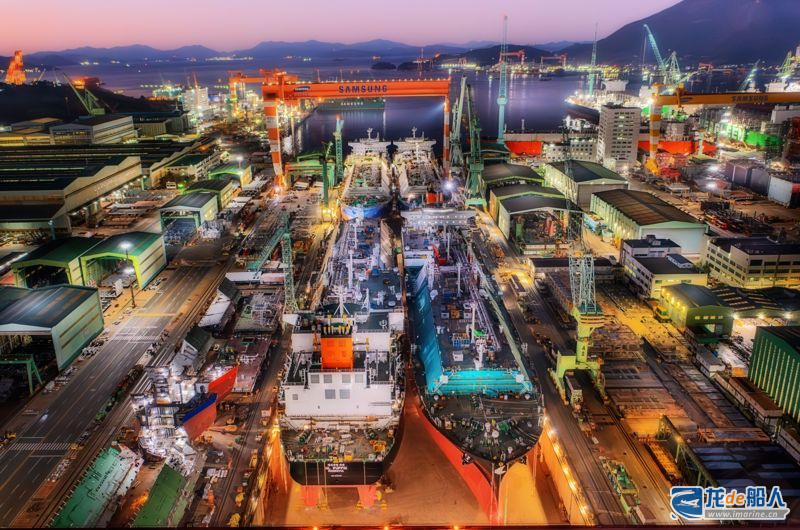
Samsung Heavy Industries has confirmed that the OPI bonus will be distributed at 208% of the “base salary plus allowances” formula. The recipients include both Samsung Heavy Industries regular employees and employees of internal partner companies. For employees of internal partner companies, those with over 5 years of service will receive the same 208% bonus base as Samsung Heavy Industries regular employees. Employees with 3 to 5 years of service will receive 80%, and those with 2 to 3 years of service will receive 70%.
Regarding the differentiated payment of OPI based on seniority, a Samsung Heavy Industries representative explained, “This measure is part of a system that aims to maintain skilled workers on the shipbuilding site and ensure its continued operation.”
It is understood that this marks Samsung Heavy Industries’ first issuance of an OPI in 12 years, with the previous issuance occurring in 2014. Following the subsequent downturn in the shipbuilding industry, Samsung Heavy Industries recorded losses for eight consecutive years from 2015 to 2022, accumulating operating losses exceeding 6 trillion won (approximately $4.088 billion) during this period, leading to the suspension of OPI issuance.
In 2023, Samsung Heavy Industries achieved an operating profit of 233.3 billion won (approximately $159 million), returning to profitability after eight years. However, it recorded a net loss of 148 billion won, failing to meet the conditions for OPI disbursement. In 2024, Samsung Heavy Industries’ operating profit reached 502.7 billion won (approximately $343 million), a 115% year-on-year increase. Although the company achieved a net profit turnaround, the OPI was ultimately not granted due to factors including contract cancellation costs stemming from the Russia-Ukraine conflict.
Samsung Heavy Industries’ issuance of OPI after a 12-year hiatus is widely viewed by South Korea’s shipbuilding industry as not a one-off event. The company has secured shipbuilding orders for over three years ahead and has largely absorbed low-priced contracts secured during the industry downturn. Consequently, industry insiders believe Samsung Heavy Industries has established a sustainable profit-generating business structure through its selective order-taking strategy.
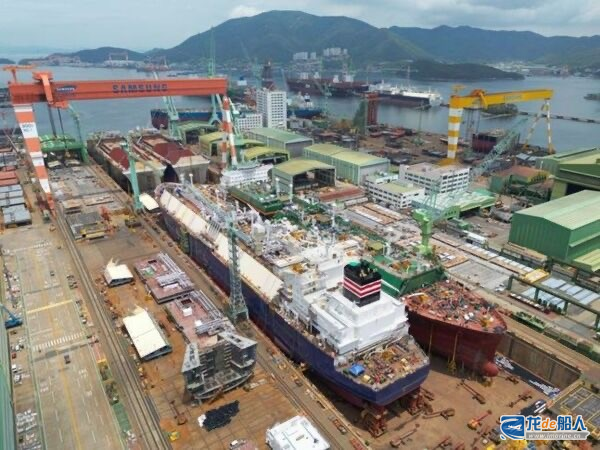
In 2025, Samsung Heavy Industries effectively improved its profitability by securing orders for high-value-added vessels such as liquefied natural gas (LNG) carriers and floating liquefied natural gas (FLNG) units.
According to Samsung Heavy Industries’ 2025 performance data released on January 30, the company achieved operating revenue of 10.65 trillion won during the reporting period, representing a 7.5% year-on-year increase. Operating profit reached 862.2 billion won (approximately $588 million), marking a 71.5% year-on-year growth.
This marks Samsung Heavy Industries’ first time surpassing the 10 trillion won threshold in nine years since 2016 (10.4142 trillion won), while its operating profit reached its highest level in 12 years. The company attributed the improved performance primarily to its selective order-taking strategy focused on high-value-added vessels and capacity expansion in its offshore business.
Currently, Samsung Heavy Industries’ Geoje Shipyard is simultaneously advancing three FLNG projects: Malaysia’s ZLNG, Canada’s Cedar and Mozambique’s Coral. With the formal shipbuilding contract for the U.S. Delphin FLNG nearing finalization, revenue from Samsung Heavy Industries’ offshore business will further increase.
In 2026, Samsung Heavy Industries has set an operating revenue target of 12.8 trillion won, representing a year-on-year increase of approximately 20%. The annual order intake target is set at $13.9 billion. Concurrently, the company is advancing its global operational strategy with domestic and international shipyards, anticipating that the growth in operating revenue will further accelerate as shipbuilding volume increases.
Regarding new ship orders, as of January 28, Samsung Heavy Industries has announced seven new vessels of three types this year, including four LNG carriers, two VLEC tankers, and one crude oil tanker. Its current order backlog stands at 134 vessels, with a total value of 40.9233 trillion won (approximately $28.7 billion). Notably, the two LNG carriers announced by Samsung Heavy Industries on January 2 are scheduled for delivery by December 31, 2025.