


The one-year suspension of USTR port fees on ships built in China and those operated by Chinese companies has only two weeks remaining, expiring on November 9.
On October 26, the Office of the United States Trade Representative (USTR) launched a one-week public comment period regarding a proposal to extend this suspension. The plan seeks to extend the period by two months, through January 9, 2027, to allow more time for U.S.-China trade negotiations. The deadline for submitting comments is October 30.
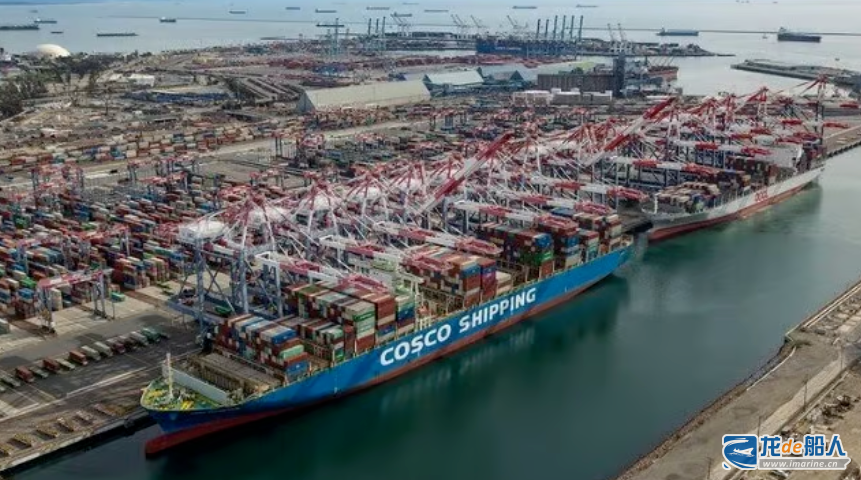
In early 2025, the United States announced plans to impose additional port fees on ships built in China, ostensibly to “diminish China’s influence in the global maritime industry and bolster the U.S. shipbuilding sector.” In response, China initiated retaliatory fees on ships with ties to the United States, with collection beginning on October 14—the same day the U.S. measures took effect.
Shortly after these port fee measures came into force, the two sides reached a consensus during economic and trade consultations in Kuala Lumpur: the U.S. agreed to suspend, for a period of one year, the implementation of measures resulting from its Section 301 investigation into China’s maritime, logistics, and shipbuilding sectors. Following this U.S. suspension, China also agreed to suspend its own corresponding retaliatory measures against the United States for one year.
During the one-year buffer period, Chinese shipbuilders have further expanded their market share. According to data from China’s Ministry of Industry and Information Technology, from January to September 2026, the volume of completed shipbuilding in China reached 58.05 million deadweight tons (DWT), an increase of 50.7% year-on-year. New orders totaled 175.29 million DWT, up 163.2% year-on-year. As of the end of September, the order backlog stood at 399.13 million DWT, an increase of 64.8% year-on-year. China’s completed shipbuilding volume, new orders, and order backlog accounted for 63.6%, 81.8%, and 72.4% of the global market share, respectively.
Meanwhile, the volume of maritime trade between China and the United States remains at a high level. In the case of the Port of Shanghai, for instance, container throughput in September exceeded 5.1 million TEU. Similarly, the ports of Los Angeles and Long Beach—the primary gateways for Chinese imports into the U.S.—have repeatedly set new records for cargo throughput.
The Office of the USTR stated that trade consultations between the U.S. and China are ongoing, with the objective of addressing the specific behaviors, policies, and practices identified in the U.S. investigation. The U.S. request for a two-month extension is intended to utilize this window of time to continue advancing the negotiations.