


After an eight-year hiatus, China Merchants Shipbuilding Qingshan Shipyard has resumed its core shipbuilding operations. As of the end of July 2026, the shipyard held over 20 effective shipbuilding orders with a total contract value of RMB 4.7 billion (approximately $697 million), along with nearly 30 pending orders valued at over RMB 6 billion (approximately $890 million); the cumulative contract value exceeds RMB 10 billion (approximately $1.483 billion).
According to publicly available information, the order book for China Merchants Shipbuilding Qingshan Shipyard comprises container ships and multi-purpose vessels, with 1,800 TEU container ships being the primary type. Notable orders include ten new vessels for Zhonggu Logistics—marking the shipyard’s first major contract win since joining China Merchants Shipbuilding—and four new vessels for Sinotrans Container Lines (a subsidiary of China Merchants Energy Shipping); recent reports indicate that Sinotrans Container Lines has also invited the shipyard to build another four vessels.
As a shipbuilding enterprise with roots in Wuhan for more than 70 years, Qingshan Shipyard serves as a core pillar of Hubei Province’s shipbuilding industry chain, a key player in shipbuilding in Central China, and a vital driver of high-quality development in Wuhan’s shipbuilding industry.
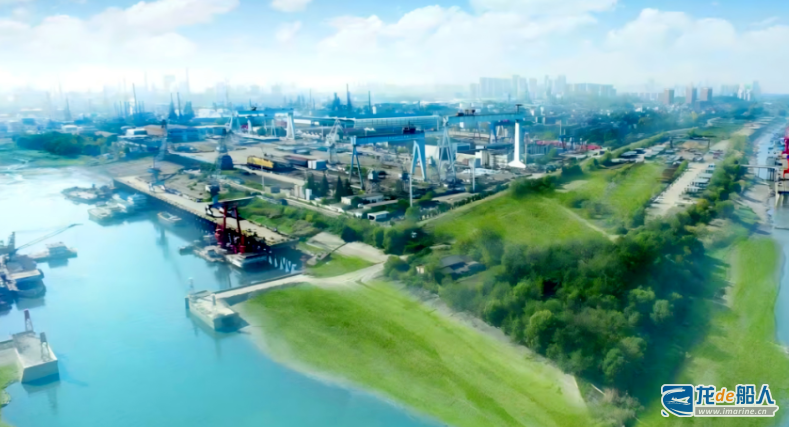
However, this pivotal shipyard once experienced an eight-year hiatus in production. In 2018, after delivering its final export order for a bulk carrier, Qingshan Shipyard announced its withdrawal from shipbuilding—concluding a 69-year legacy—and pivoted toward sectors such as steel structure manufacturing and ship repair and conversion.
In October 2024, capitalizing on a new boom in the shipbuilding industry, the shipyard began preparations to resume shipbuilding operations; full-scale resumption of its core shipbuilding business is scheduled for 2026.
With the securing of multiple new vessel orders and the commencement of a 15,000 DWT multi-purpose vessel project, the shipyard’s eight-year production gap has officially ended. It is currently simultaneously restarting production capacity and undergoing transformation and upgrading, focusing primarily on the construction of small-to-medium-sized, high-value-added vessels.