


On September 28, the 150-horsepower and 250-horsepower 4,500-meter-class deep-sea operation robots independently developed and fully domestically produced by Shandong Future Robot Co., Ltd. set sail from Weihai Port in Shandong, heading to the South China Sea for a joint scientific expedition. This marks another important breakthrough in China’s efforts to achieve self-reliance in high-end deep-sea equipment.
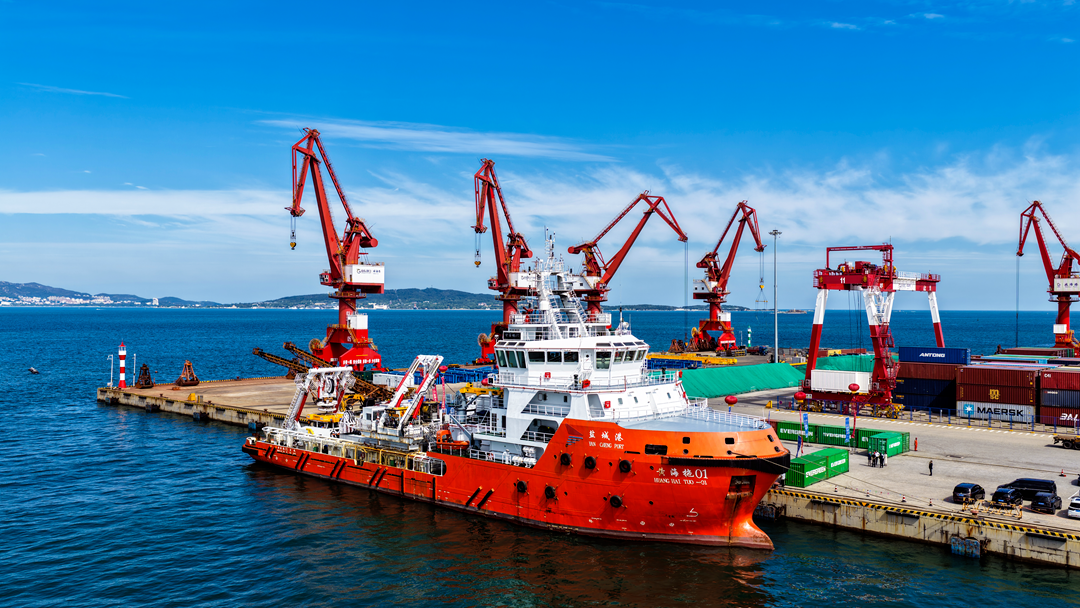
As the launch order was issued, this 4,500-meter-class deep-sea robot was slowly hoisted aboard the ship, preparing to head to the South China Sea to conduct deep-sea validation tests. This operational deep-sea robot has achieved full-chain domestic production of tens of thousands of components across the entire machine, breaking the long-term foreign technological monopoly. Its operational depth coverage spans 3,000 meters, 4,500 meters, and 6,000 meters underwater, and it is equipped with a self-developed seven-axis multi-functional hydraulic manipulator. It has overcome more than 30 core key technologies, including deep-sea pressure-resistant sealing, high-power deepwater propulsion, long-distance underwater communication, and multimodal autonomous navigation. It can undertake a variety of complex operational tasks such as deep-sea oil and gas development, subsea pipeline inspection, mineral resource exploration, underwater scientific research sampling, and underwater emergency salvage. Its equipment performance has been authoritatively certified by DNV (Det Norske Veritas).
This equipment is one of the very few heavy-duty deep-sea systems in China that has achieved full autonomy and control across the entire production chain—from core components and control systems to the design and manufacture of the complete unit—marking a substantial engineering milestone in the localization of China’s heavy-duty deep-sea operations equipment.
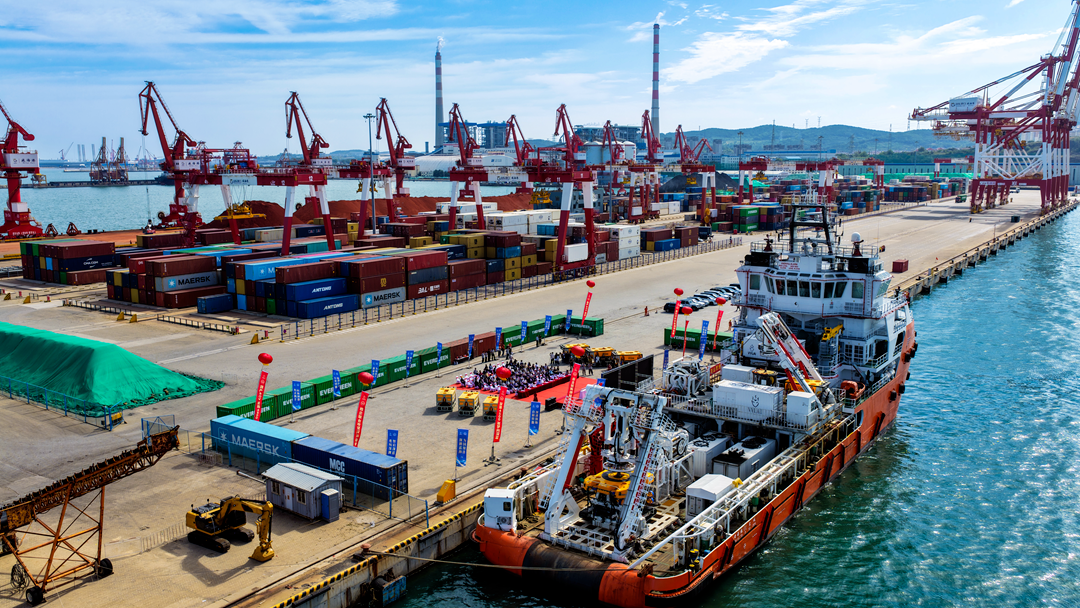
The company stated that both the core software and hardware of this 4,500-meter-class deep-sea robot have achieved domestic independent controllability. The enterprise has joined forces with Harbin Institute of Technology (Weihai) to focus on “bottleneck” technological challenges in the field of deep-sea equipment, transforming laboratory research achievements into practical equipment capable of diving into the deep sea and withstanding extreme marine environments. Next, the team will continue to iterate various types of deep-sea equipment, leveraging modular and large-scale technical solutions to reduce the application costs of domestically produced deep-sea equipment, promote more Chinese-made deep-sea equipment to the global offshore engineering market, and participate in international competition in the deep-sea equipment field with Chinese solutions.
The 4,500-meter depth range is currently considered the core depth zone for deep-sea resources with economic extraction value. At this depth, high pressure, low temperatures, and strong ocean currents coexist, creating complex and extreme operating conditions that place stringent demands on the equipment’s pressure resistance and long-term operational stability. This field scientific expedition to the South China Sea serves as a comprehensive real-world test of the equipment’s fully domestically designed system, as well as the reliability and stability of its core software and hardware.