


Tanker ordering has reached record levels in 2026, but with much of the existing fleet ageing, rising newbuilding activity comes against a growing need for fleet renewal, according to shipbroker Ifchor Galbraiths.
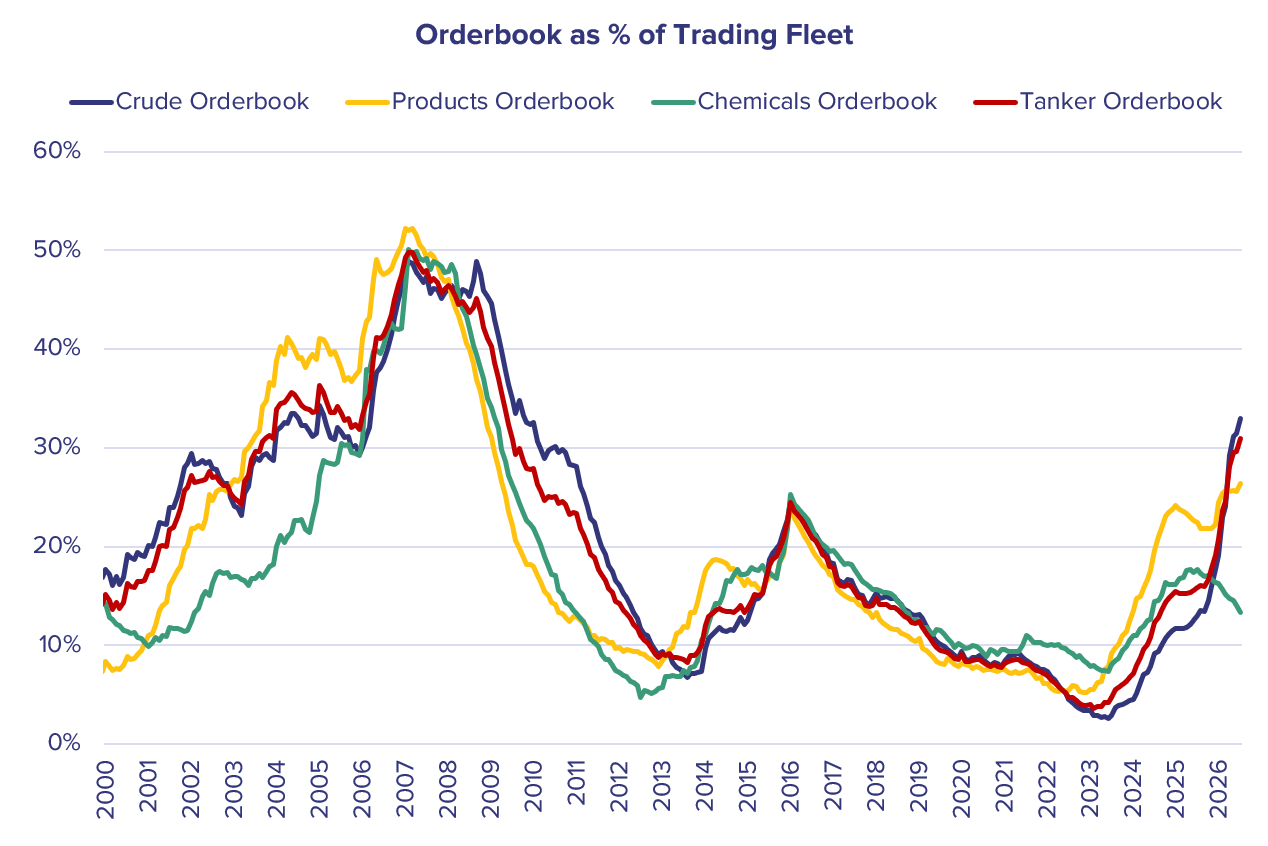
Amid continued volatility in tanker markets and broader geopolitical upheaval, it is easy to lose sight of the underlying supply fundamentals, which, depending on the segment, are likely to prove just as important in shaping market conditions over the coming decades.
Whilst the latter part of 2025 saw the first signs of increased contracting, the newbuilding landscape has shifted dramatically throughout 2026, with ordering reaching historically unprecedented levels. As at the end of July, a total of 96.4m dwt worth of tankers have been ordered, already comfortably exceeding the previous annual records seen in 2006 (81.3m dwt) and 2015 (75.8m dwt). Whilst recent months have seen the pace of ordering decline, at least relative to early months, the final tally for the end of the year is likely to be well in excess of 100m dwt worth of new tankers being inked. The driving force behind these record levels has been the larger crude tankers, with both the VLCC and Suezmax segments seeing the highest levels of ordering on record, with a total of 197 and 103 vessels respectively signed. At the time of writing, the wider tanker fleet has an orderbook that sits at just over 31% of the currently trading fleet.
There also remain tanker segments for whom the orderbook remains relatively light, the LR1s and Handies being the most notable examples amongst larger tankers, with the orderbook sitting at 13.6% and 17.6% of the trading fleet respectively. The Chemical Tanker fleet equally represents a segment with a less significant orderbook, with the segment seeing an orderbook of 12.4% of the currently trading fleet.
The swathe of secondhand transactions at significant pricing levels, along with the healthy freight market and an ageing fleet, have spurred the fleet renewal activity and contributed to these levels of ordering.
The ageing of the tanker fleet provides important context for the current level of contracting. At the time of writing, in capacity terms, just over 47.5% of the currently trading fleet sit over 15 years of age and just under 21% of the tanker fleet are already over 20 years of age. With the sanctioned fleet also sitting at the upper end of the age range, and a swathe of vessels tipping over into each of these older age groupings out to the end of the decade, the requirement for newer tonnage is clear.
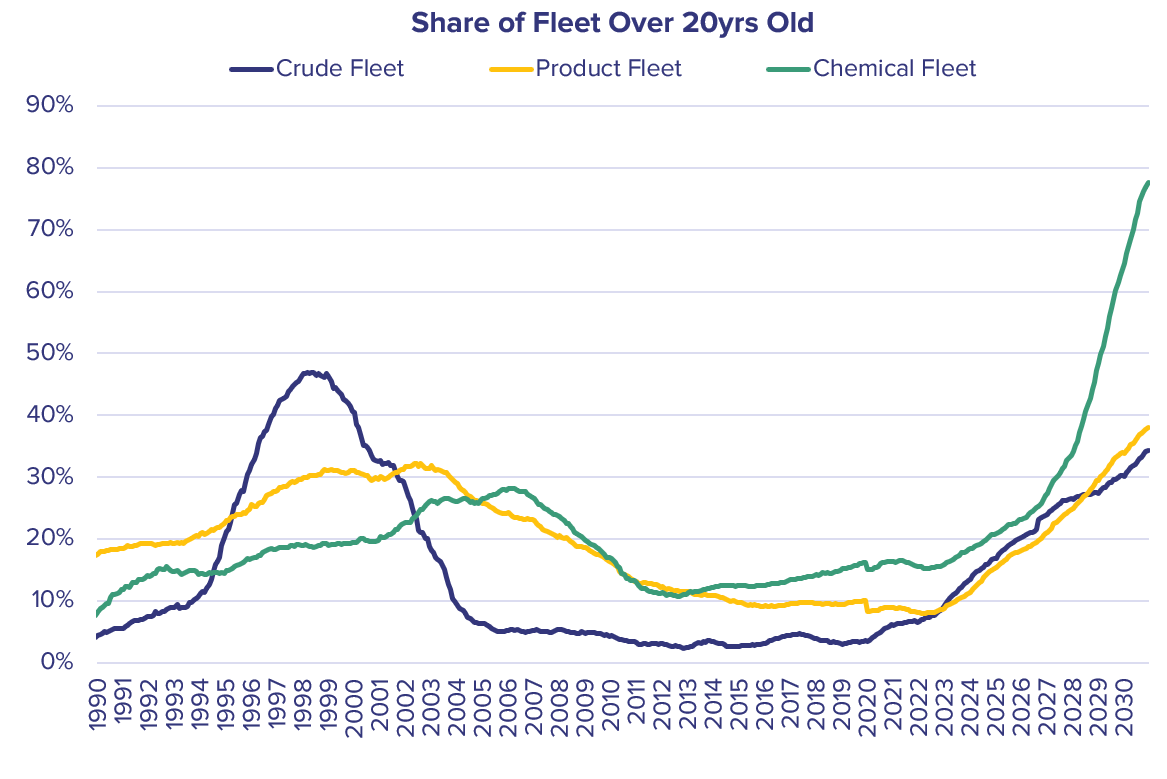
Removals within the tanker space remain limited, unsurprisingly considering the dramatic earnings enjoyed by many segments through much of 2026. A total of 2.16m dwt of tankers have been removed so far this year, which whilst far below anything resembling normal, is at least in excess of the minuscule volumes removed in 2023/24. Of the larger tankers, including VLCCs and Suezmaxes, all vessels removed so far this year have been sanctioned vessels, a reflection of both the exceedingly high average age of those fleets, but also that some of these vessels are finding it a little more difficult to find employment, given the re-entry of Venezuela into the conventional market, and the challenges surrounding Iranian exports from the Middle East. Whilst it can remain complex to recycle sanctioned tonnage, there appears to be more momentum in this space than has been seen over recent years, and this could also provide a useful offset to elevated deliveries over the coming years.