


Sources reveal that at least four shipbuilders—predominantly Chinese—are currently in talks with three major liner giants, including Mediterranean Shipping Company (MSC), with formal shipbuilding contracts expected to be signed after the summer.
The current shipbuilding super-cycle has extended across multiple shipping sectors, and early available slots at shipyards are being snapped up rapidly; consequently, delivery schedules are expected to play a decisive role in the final selection of shipyards.
Reports circulated in June that MSC would place an order with Hengli Heavy Industries for up to twenty 20,000 TEU-class LNG dual-fuel container ships—an order that includes options—with deliveries expected to begin in the first half of 2029.
Data from Alphaliner indicates that MSC, the world’s largest liner shipowner, currently operates a fleet of 1,005 owned and chartered vessels with a total capacity of 7.35 million TEU, alongside an orderbook of 151 vessels totaling 2.6 million TEU.
According to Clarkson’s data, the vast majority of MSC’s orders are for large vessels with capacities exceeding 10,000 TEU—contracts almost exclusively secured by Chinese shipbuilders; yards such as Hengli Heavy Industries, Zhoushan Changhong International, Jiangsu Hantong Ship Heavy Industry Co., Ltd(HT) , and Penglai Zhongbai Jinglu Ship Industry Co., Ltd. (Jinglu Shipyard) are all constructing large container ships for the company.
Maersk’s most recent order for large container ships was placed in February 2026, when the shipowner contracted New Times Shipbuilding for eight 18,600 TEU LNG dual-fuel container ships; market reports indicate that the order included options for six additional ships of the same type. The initial eight firm vessels are scheduled for delivery in 2029 and 2030, with a reported cost of approximately $190 million per ship.
Data from Alphaliner shows that Maersk’s active fleet comprises 743 vessels with a total capacity of 4.71 million TEU, while its orderbook includes 90 vessels totaling 1.2 million TEU. These newbuilds are primarily vessels with capacities of 9,000 TEU or larger and are mainly being constructed at Chinese shipyards—such as the multiple 17,000 TEU and 9,000 TEU container ships being built by Yangzijiang Shipbuilding.
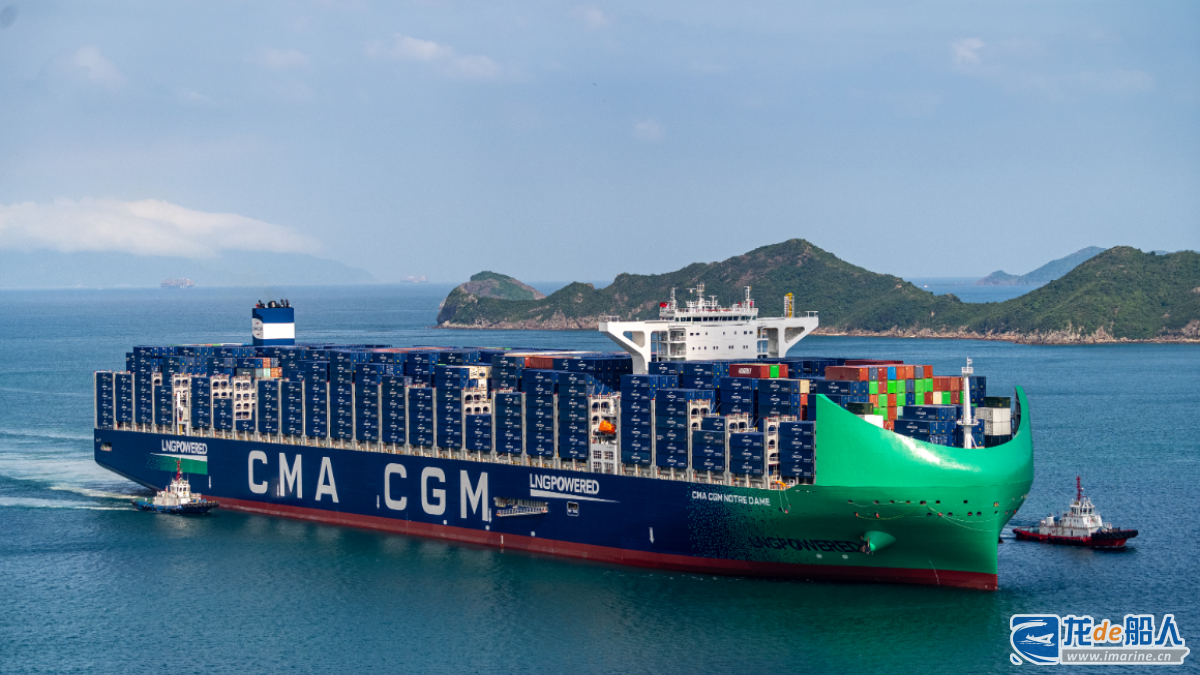
CMA CGM’s most recent order, placed in June 2026, involves a batch of 6,000 TEU-class container ships to be built by Hengli Heavy Industries, with delivery scheduled before 2029. Earlier this year, the shipowner also confirmed an order with India’s Cochin Shipyard for six LNG dual-fuel feeder container ships.
Alphaliner data shows that CMA CGM currently operates 729 vessels with a total capacity of 4.4 million TEU and holds an orderbook of 157 vessels totaling 1.72 million TEU; these orders span various vessel segments, ranging from small and medium-sized container ships to ultra-large container ships with capacities exceeding 24,000 TEU.
Despite the launch of construction plans for ultra-large container ships by leading shipowners, the focus of many owners during the current wave of orders has shifted toward feeder and mid-sized container ships; consequently, demand for large and ultra-large container ships has slowed.
Veson Nautical’s mid-year report indicates that total container ship orders rose by approximately 29% year-on-year in the first half of 2026; however, orders for ultra-large and Neo-Panamax container ships showed a downward trend, declining by 18%—the most significant drop.
The latest monthly report released by Xclusiv Shipbrokers, the orderbook for ultra-large container ships for 2026 stands at 38 vessels, while orders for feeder container ships and Handysize vessels during the same period total 184 and 91 vessels, respectively.
Following a wave of massive orders in recent years, the ratio of the orderbook to the existing fleet in the ultra-large container ship segment has surpassed 70%, a factor that partly explains the sluggish ordering activity observed for 2026.