


China continues to challenge South Korea’s long-standing dominance in the liquefied natural gas (LNG) carrier shipbuilding market; as South Korean shipyards approach capacity limits, Chinese shipyards have secured a succession of LNG carrier orders this year.
A recent report by shipbroker Banchero Costa indicates that, as of early July 2026, Chinese shipbuilders had secured orders for a total of 34 LNG carriers, compared to 32 vesss won by South Korean shipbuilders during the same period.
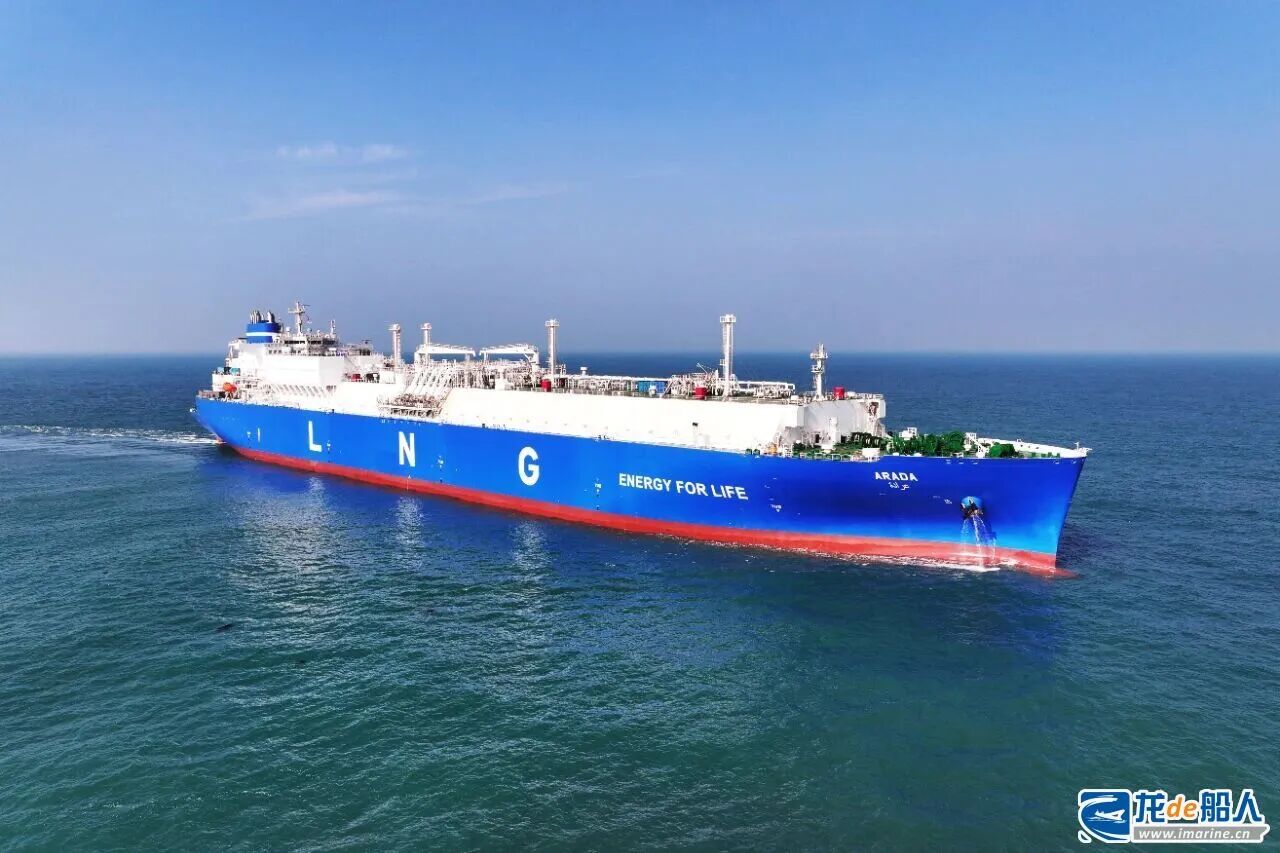
South Korean shipbuilders have long dominated the market for LNG carrier construction. Between 2022 and 2025, the order volumes for this vessel type for Chinese and South Korean shipbuilders stood at 43 versus 113, 27 versus 55, 46 versus 56, and 12 versus 39, respectively. However, data from Banchero Costa indicates that as of early July 2026, Chinese shipbuilders achieved a rare turnaround, taking the lead by a narrow margin of two vessels.
Jiangnan Shipyard and Hudong-Zhonghua, both subsidiaries of China State Shipbuilding Corporation (CSSC), are the key players in the current wave of LNG carrier orders secured by Chinese shipbuilders. Both shipbuilders have each won orders for over ten new vessels in this segment this year, with clients including COSCO Shipping, ADNOC L&S, Eastern Pacific Shipping (EPS), TMS Cardiff Gas, and MISC.
Ralph Leszczynski, Head of Research at Banchero Costa, stated that the primary reason for the shift in the flow of LNG carrier orders during the first half of this year was insufficient capacity at South Korean yards.
To date, there are five yards in China currently constructing large LNG carriers. Three belong to the CSSC Hudong-Zhonghua Shipbuilding, Jiangnan Shipyard, and Dalian Shipbuilding Industry Corporation (DSIC)—while the other two are China Merchants Heavy Industries Haimen shipyard (CMHI Haimen shipyard) and Yangzijiang Shipbuilding.
In addition, Hengli Heavy Industries signed a patent cooperation agreement with GTT for membrane-type containment systems in early 2025, positioning itself to become the sixth shipbuilders in China—and the second privately owned one—capable of building large LNG carriers.
In contrast, the only South Korean shipbuilders currently capable of building LNG carriers remain HD Hyundai Heavy Industries, Hanwha Ocean, Samsung Heavy Industries, and HD Hyundai Samho; other South Korean shipbuilders lack the technical capabilities and production capacity to construct such vessels.
Beyond production capacity, another key factor driving LNG carrier orders for Chinese shipbuilders is the role of domestic shipowners; an increasing number of Chinese owners are placing orders with domestic shipbuilders. According to data from Banchero Costa, orders from domestic shipowners account for at least 25% of the total LNG carrier orderbook for Chinese shipbuilders. In contrast, South Korean shipowners have not placed any LNG carrier orders recently.
According to estimates by Banchero Costa, Chinese shipowners account for approximately 9% of the global LNG carrier orderbook, while South Korean shipowners hold a share of only 3%; regarding the active global LNG carrier fleet, Chinese shipowners control about 18% of the capacity, compared to just 7% for South Korean shipowners.