


According to European media reports, the U.S. Coast Guard’s “Heavy Polar Security Cutter (PSC, also known as the Heavy Polar Icebreaker)” program is mired in delivery delays; this is the first heavy polar icebreaker the U.S. has built in more than 50 years. A recent report by the U.S. Government Accountability Office (GAO) predicts that delivery of the first Heavy Polar Icebreaker has been postponed to March 2033 at the earliest, nearly a decade later than the original delivery date.
Based on the latest accountability report released by the GAO, the U.S. Heavy Polar Icebreaker program continues to face numerous unresolved construction process risks, including the shipyard’s plan to increase its on-site workforce by 40% and the lack of a fully validated production plan. Consequently, even under the most recently revised construction schedule, there remains significant uncertainty as to whether the program’s lead vessel will be delivered on time.
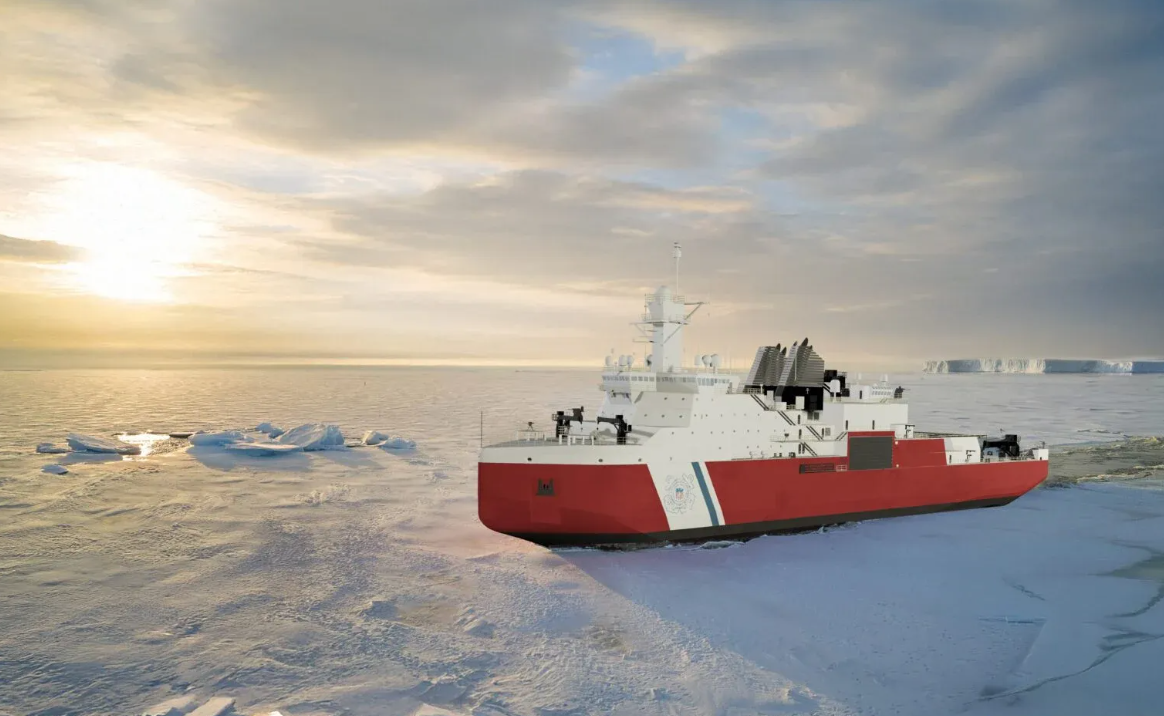
This latest assessment deals yet another major blow to the U.S. Heavy Polar Icebreaker program. The program has now become one of the U.S. Coast Guard’s most delayed and costly procurement projects. According to the latest projections, the first vessel will cost approximately $3.4 billion—equivalent to the total budget originally allocated for the three Heavy Polar Icebreakers.
Regarding the Heavy Polar Icebreaker program, the U.S. Coast Guard initially awarded the contract to VT Halter Marine in 2019, with the first vessel originally scheduled for delivery in March 2024. In 2022, Bollinger Shipyards, the largest private shipbuilding and repair yard in the United States, acquired VT Halter Marine, thereby taking over the project and continuing to advance its development.
In July 2023, a steel-cutting ceremony was held at Bollinger Shipyards for the eight prototype hull sections of this heavy polar icebreaker; however, the project did not officially enter the construction phase until late 2024, following approval from the U.S. Coast Guard/U.S. Navy Joint Program Office. In May 2025, full-scale assembly of the vessel began.
Although the vessel’s construction schedule has been adjusted, as recently as April 2026, senior officials at the U.S. Coast Guard were still publicly stating that the delivery date was 2030. However, the GAO noted that the vessel’s most recently approved project milestones indicate a delivery date of March 2033, and warned that this delivery date does not take several significant risks into account.
Related risks include: Bollinger Shipyards needs to expand its shipyard workforce by approximately 40% between 2025 and mid-2026, while also finalizing the full staffing levels required for the construction of the three icebreakers. The GAO report also notes that the revised construction schedule was approved before a comprehensive benchmarking review with the shipbuilder was completed, meaning the schedule does not yet incorporate current contractor shipbuilding efficiency data. “These risks raise questions about whether delivery of the first heavy-duty polar icebreaker will be delayed beyond 2033.”
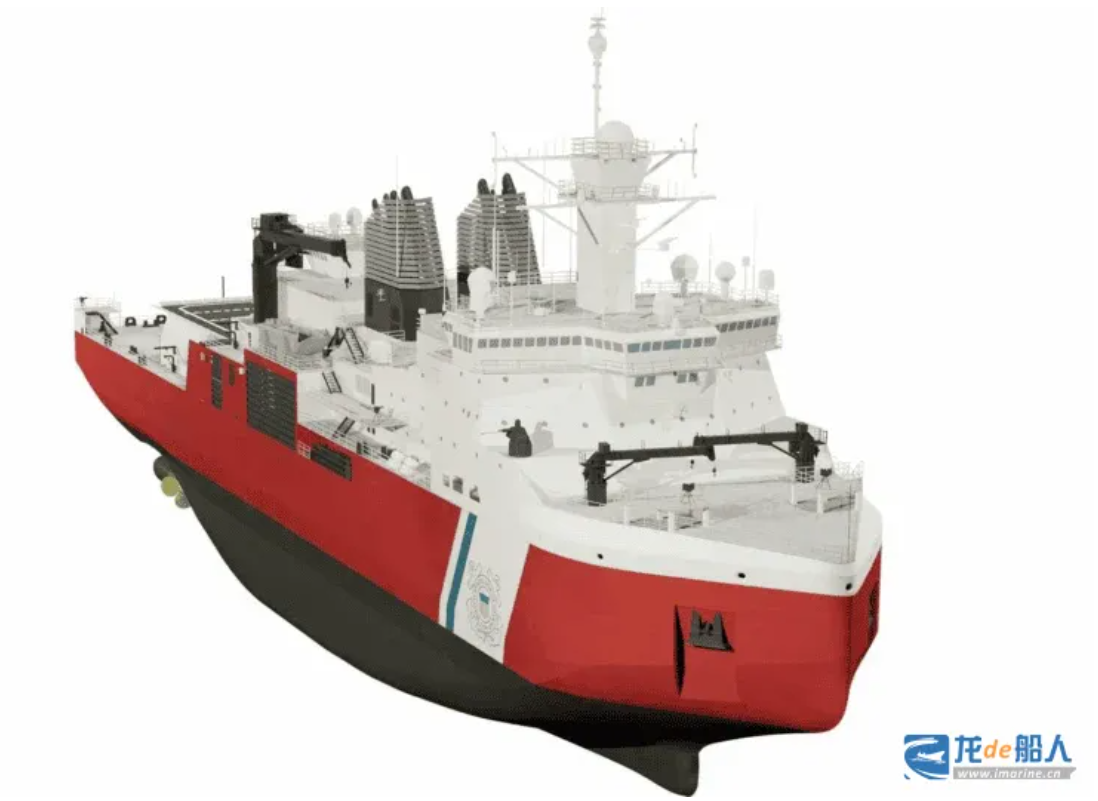
The report notes that public information regarding the construction progress of the United States’ first heavy-duty polar icebreaker remains scarce. In April 2026, senior officials with the U.S. Coast Guard revealed that of the 85 planned hull blocks for the vessel, only 26 are currently under construction, and the number of completed hull blocks has not yet been disclosed.
GAO cited previous U.S. Coast Guard planning documents, which indicated that the first eight hull sections were originally scheduled for completion in 2026 to facilitate the assembly of larger hull blocks. Currently, neither the U.S. Coast Guard nor Bollinger Shipyards has provided an updated progress report. During 2025, photos of the hull blocks briefly appeared on social media, but the related posts were subsequently deleted.
In addition to delays in the construction schedule, the cost of building this heavy-duty polar icebreaker has also risen significantly.
Based on the latest procurement benchmarks from the U.S. Coast Guard, the construction cost of the lead ship in the U.S. Heavy Polar Icebreaker program has already reached approximately $3.4 billion. Since construction contracts for the remaining two Heavy Polar Icebreakers are still under negotiation, the total cost for the three ships in this program remains undetermined. In 2025, the U.S. Congress allocated an additional $4.3 billion in special funding for the project, bringing the total project funding to over $6 billion. At the time, U.S. officials stated that this allocation would be used to fund all three heavy-duty icebreakers.
However, the U.S. Coast Guard has recently stated that this additional funding will only cover the construction of two heavy polar icebreakers and the procurement of long-lead-time core equipment for a third vessel, indicating that the project will most likely require further funding. According to the GAO’s latest projections, the three heavy polar icebreakers are not expected to reach full operational capability until March 2039.
It is understood that the United States’ first heavy-duty polar icebreaker is intended to replace the “Polar Star”, which is currently the U.S. Coast Guard’s only active heavy-duty icebreaker. Commissioned in 1976, the vessel has undergone multiple life-extension upgrades and is barely remaining operational.
Recently, contracts for all 11 of the U.S. Coast Guard’s polar security icebreakers have been finalized. Davie Defense, Bollinger Shipyards, and the Finnish shipbuilder Rauma Marine Constructions will build 5, 4, and 2 vessels, respectively, at a total cost of approximately $6.8 billion.