


With the volume of new orders for LNG bunkering vessels continuing to rise, the global fleet is projected to grow by more than 60% within three years.
According to a mid-2026 outlook report released by SEA-LNG—a UK-registered non-profit industry coalition—the number of operational LNG bunkering vessels worldwide has risen from nine in 2017 to the current 67; an additional 42 vessels are under construction and expected to be delivered by 2029. The report notes: “If all existing orders are delivered on schedule, the global LNG bunkering fleet will expand by over 60% within three years.”
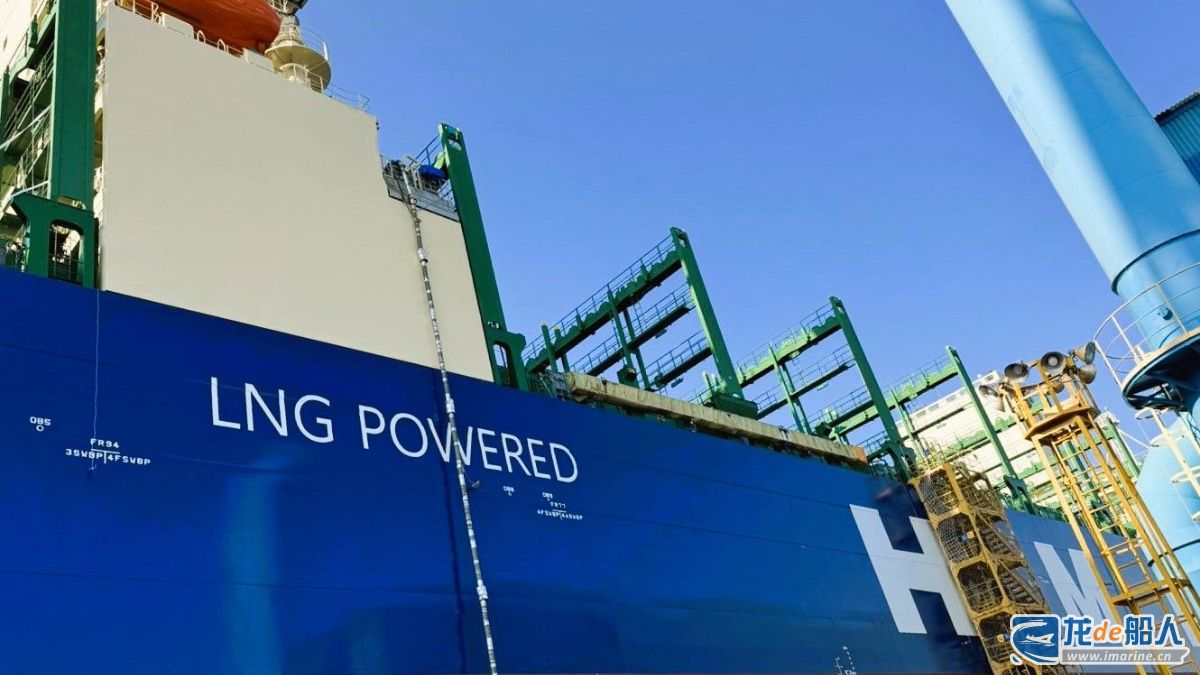
In 2025, shipowners worldwide placed orders for a total of 23 LNG bunkering vessels, setting a new record.
Orders for the first half of 2026 totaled seven vessels, primarily contracted to Nantong CIMC Sinopacific Offshore & Engineering Co., Ltd. (CIMC SOE) and China Merchants Heavy Industry (Jiangsu). In terms of vessel capacity, there is a trend toward larger LNG bunkering vessels, with newbuild specifications typically ranging from 18,000 to 20,000 cubic meters.
A report by SEA-LNG also indicates that the pattern of shipowner orders for 2026 reflects a shifting landscape.
Previously, orders for LNG bunkering vessels were dominated by European shipowners; however, data from the first half of 2026 shows a significant increase in investment in this sector by Chinese shipowners.
Examples include the order placed by CM Energy/Seacon Shipping Group with China Merchants Heavy Industry (Jiangsu) for 1+1 optional 20,000-cubic-meter class LNG bunkering vessel, and the order placed by Sinopec clean energy with CIMC SOE for one 12,000-cubic-meter class LNG bunkering vessel. The report notes: “This trend indicates that China is accelerating the deployment of supporting LNG bunkering capacity to serve its expanding fleet of LNG-powered vessels.”
Citing data from Kpler, SEA-LNG points out that between January and May 2026, the global monthly volume of LNG bunkering averaged approximately 770,000 cubic meters—an increase of about 13% compared to the same period in 2025. “This growth is driven by the entry into service of a large number of LNG dual-fuel vessels, as well as favorable price trends for LNG relative to conventional fuels.”
Currently, LNG bunkering operations are primarily concentrated in six key hubs: the Northwest Europe region centered on Rotterdam, Antwerp, and Bruges; the Western Mediterranean region focused on Fos, Barcelona, Gibraltar, and Algeciras; Singapore; Shanghai/Ningbo; Hong Kong; and the US East Coast region supported by ports in Florida, the Bahamas, and Savannah.