


Creditors of Romania’s Mangalia have reportedly drawn up a new sale plan for the facility, according to Romania-Insider: they intend to sell the shipyard with a starting bid of 168 million euros and hold at least six auctions per month. The shipyard is currently in bankruptcy liquidation.
According to reports, the main changes in the latest proposal compared to the previously drafted sale plan involve “organizing at least six public auctions per month, with a starting bid set at 100% of the market value of Mangalia’s operating assets.”
The latest proposal was put to a vote on May 22, with the meeting agenda consisting of a single item: approval of the plan for the comprehensive disposal of the Mangalia’s operating assets. This marks the second attempt by creditors to establish the terms for the auction sale of the Mangalia.
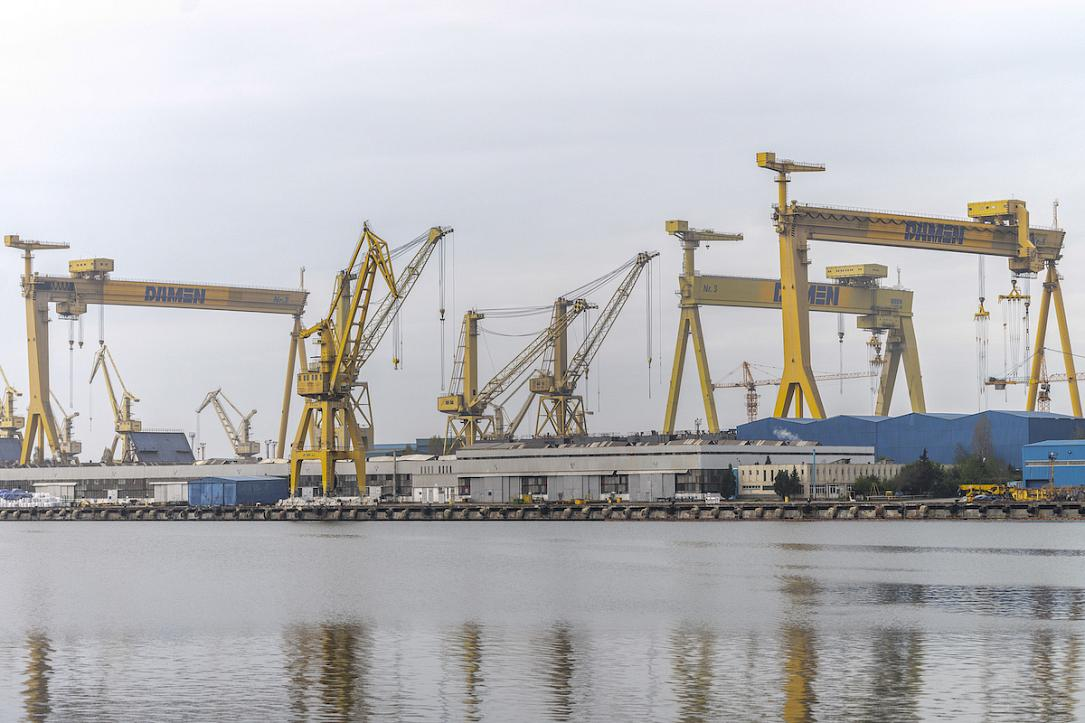
The first vote took place on May 8. Damen Holding BV, the main creditor of the Mangalia (holding 69.5% of the claims), opposed the sale terms proposed at the time. The Romanian Navalistul union and the Romanian National Agency for Fiscal Administration (ANAF) also voted against the proposal, and the vote ultimately failed.
ANAF supports the sale of Mangalia as a whole but insists it be sold at a market value of 184 million euros, rather than the liquidation value of 84 million euros estimated by the bankruptcy court.
It is understood that the creditors’ meeting for the Mangalia is controlled by the Damen Group, with a total of 191 institutions and companies seeking repayment of 2 billion Romanian lei (approximately $444 million) in debts from the shipyard.
The largest creditors of the Mangalia are its parent company, Damen Group, and its subsidiaries, with combined receivables totaling 1.7 billion Romanian lei (approximately $377 million), accounting for nearly 85% of the total debt; ANAF and the Navalistul trade union hold debts of 26 million Romanian lei (approximately $5.7668 million) and slightly over 4 million Romanian lei (approximately $887,200), respectively.
Records indicate that the Mangalia was established in 1976 under the original name of 2 Mai Mangalia. In 2018, Damen Shipyards became the shipyard’s largest shareholder through a share acquisition, holding a 51% stake. In exchange for management control of the shipyard, Damen Shipyards transferred a 2% equity stake to the Romanian state-owned enterprise Santierul Naval 2 Mai at no cost, making the latter the largest shareholder of the Mangalia.
In 2023, Damen Shipyards lost control of the shipyard due to Romania’s new corporate governance law and announced its withdrawal from the project that same year. In May 2024, Damen Shipyards filed for bankruptcy for the Mangalia; bankruptcy proceedings began in June. Prior to the bankruptcy, the shipyard had suffered from a prolonged lack of orders; it had not secured any commercial ship orders since 2020. It currently relies on ship repair operations to maintain basic operations and raises funds through the auction of non-core assets to pay wages and sustain production activities.
A few days ago, European defense giant Rheinmetall and the world’s largest shipping company, Mediterranean Shipping Company (MSC), announced that they would join forces to acquire Mangalia, with plans to develop it into a shipbuilding base capable of handling both defense and commercial vessel orders.
Prior to this, Romania had awarded Rheinmetall a contract worth nearly €1 billion for the procurement of four naval vessels, a move consistent with Romania’s previously stated intention to “award defense shipbuilding projects to long-term strategic investors in the Mangalia.” Mediterranean Shipping Company (MSC) intends to use Mangalia to provide maintenance and repair services for its fleet and plans to build cruise ships, roll-on/roll-off vessels, and tugboats at the shipyard in the future.
It is reported that during its management by Damen Shipyards, the Mangalia once developed into one of Europe’s top five shipyards, boasting three dry docks. However, with the decline of the European shipbuilding industry, even this “leading” shipyard could not escape bankruptcy.