


Recently, the Dutch offshore engineering services company Boskalis held a naming ceremony for one of its rock installation vessels, the “Windpiper.” The vessel, described as the world’s largest rock installation vessel, is set to sail to the Baltic Sea to undertake its first project.
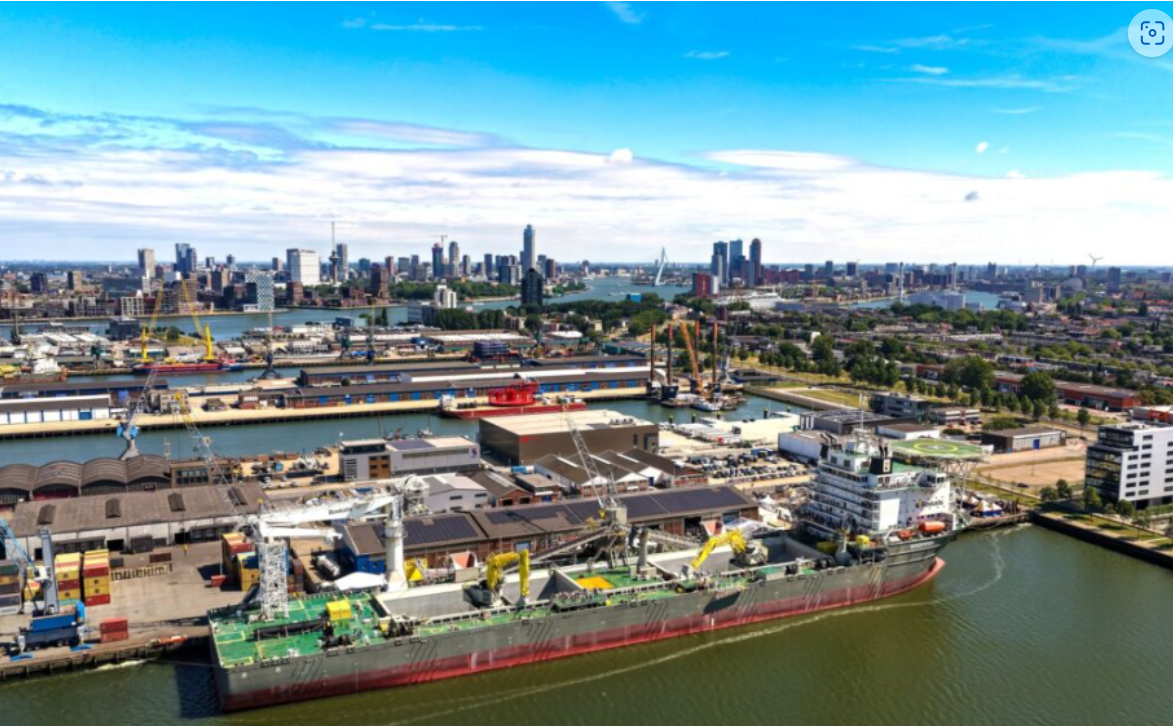
The “Windpiper” is 227 meters long and 40 meters wide, with a total installed power of over 31,000 kilowatts. It has a rock-carrying capacity of up to 45,500 metric tons and is equipped with more than 100 single-occupancy cabins. In addition to a moon pool designed for tunnel segment installation, the vessel is equipped with a tilting tunnel segment system, which is essential for protecting the structural foundations of offshore wind turbines and other structures. Furthermore, the vessel is equipped with seven propellers and has earned DP2 certification, making it specifically designed for operation in harsh sea conditions.
It is worth noting that the “Windpiper” was originally the deep-sea mining vessel “MAC Goliath,” built at China’s Mawei Shipbuilding at a cost of approximately $500 million for the Canadian company Nautilus Minerals.
In 2014, Mawei Shipbuilding signed a contract with Dubai-based shipowner Marine Assets Corporation (MAC) to build the world’s first deep-sea mining vessel. Originally scheduled for delivery by the end of 2017, the vessel was intended for use in the Solwara 1 gold-copper mining project in Papua New Guinea. At that time, the shipowner had signed a charter agreement with Canada’s Nautilus Minerals.
Subsequently, because the shipowner failed to make a $18 million installment payment as required by the contract, Mawei Shipbuilding voluntarily terminated the shipbuilding contract in July 2018, at which time construction was approximately 75% complete.
From 2018 to 2024, this world’s first deep-sea mining vessel remained idle at the shipyard until January 2025, when Boskalis announced its acquisition of the vessel and plans to convert it into the industry’s largest rock-dumping vessel, giving this “canceled vessel” a new lease on life.
After a year and a half, the “Windpiper” completed its refit and arrived at the Port of Rotterdam in the Netherlands in April 2026 for final outfitting and commissioning, with plans to deploy it to an offshore wind project in the Baltic Sea in the second half of the year.
Previously, Boskalis operated three rock-dumping vessels. The company stated that with the “Windpiper” officially delivered and operational, its rock-dumping capacity will double, further solidifying its leading position in this market segment.