


Over the past few months, the veteran South Korean shipowner Sinokor Maritime has been aggressively acquiring Very Large Crude Carriers (VLCCs). At the time, industry speculation suggested that the funding for this round of VLCC acquisitions—as well as the ultimate buyer—originated from Mediterranean Shipping Company (MSC). Public documents from regulatory bodies in Greece and Cyprus have now, for the first time, officially confirmed these months-long market speculations.
According to public documents, in early February, MSC—through its Luxembourg-registered entity, SAS Shipping Agencies Services (SAS Lux)—signed an investment framework agreement with Sinokor Maritime’s founder and sole existing shareholder, Jong Ka-hyun.
Under the terms of the agreement, SAS Lux will acquire a 50% equity stake in Sinokor Maritime, while the remaining 50% stake will continue to be held by Jong Ka-hyun; this signifies that the two parties will jointly control Sinokor Maritime.
According to Sinokor Maritime’s official website, the company—formerly known as Sinokor Merchant Marine—launched its first container liner service between Korea and China in 1989 and has, over the years, focused its expansion primarily within the container ship and dry bulk vessel sectors.
According to an in-depth report by “Forbes”, the collaboration between Sinokor Maritime and MSC began at a time when the latter was aggressively acquiring second-hand vessels within the container shipping sector. Between January 2022 and March 2025, MSC invested $40 billion in the acquisition of container ships—a portfolio that included at least 11 vessels sold by Sinokor Maritime.
According to data released by Alphaliner last month, MSC’s container fleet boasts a total capacity of 7.2 million TEU and currently operates 980 vessels, standing on the verge of crossing the symbolic 1,000-ship threshold. The fleet comprises 727 owned vessels with a capacity of 4.55 million TEU, and 253 chartered vessels with a capacity of 2.65 million TEU. Furthermore, the company holds newbuild orders totaling a capacity of 2.18 million TEU—ranking fourth among the world’s top ten shipping lines in terms of the ratio of its orderbook to its existing fleet.
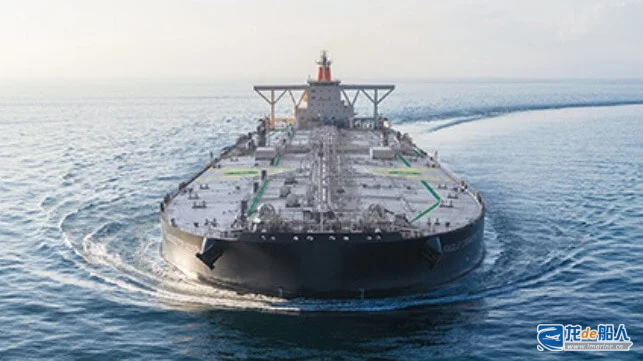
Sinokor Maritime—an entity just as “low-profile” as MSC—has recently emerged as the most active shipowner in the secondhand VLCC market. Citing market sources, Forbes reported that Sinokor Maritime appears to be acquiring “as many VLCCs as possible.”
Currently, Sinokor Maritime owns or charters a fleet of approximately 130 to 150 VLCCs, accounting for roughly 14% to 17% of the global total of 880 vessels. It stands as the only operator worldwide to hold a market share exceeding 10% in the VLCC sector.
Norwegian shipbroker Fearnleys analyzed that the company now controls over a quarter of the compliant, operational VLCC fleet, estimating that Sinokor Maritime’s market share in the short-term VLCC shipping sector could reach as high as 37% by February 2026.
Shipbroker BRS stated in a recent report that “never before has a single VLCC operator held such a dominant market share within the active fleet,” describing Sinokor Maritime as a “super-operator” in the VLCC sector.
According to reports, a deep dive by Forbes into corporate records in Panama and Equasis revealed 31 VLCCs linked to Sinokor Maritime—though not owned by the company itself—11 of which are registered under MSC Shipmanagement, a Cyprus-based entity led by Mario Aponte. In total, 18 such companies were identified; however, it remains unclear whether the remaining seven have also acquired, or are in the process of acquiring, VLCCs.
Market sources indicate that Sinokor Maritime’s total VLCC acquisitions currently stand at 76 vessels, though the company’s total fleet size is projected to eventually exceed 100 ships. Bloomberg estimates that Mediterranean Shipping Company (MSC) and Sinokor Maritime will ultimately control a combined fleet of approximately 150 VLCCs, commanding a market share of 40%. Other analysts, however, suggest that their actual market share is closer to 25%.
Given the soaring valuations of oil tankers in 2026, this move appears to be an excellent time to enter the crude oil shipping market.
It is understood that the Gianluigi Aponte family—which is poised to become a co-controlling shareholder of Sinokor Maritime—commands a business empire encompassing MSC (Mediterranean Shipping Company), the world’s largest container shipping line; MSC Cruises, its cruise line division; and a rapidly expanding logistics network. This acquisition of an equity stake in Sinokor Maritime is aimed at making a major foray into the crude oil tanker market, with the ultimate objective of securing a dominant position.
Currently, MSC’s acquisition of a stake in Sinokor Merchant Marine—conducted through its subsidiary, SAS Lux—has not yet received full approval. Greece and Cyprus have formally accepted the filing; however, regulatory approval from other jurisdictions may still be required prior to the completion of the transaction.
Notably, the aforementioned transaction does not mark MSC’s first foray into other business sectors via SAS Lux. In 2024, MSC utilized SAS Lux to acquire Gram Car Carriers, thereby entering the car carrier market. Concurrently, MSC has expanded its investments in ferries and cruise ships, ventured into air cargo operations, and acquired rail and land-based logistics assets.