


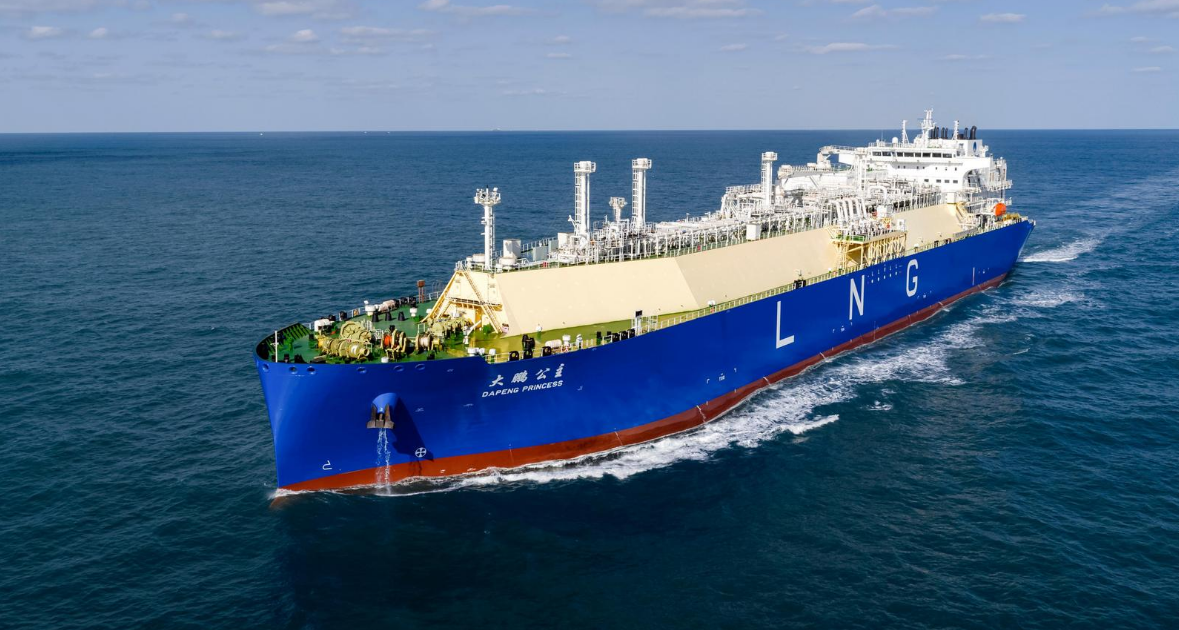
Citing views from shipping industry executives and market analysts, foreign media report that following a slump in 2025, orders for LNG carriers are expected to rebound in 2026, driven by rising global LNG production and improved fuel efficiency in ships.
The recovery in orders for LNG carriers is easing market concerns that the U.S.-Iran conflict could lead to supply disruptions, thereby weakening short-term shipping demand and depressing freight rates.
Data from shipping consultancy firms Poten & Partners and Drewry show that since the end of 2025, Chinese and South Korean shipyards have secured significantly more orders for LNG carriers, with 35 new LNG carriers ordered in the first quarter of 2026 alone.
According to Drewry data, only 37 LNG carriers were ordered in 2025, compared to a record high of 171 in 2022. The construction cost of a single LNG carrier ranges from $250 million to $260 million, and the construction cycle exceeds three years.
A senior analyst at Drewry noted that upcoming LNG projects in the United States, Africa, Canada, and Argentina will drive demand for LNG carriers. Combined with the shipping industry’s pursuit of fuel efficiency and the acceleration of ship scrapping, steam-turbine and diesel-electric LNG carriers are expected to be phased out gradually.
U.S. LNG shipments offer flexibility
Currently, the global fleet of LNG carriers exceeds 700 vessels, with an annual transport capacity of over 400 million tons.
Fraser Carson, a principal analyst at Wood Mackenzie, stated that in 2025, approximately 72 million metric tons per year of new LNG capacity will be approved globally. Over the next three to four years, more than 120 million metric tons per year of new LNG supply from the United States will enter the market, giving rise to a new shipping and trade landscape and thereby creating a need for more LNG carriers.
U.S. LNG is typically sold on a FOB basis, with flexible destination terms that allow for mid-voyage rerouting, which may result in extended vessel lay-up periods.
In addition, Mitsui O.S.K. Lines (MOL), the world’s largest LNG carrier owner with a fleet of 107 vessels, stated that the investment boom in U.S. LNG production capacity will continue to fuel shipbuilding enthusiasm among LNG carrier owners. MOL plans to expand its LNG carrier fleet to approximately 150 vessels by around 2035.
Meanwhile, Drewry data shows that due to poor economic returns and tightening emissions regulations, the scrapping of steam-powered LNG carriers has accelerated since 2022, with the number of vessels scrapped reaching a record 15 in 2025.
A representative from the global ship management company Anglo-Eastern noted that as the industry shifts toward dual-fuel vessels capable of using LNG as fuel, the International Maritime Organization’s (IMO) proposed framework for reducing shipping emissions is also driving demand for newbuilds.
Geopolitical tensions are complicating the outlook for the LNG shipping market
Despite continued strong demand for new vessels, the U.S.-Iran conflict is sending mixed signals to the global LNG shipping market.
Fraser Carson noted that supply disruptions are driving Asian LNG buyers to turn to alternative sources, such as the Atlantic Basin, thereby increasing vessel voyage distances. This could also boost demand for LNG projects in other regions, thereby driving overall demand for more LNG carriers.
On the other hand, the conflict is disrupting LNG shipping routes through the Strait of Hormuz and will result in the shutdown of 12.8 million tons of Qatar’s production capacity over the next three to five years. This could dampen transport demand and drag down freight rates, at a time when vessel supply is facing “avalanche-like” growth.
Qatar currently operates more than 100 LNG carriers and plans to add 70 to 80 newly built vessels over the next three to four years; meanwhile, the Abu Dhabi National Oil Company (ADNOC) expects to double the size of its fleet to 18 vessels within 36 months. Fraser Carson noted, “This series of new vessels was originally intended primarily to serve LNG projects currently under construction, but those projects are now facing delays. The longer these delays persist, the greater the likelihood that new vessels will be subleased or chartered out into the spot market, leading to a significant decline in freight rates.”
Regarding deliveries, according to forecasts by Poten & Partners and Drewry, 90–100 LNG carriers are expected to be delivered in 2026, up from 79 in 2025, setting a new record. However, Drewry analysts noted that of the nine LNG carriers originally scheduled for delivery in 2026 but now postponed to 2027–2028, seven are associated with Qatar Energy.
Analysts at Poten & Partners stated that due to uncertainties caused by the war, some companies may delay placing orders for large LNG carriers. “Market uncertainty and rising shipbuilding costs—including labor and raw material costs—amid the current Middle East crisis may deter some companies from placing orders.”