


As the ongoing conflict in the Middle East involving the U.S., Israel, and Iran persists, both crude oil supply chains and shipping markets are experiencing severe turbulence. Disruptions to Middle Eastern crude oil supplies—triggered by a blockade of the Strait of Hormuz—have caused freight rates for Very Large Crude Carriers (VLCCs) to skyrocket, leading to the rare phenomenon where the price of immediately available second-hand vessels exceeds that of newbuilds. This marks the first time such a situation has occurred since the shipping market’s peak boom period in 2008.
As the shortage of shipping capacity intensifies, Sinokor Merchant Marine—owner of the world’s largest VLCC fleet—has emerged as the primary beneficiary, while the value of Suezmax tankers, which serve as an alternative to VLCCs, has also risen in tandem.
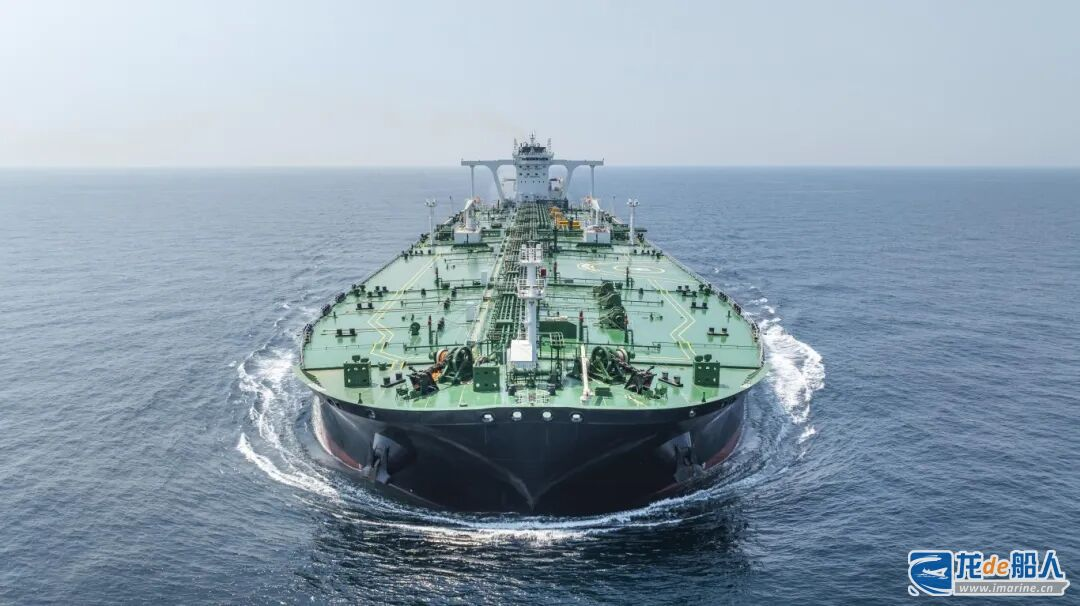
VLCC Freight Rates Soar for Days
According to Clarksons data, as of March 6, the resale value of a five-year-old, 300,000 DWT VLCC stood at $140 million, while the newbuilding cost for a vessel of equivalent specifications was $128.5 million. This indicates that the price of a second-hand vessel is 8.9%—or $11.5 million—higher than that of a new vessel. Industry experts explain: “Even if one were to order a new vessel, the delivery schedule is currently booked out for three years; consequently, VLCCs that are available for immediate deployment are commanding a premium.”
The direct cause of the surge in second-hand vessel prices is the skyrocketing of freight rates. During the second week of this month, the average daily freight rate for 300,000 DWT VLCCs stood at $423,736—an increase of 102.2% compared to the previous week. When benchmarked against the average daily rate of just $68,146 recorded in the second week of October 2025, this represents a more than sixfold increase within a mere five months.
The blockade of the Strait of Hormuz, which has left approximately 60 VLCCs stranded globally, is the primary driver behind the surge in VLCC freight rates. The immobilization of these vessels has caused a drastic decline in effective market shipping capacity; furthermore, as refineries and crude oil traders have expanded their sourcing beyond the Middle East, demand for long-haul transport has increased. Industry experts explain: “Even if the volume of cargo transported remains constant, longer shipping routes inevitably require a greater number of vessels; this shortage of shipping capacity directly results in soaring freight rates.”
Market analysts suggest that the recent surge in freight rates may be more than just a simple “war premium.”
In recent years, driven by increasingly stringent carbon emission regulations from the International Maritime Organization (IMO) and market expectations of a long-term slowdown in oil demand, shipping companies have shown little enthusiasm for placing new orders in the tanker market. In reality, however, global oil consumption continues to rise, and crude oil trade flows—connecting Russia, the Middle East, and the United States—have become increasingly complex; consequently, the actual demand for tankers has, in fact, increased. Compounded by the concurrent need to replace aging tankers—specifically those over 20 years old—the supply-demand dynamics within the shipping sector have become increasingly tight.
This is particularly true for the VLCC segment, where the scale of supply is difficult to expand. Given that VLCCs—classified as ultra-large vessels with a length of approximately 300 meters and a beam of 50 meters—can only be constructed by a select few shipyards equipped with large dry docks, deep-water facilities, and massive cranes, industry insiders have offered the following analysis: “Vessels cannot be built on demand overnight; consequently, in the current market environment, second-hand vessels capable of immediate deployment are inevitably more valuable than newbuilds.”
Furthermore, the market for second-hand VLCCs exhibits a distinct trend: “the younger the vessel, the more pronounced the price appreciation.” As demand is concentrated on vessels approximately five years of age—which boast high fuel efficiency and can relatively easily comply with environmental regulations—the market effectively regards them as “near-new vessels ready for immediate deployment.” Conversely, for older vessels aged 15 years or more, the price disparity widens significantly—even among VLCCs of the same class—due to factors such as remaining service life, maintenance costs, and the burden of environmental compliance. Industry observers note: “In the past, the second-hand vessel market focused primarily on sourcing low-cost ships; today, it has evolved into a market driven by the acquisition of ‘time value.'”
Buying Spree: Sinokor Merchant Marine Becomes the Focus of the VLCC Market
In the currently booming VLCC market, the company attracting the most attention is undoubtedly the veteran South Korean shipowner, Sinokor Merchant Marine. Since the conclusion of the COVID-19 pandemic in 2022, the company has embarked on an aggressive acquisition spree of second-hand VLCCs. Anticipating that unforeseen variables—such as pandemics or wars—could trigger a surge in freight rates, Sinokor Merchant Marine has strategically positioned itself in advance to expand its fleet.
Currently, Sinokor Merchant Marine owns or charters a fleet of approximately 130 to 150 VLCCs, accounting for roughly 14% to 17% of the global total of 880 vessels; it is the only operator worldwide with a VLCC market share exceeding 10%.
Sinokor Merchant Marine’s market dominance is translating into significant bargaining power regarding freight rates. Reports indicate that Sinokor Merchant Marine recently quoted a daily charter rate of approximately $800,000 for VLCCs on Middle East routes to global refiners—a premium rate far exceeding the prevailing market average. Taking the representative VLCC route—from Saudi Arabia to Shanghai, China—as an example, the revenue generated from a single one-way voyage exceeds 140 million won. Norwegian shipbroker Fearnley estimates that, as of February 2026, Sinokor Merchant Marine held a market share of up to 37% in the short-term VLCC charter market.
Sinokor Merchant Marine’s aggressive fleet expansion is also considered a significant factor driving up the prices of second-hand VLCCs. In December 2025, the company acquired 15 second-hand VLCCs in a single transaction; subsequently, on February 20—prior to the outbreak of the U.S.-Iran conflict—it purchased an additional VLCC from the Singaporean shipping company AET.
Industry observers believe that Sinokor Merchant Marine is leveraging the robust cash flow generated during the period of rising freight rates to acquire additional vessels. By doing so, the company aims to further consolidate its market dominance through these new assets, thereby establishing a virtuous cycle. This strategy represents far more than merely reaping the benefits of a “war dividend”; rather, it signifies the company’s successful seizure of the leading role in the ongoing reshaping of the tanker market landscape.
Against the backdrop of rising freight rates, the gap between shipping companies that have secured their fleets in advance and those that have failed to do so is widening rapidly. Shipping companies with ample capacity can maximize their bargaining power regarding freight rates in the spot market, whereas those facing capacity shortages are left with no choice but to accept exorbitant charter rates—or simply forgo charter contracts altogether.
Industry observers believe that the VLCC market in 2026 will not merely be characterized by a simple uptrend in freight rates, but rather by a scenario in which vessel capacity becomes concentrated among top ship-owning operators—a situation in which market dominance shifts decisively into their hands.
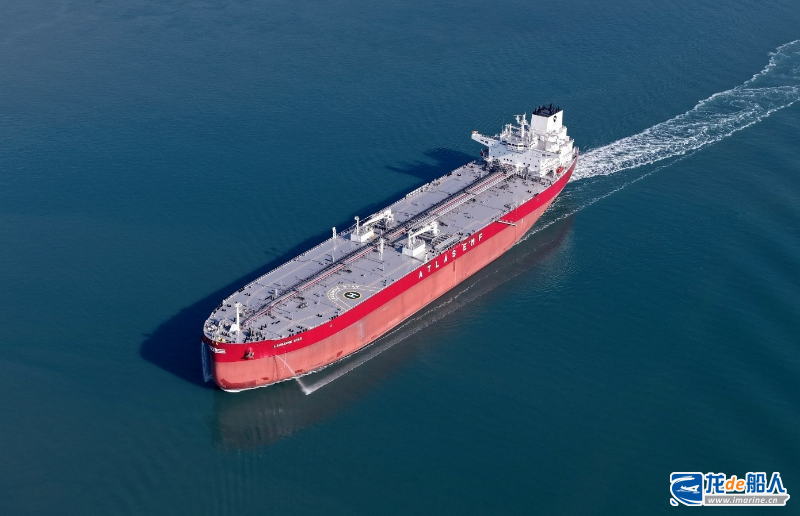
Tanker Capacity Shortage Spreads to Suezmax Tankers
Currently, the shortage of capacity in the tanker market has spread to other vessel types—particularly Suezmax tankers, which serve as viable substitutes.
Suezmax tankers possess a carrying capacity ranging from 120,000 to 160,000 deadweight tons. Although their cargo volume is smaller than that of VLCCs, their more compact hulls and shallower drafts enable them to call at ports with limited water depth. Their value is currently on the rise, driven by their ability to access U.S. ports along the Gulf Coast—which typically have average depths of around 20 meters—combined with the market’s ongoing shift toward substituting Middle Eastern crude oil with U.S.-produced crude.
Particularly in the context of difficulties in Middle Eastern crude oil supplies caused by a blockade of the Strait of Hormuz, demand for transporting U.S. crude oil—loaded in the Gulf of Mexico—to Asia is on the rise; in this scenario, the Suezmax tanker’s ability to transit the Suez Canal has emerged as a key advantage.
Due to draft and vessel size constraints, VLCCs have relatively limited route options; Suezmax tankers, on the other hand, are better suited for long-haul transport to Asia via the Suez Canal and are considered a more efficient alternative. Simply put, while VLCCs handle the bulk transport of massive cargo volumes in a single shipment, Suezmax tankers emerge as a more agile alternative in scenarios involving port restrictions or the necessity of long-distance detours.
In fact, the volume of orders for Suezmax tankers is growing rapidly. Data from the U.S. shipping analytics firm Besson Nautical indicates that a total of 74 Suezmax tankers were ordered in 2025—a year-on-year increase of 48%—while new orders for VLCCs saw a slight decline during the same period.
The analysis notes that, given that the dry docks at large shipyards capable of building VLCCs are already fully booked for the next three to four years, shipowners in urgent need of vessels are turning their attention to Suezmax tankers, which can also be built by medium-sized shipyards.
The increase in U.S. crude oil shipments and the trend toward route diversification are also supporting demand for Suezmax tankers. Recently, several shipyards in China and South Korea have secured orders for Suezmax tankers, though delivery dates are typically three years from now. Industry observers believe that as demand for VLCC replacements and fleet renewal of aging vessels surges simultaneously, the Suezmax tanker market is heating up at a faster-than-expected pace.
In addition to a surge in newbuilding orders, prices for second-hand Suezmax tankers are also rising rapidly. As of March 6, the resale price for a 5-year-old Suezmax tanker stood at $88 million, surpassing the newbuilding price of $87.5 million on the same day. Following VLCCs, this marks the first time that second-hand Suezmax tanker prices have exceeded those of newbuildings.
Market conditions for VLCCs and Suezmax tankers not only reflect a correlation but also indicate that the scarcity value of “vessels ready for immediate operation” is rising across the entire tanker market. This is because, for shipowners, securing secondhand vessels that can be put into service immediately to address soaring freight rates is a more advantageous strategy than placing orders for newbuilds and waiting several years.
An industry insider noted, “The Suezmax tanker fleet has a high proportion of older vessels, so there is significant structural demand for replacement. As long as the shortage of VLCCs persists, demand for Suezmax tankers—as a substitute—will continue to rise.”