


As concerns over an oversupply of container ships have intensified, some shipping companies have shifted their shipbuilding focus from container ships to the tanker market. At the same time, driven by strong demand for crude oil transportation, the need to replace aging vessels, and rising freight rates due to the conflict in the Middle East, the tanker market continues to heat up, and Chinese shipyards have secured a large number of orders thanks to their unique competitive advantages.
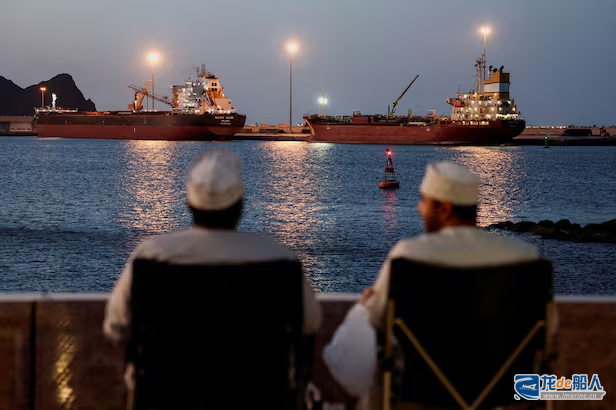
The shipping giant changed its order, converting all four container ships into oil tankers.
Earlier this month, Capital Group—owned by Greek shipping magnate Evangelos Marinakis—announced a contract with HD Hyundai Samho to alter its 2025 order for four medium-sized container ships, replacing them with four 157,000 DWT Suezmax oil tankers. These tankers can transit the Suez Canal when fully loaded with crude oil and are currently the largest Suezmax-class crude oil carriers in operation.
Following the contract amendment, the delivery date for HD Hyundai Samho’s four Suezmax tankers has been set for no later than October 31, 2028, approximately one month earlier than the original container ship project. Due to the change in vessel type, there was a significant adjustment to the shipbuilding contract price before and after the amendment, with the total cost decreasing from $466 million to $360 million.
Clarksons noted: “Shipbuilders are agreeing to convert existing container ship orders into tanker orders in exchange for favorable terms, such as higher prices and the inclusion of high-margin eco-friendly specifications… With the recent strengthening of the tanker market, such cases of order conversions are on the rise.”
With a shortage of tanker capacity and soaring freight rates, shipowners are increasing their capacity to order new vessels.
It is understood that during the early stages of a shipbuilding contract, the shipowner and the shipbuilder can typically negotiate changes to the ship type; however, this usually requires the payment of a change fee or a commitment to place additional orders, and the shipowner must also bear the corresponding costs. The reason shipowners are willing to bear the costs of changing ship types stems from the diverging supply-demand outlooks for container ships and oil tankers. The newbuilding market for container ships has seen a surge in large-scale orders, with capacity under construction reaching record highs, leading to increased future supply pressure; in contrast, the global oil tanker fleet faces a structural shortage of capacity.
According to Clarksons data, as of the end of 2025, the order book for container ships accounted for 34% of the existing fleet, implying that new tonnage equivalent to one-third of the current fleet could be added in the future. By comparison, the order book for oil tankers accounted for only 17% of the existing fleet.
Not only that, but the recent outbreak of conflict in the Middle East has driven a sharp rise in tanker freight rates, further bolstering the tanker market. Currently, traffic through the Strait of Hormuz has been substantially disrupted, causing shipping volumes to plummet by more than 90%; Saudi Arabia has already adjusted its export routes, redirecting some crude oil shipments to ports along the Red Sea coast.
As voyage distances have increased, tanker freight rates have soared to record highs. Last week, spot charter rates for Very Large Crude Carriers (VLCCs) on routes from the Middle East to China reached $480,000 per day, while daily charter rates for Suezmax tankers exceeded $300,000. The global shipping market’s daily earnings index climbed to a record high of $53,319. As tanker operating profits expand, shipowners’ cash liquidity has improved, and their capacity to order newbuilds has increased accordingly.
Korea Investment & Securities noted in an analysis: “In the merchant shipping cycle that began in 2021, 2026 is set to be the year with the strongest growth in tanker orders… From January to March 8, 2026, global shipbuilders received orders for 97 new tankers, more than triple the 30-plus vessels received during the same period last year.”
Chinese shipbuilders have a clear advantage and have secured the majority of orders.
Amid this surge in tanker orders, Chinese shipbuilders are rapidly filling their production capacity thanks to their unique competitive advantages.
Amid this surge in tanker orders, Chinese shipyards are rapidly filling their production capacity thanks to their unique competitive advantages. shipbuilders such as Hengli Heavy Industries, New Times Shipbuilding, Beihai Shipbuilding, Guangzhou Shipyard International, Waigaoqiao Shipbuilding, and Jiangsu Hantong Ship Heavy Industry Co., Ltd(HT) have all secured new orders.
Taking VLCCs as an example, according to incomplete statistics, global shipowners have placed orders for at least 56 VLCCs this year. Hengli Heavy Industries has secured 44 of these vessels, accounting for over 80% of the market share, while the remainder have been awarded to shipbuilders such as New Times Shipbuilding, HT, and Hanwha Ocean.
In the Suezmax tanker market, orders secured by Chinese shipbuilders are also significant; of the more than 30 vessels ordered this year, Chinese shipbuilders have secured nearly 20. Furthermore, the largest order for MR product tankers so far in 2026 was secured by a Chinese shipbuilder: Greek shipowner Central placed an order with Guangzhou Shipyard International for 10 50,000 DWT MR product tankers.
Overall, the container ship market continues to face pressure from oversupply, while the tanker market is entering a strong cycle driven by a confluence of factors, including tight capacity, high freight rates, the replacement of aging vessels, and geopolitical tensions. As the boom in new tanker construction persists, the global shipping and shipbuilding market landscape in 2026 is expected to continue to revolve around the tanker cycle.