


Despite the persistent decline in container freight rates, the surge in new vessel orders among global liner shipping companies shows no signs of abating.
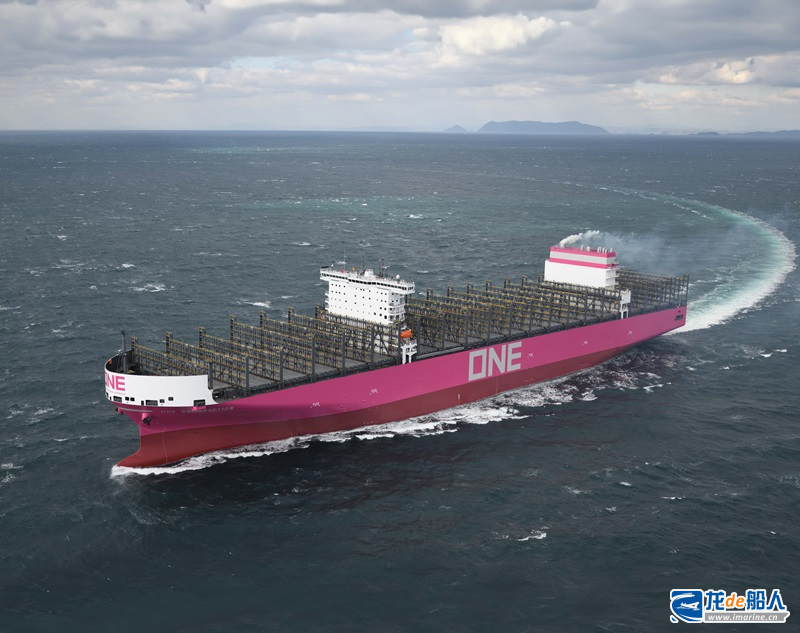
South Korean media reports that Ocean Network Express (ONE) has announced plans to order a total of 22 liquefied natural gas (LNG)-dual-fuel container ships worth $4.2 billion.
The shipbuilding project includes two new vessel specifications: 6+6 13,000 TEU class and 6+4 15,000 TEU class. Orders are expected to be distributed among several shipbuilders for different vessel types.
The industry believes that ONE’s ongoing LNG dual-fuel container ship project is a key indicator that the shipbuilding investment cycle centered on environmentally friendly vessels remains robust.
Industry observers note that despite recent adjustments to freight rates, shipowners continue to maintain their medium-to-long-term investment strategy for fleet renewal and compliance with environmental regulations. Against the backdrop of progressively stricter environmental regulations such as the International Maritime Organization’s (IMO) Carbon Intensity Index (CII), demand for fleet renewal is driving new ship orders.
According to the World Shipping Council’s “Dual Fuel Fleet Dynamics Report,” LNG remains the preferred fuel for container ship owners, accounting for 58% of total tonnage; conventional fuels account for 36%, and methanol fuel for only 6%. This trend has continued into 2026. Data from DNV’s Alternative Fuels Insights platform shows that in January 2026, 20 new orders for alternative fuel vessels were placed: 16 LNG-fueled vessels, all of which are container ships.
Industry analysts note: “Despite the short-term adjustment in container freight rates, there are no signs yet of a reversal in the fleet investment cycle of shipping companies.”
Entering 2026, in addition to the LNG dual-fuel container ship project under the ONE initiative, leading liner shipping companies such as Mediterranean Shipping Company (MSC), Maersk, COSCO Shipping Lines, and Singapore’s Pacific International Lines (PIL) are also ramping up their investments in LNG dual-fuel vessels.
COSCO Shipping Lines has placed an order with Jiangnan Shipyard for 12 dual-fuel LNG-powered container ships with a capacity of 18,000 TEU. Each vessel is valued at 1.399 billion yuan, totaling 16.788 billion yuan (approximately US$2.438 billion). Delivery is expected between 2028 and 2029.
MSC has placed an additional order for eight 11,500 TEU LNG dual-fuel container ships with Penglai Zhongbai Jinglu Ship Industry Co., Ltd. (Jinglu Shipyard). This brings the total number of vessels of the same type ordered under their cooperative construction program to 16. The first batch of eight vessels was ordered in 2024, with an option for four additional vessels of the same type.
Maersk has announced a contract with New Times Shipbuilding for the construction of eight 18,600 TEU LNG dual-fuel container ships, scheduled for delivery in 2029 and 2030. Measuring 366 meters in length and 58.6 meters in width, these vessels are more compact than the current largest container ships, which stand at 400 meters. They will be equipped with dual-fuel engines capable of operating on either conventional marine fuel oil or liquefied natural gas (LNG).
PIL has separately signed contracts with Hudong-Zhonghua Shipbuilding and HD Hyundai Heavy Industries for the construction of four 13,000 TEU LNG dual-fuel New Panamax container ships. Delivery schedules and final costs remain undetermined. Industry estimates place the total project value at over $1.5 billion, with deliveries expected between late 2028 and early 2029.
Wan Hai Lines has placed an order for six 6,000 TEU container ships with LNG-ready designs at Huangpu Wenchong, with a single vessel costing between US$75.2 million and US$82 million, and a total order value between US$451.2 million and US$492 million. Delivery is expected before 2030.