


South South Korean Next-Generation Destroyer (KDDX) project, which had been stalled for two years, has made substantial progress. The South Korean authorities have finalized the selection of contractors for the detailed design and construction of the first vessel of the KDDX project, and HD Hyundai Heavy Industries and Hanwha Ocean will engage in a direct confrontation.
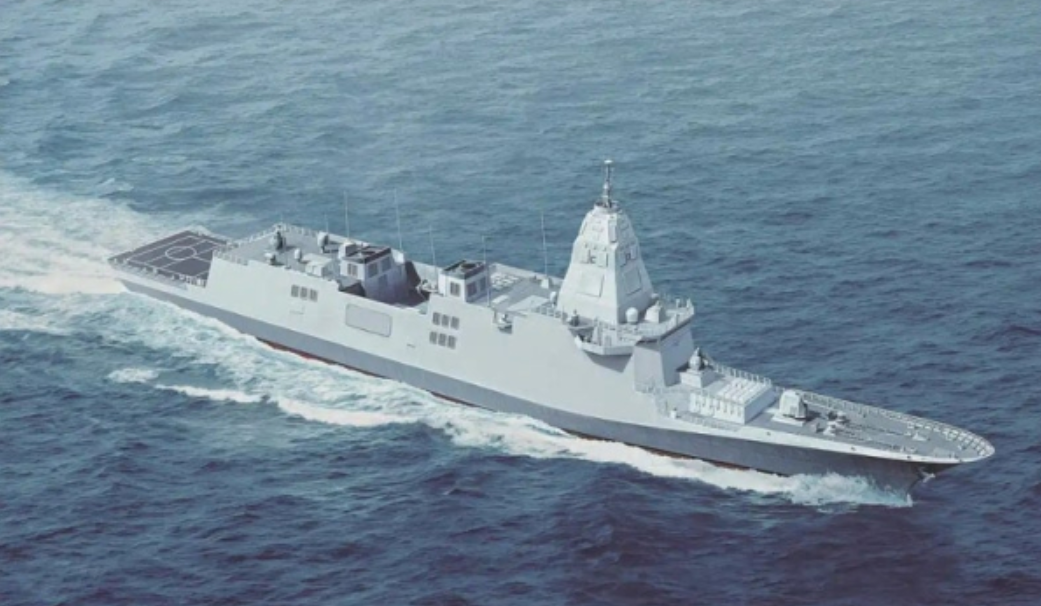
Currently, the South Korean shipbuilding industry is closely monitoring the applicability of the safety clauses in the KDDX project and how to formulate competitive bidding standards. This marks the first time a defense shipbuilding project in South Korea has adopted a competitive bidding process.
According to South Korean media reports, the Defense Acquisition Program Administration (DAPA) has decided to select contractors for the detailed design and construction of the lead ship for the KDDX project through a competitive bidding process. The formal contract is expected to be finalized and signed by the end of 2026 at the latest.
Specifically, DAPA plans to convene a KDDX Project Promotion Committee meeting in the first half of 2026 to revise the detailed design and basic construction plan for the lead ship, submit it for review, and establish evaluation criteria and scoring standards. Following this, the proposal solicitation, tender announcement, and negotiation processes will be completed sequentially to ensure contract signing is finalized by the end of 2026.
Regarding the competition method determined by the South Korean authorities, the South Korean shipbuilding industry believes that the biggest variable lies in the issue of safety score deductions for HD Hyundai Heavy Industries. Previously, HD Hyundai Heavy Industries had accumulated 1.8 safety points deducted as of November 19th due to more than eight instances of leaking military secrets. In September 2025, reports surfaced that DAPA was considering an additional 1.2 safety points deduction by December 2026, causing the controversy to continue to escalate.
Since the outcome of bidding for defense and military projects often hinges on decimal points, DAPA stated that whether to impose additional deductions on HD Hyundai Heavy Industries will be decided during the evaluation period following the publication of the tender notice. HD Hyundai has explicitly stated that if additional safety points are deducted, the company will take strong legal action.
A representative from South Korea’s shipbuilding industry stated: “The core issue in the bidding for South Korea’s KDDX project lies in whether HD Hyundai Heavy Industries should be subject to safety assessment deductions. While the matter of deductions remains undecided, DAPA must take measures to prevent disputes between companies.”
In response, DAPA stated: “The industry rumor that HD Hyundai Heavy Industries is at a disadvantage in the bidding process due to safety point deductions is completely unfounded. DAPA has not yet decided whether to implement safety point deductions for the KDDX project and is currently conducting a comprehensive evaluation of relevant matters… Subsequent proposal evaluations for the bidding process will be conducted fairly and prudently in accordance with established procedures.”
Notably, this marks the first instance in South Korea’s defense procurement history where the detailed design and lead contractor for a naval vessel were determined through competitive bidding. Consequently, the DAPA must revise its technical and price evaluation criteria and navigate a complex series of procedures, including tender announcements, proposal evaluations, and design reviews.
Industry observers in South Korea have pointed out that the KDDX project faces unpredictable risks throughout its entire process—from the formulation of evaluation criteria and scoring systems to the implementation of safety point deduction mechanisms and the disclosure of results. As procedures increase, the possibility of further project delays cannot be ruled out.
Regarding the decision to conduct a competitive bidding process, HD Hyundai Heavy Industries stated, “The company respects DAPA’s decision, but regrets that established principles and regulations have been shaken. The company will carefully review the decision and looks forward to the subsequent procedures proceeding fairly in strict accordance with the law and principles.” Hanwha Ocean stated, “It is fortunate that the method for selecting the detailed design contractor and the first ship contractor for the KDDX project has now been determined… The company will do its utmost to contribute to strengthening the South Korean Navy by undertaking the KDDX project.”
It is understood that the KDDX project is a national-level key initiative in South Korea, with a total cost of approximately 7.8 trillion won. The plan is to construct and deploy six 6,000-ton class destroyers by 2030. This destroyer class employs entirely domestically developed South Korean technology, from the hull to the weapon systems. Upon completion, South Korea will become the sixth country in the world to achieve full domestic production of destroyers.
The project is being advanced in phases: conceptual design, basic design, detailed design, construction of the lead ship, and construction of subsequent vessels. The conceptual design was completed by Daewoo Shipbuilding & Marine Engineering (now Hanwha Ocean) in 2012, while Hyundai Heavy Industries completed the basic design by the end of 2023.
In December 2023, South Korea’s DAPA initiated the selection process for contractors to undertake the detailed design and construction of the lead ship for the KDDX project, originally scheduled for completion in 2024. Following standard practice for South Korean defense projects, the company responsible for the ship’s basic design was expected to secure the detailed design contract. However, this decision faced strong objections and challenges from Hanwha Ocean, sparking an intense bidding war between the two parties.
Over the next two years, Hanwha Ocean and HD Hyundai Heavy Industries engaged in fierce competition for this major contract, even filing criminal lawsuits against each other in an effort to gain an edge during the bidding process. During this period, the DAPA proposed three contractor selection methods: designated contract, competitive bidding, and joint design. After multiple rounds of negotiations, competitive bidding was ultimately chosen—the approach most favored by Hanwha Ocean.