

South Korea’s Ministry of Trade, Industry and Energy (MOTIE) and the Ministry of Oceans and Fisheries recently announced that the country will invest over 1.4 trillion won (approximately $1.06 billion) in public and private funds toward the application of artificial intelligence in the shipbuilding industry. The initiative aims to achieve goals such as automated production and the operation of “smart” shipyards. Spanning until 2030, the plan is divided into three regional projects, with participating companies including HD Hyundai, Samsung Heavy Industries, Hanwha Ocean, and various small and medium-sized shipbuilding enterprises.
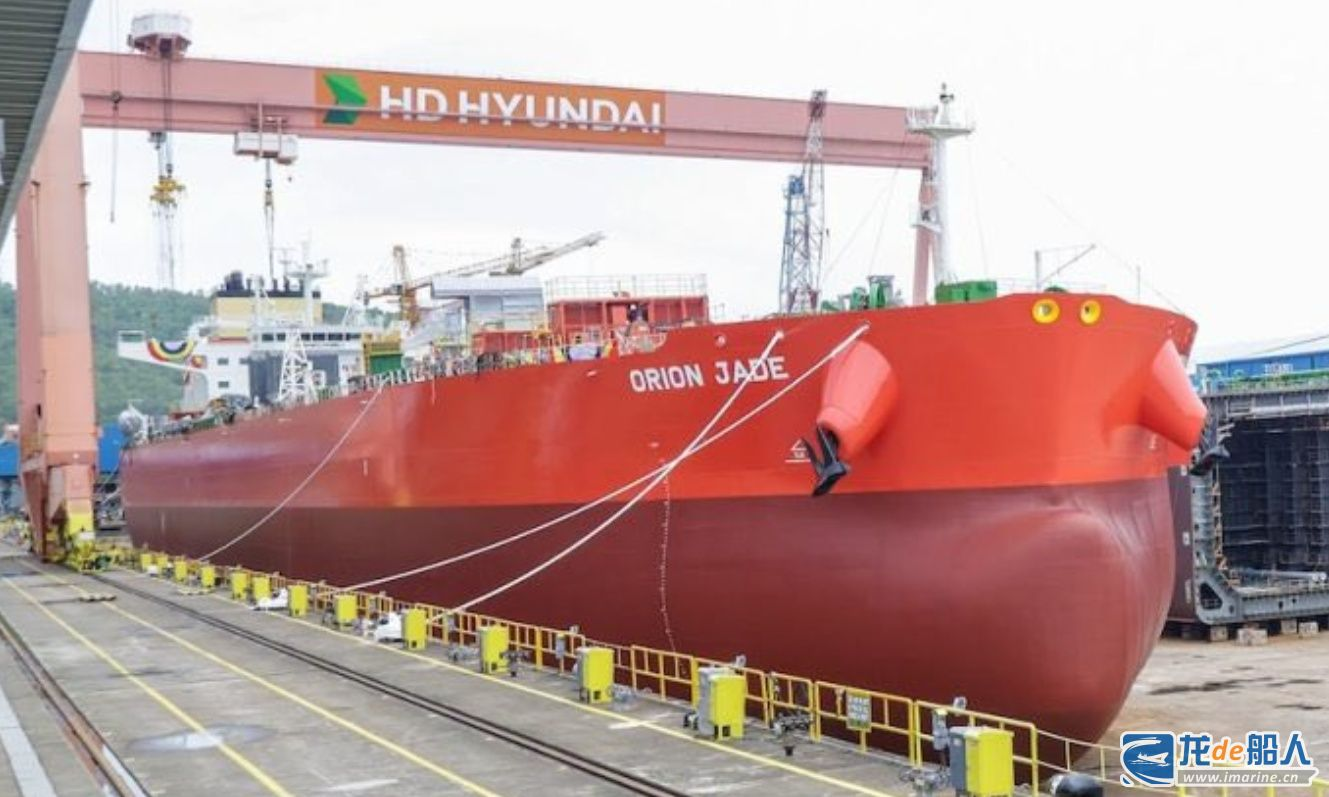
South Korea’s latest initiative to integrate artificial intelligence technology into the shipbuilding industry includes a project with an investment of 596 billion won (approximately $447 million)—the largest of its kind. Centered in Mokpo and Yeongam, the project will be led by HD Hyundai Samho, a shipbuilding subsidiary of HD Hyundai, to develop an AI-controlled steel section assembly process. HD Korea Shipbuilding & Offshore Engineering (HD KSOE) is responsible for developing an autonomous logistics system for shipyards, including the transfer of hull sections and production scheduling; technologies successfully tested during this project will be simultaneously applied to nine surrounding ship equipment suppliers.
Currently, HD Hyundai Samho has signed a memorandum of understanding with Daea Industry to invest 400 billion won (approximately $300 million) in Yeongam to build a new AI-operated demonstration shipyard. This proposed investment has been included in the budget for the aforementioned regional project and does not constitute a new, standalone investment.
The second project will involve an investment of 500 billion won (approximately $375 million) and will cover shipyards and marine equipment suppliers in the Geoje and Busan regions. Samsung Heavy Industries and Hanwha Ocean will develop an AI-based design and production information platform that will enable marine equipment suppliers to input standardized engineering data directly into automated manufacturing equipment. The platform will be applied to areas such as piping, electrical installations, and hull outfitting.
The third regional project will be used to rebuild shipbuilding capacity in the Qunshan area, with a total investment of 310 billion won (approximately $233 million). JE Ocean Heavy Industries plans to introduce an AI-assisted small-section production line in the region and establish a dedicated 5G network for industrial data collection.
JE Ocean Heavy Industries is a new company established by Ecoprime Marine Pacific—the largest shareholder of South Korea’s mid-sized shipbuilder JE Ocean Heavy Industries—to finance the acquisition of the Gunsan shipyard. In July of this year, the shipbuilder entered into a partnership with Ucast, a South Korean 5G private network service provider, to launch the smart transformation project at the Gunsan shipyard.
In addition to its artificial intelligence initiative for the shipbuilding industry, South Korea has simultaneously released its first 10-year roadmap for the development of autonomously navigating vessels, with the goal of launching ships that meet the International Maritime Organization (IMO) Level 4 fully autonomous navigation standards by 2035. The plan includes ongoing technological research and development, expanding the scope of full-scale vessel trials, and participating in the development of international standards.