

In 2026, South Korea’s shipbuilding industry found itself in a wage negotiation stalemate; to date, only Samsung Heavy Industries and HJ Heavy Industries have reached annual wage and collective bargaining agreements, while labor-management disputes at major shipbuilders such as HD Hyundai Heavy Industries and Hanwha Ocean have further escalated.
Taking HD Hyundai Heavy Industries as an example, since the union has rejected the 2026 wage and collective bargaining agreement and no consensus was reached during the most recent round of negotiations, it has escalated a partial strike into a full-scale strike and launched a high-altitude protest in an effort to secure better wages and benefits.
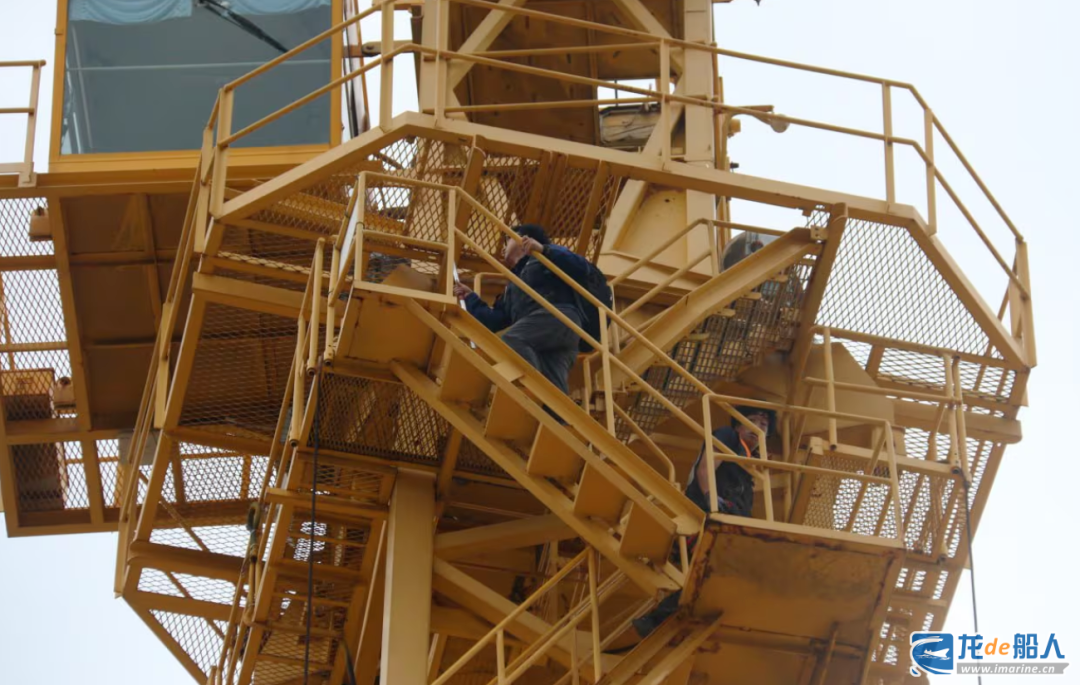
According to a report from both labor and management at HD Hyundai Heavy Industries on October 18, Kim Dong-ha (transliteration), president of the Hyundai Heavy Industries branch of the Korean Metal Workers’ Union, climbed a crane approximately 25 meters high at around 5:00 p.m. on the 18th in the small parts storage area of Main Assembly Plant No. 1 at the Ulsan headquarters to stage a high-altitude sit-in protest. As of now, Kim Dong-ha remains alone at the top of the crane, while union members from HD Hyundai Heavy Industries and management security personnel are locked in a standoff on the ground.
Following the commencement of the high-altitude sit-in protest, the labor union at HD Hyundai Heavy Industries issued a statement: “HD Hyundai Heavy Industries’ projected operating profit for 2026 exceeds 4 trillion won (approximately $3.01 billion at current exchange rates)—nearly double the figure from the previous year—yet shipyard workers are being denied a share of these business results. We demand a performance-based distribution that reflects the current industry boom.”
In addition to the sit-in protests taking place at heights, the strike action by the HD Hyundai Heavy Industries labor union has also escalated. According to the union’s latest strike plan, a partial four-hour walkout originally scheduled for October 19–20—which was to involve only union leadership—has been expanded into a seven-hour strike involving all union members. When combined with the previously scheduled strikes for October 21–23, HD Hyundai Heavy Industries now faces five consecutive days of seven-hour strikes, running from October 19 through October 23.
The strike will take the following form: employees will arrive at work at 8:00 a.m. but work for only one hour, followed by a complete work stoppage from 9:00 a.m. to 5:00 p.m.—effectively amounting to a full-scale strike.
According to reports, labor and management at HD Hyundai Heavy Industries began negotiations on the 2026 wage and collective bargaining agreement in June and reached a tentative agreement on September 30. The agreement includes a 120,000 won (approximately $90.29, including seniority-based pay increases) increase in the monthly base salary, a one-time bonus of 11 million won (approximately $8,276.40) plus a 200% performance bonus, and the expansion of the eligibility criteria for senior employee incentives; maternity leave was extended from 10 days to 20 days, among other provisions.
Based on this provisional agreement, labor and management at HD Hyundai Heavy Industries estimated that the total value of employees’ base salary increases, one-time subsidies, and various bonuses would reach 40.56 million won (approximately $30,517)—a record high—representing an increase of 10.61 million won (approximately $7,982.96) from last year. However, this record-breaking compensation package failed to gain the approval of HD Hyundai Heavy Industries union members and was ultimately rejected with 52.14% voting against it.
After the provisional agreement was rejected, the HD Hyundai Heavy Industries labor union demanded further increases in base pay and bonuses; management, however, stated that it had already offered a very generous proposal and that there was limited room for further pay raises. Both sides are currently working to bridge their differences.
Regarding base pay and bonuses, the HD Hyundai Heavy Industries Union’s initial demands were: a 149,600 won increase in monthly base pay and a 100% increase in bonuses; the core demand was that management allocate a fixed percentage (at least 30%) of operating profit to employees as performance bonuses. Based on the HD Hyundai Heavy Industries union’s estimate of over 4 trillion won in operating profit, and applying the minimum 30% ratio, management would need to set aside at least 1.2 trillion won (approximately $903 million) for performance bonuses.
South Korean media reported that in 2026, labor-management conflicts at HD Hyundai Heavy Industries intensified, directly related to issues surrounding the collective bargaining agreement and the integration of compensation systems following the merger of HD Hyundai Heavy Industries and HD Hyundai Mipo. According to the report, Kim Tae-an (transliteration), chairman of the HD Hyundai Mipo Committee and a former HD Hyundai Mipo employee, has been on a hunger strike for 11 days since October 8 to protest what he believes will be a deterioration in working conditions.
In addition to HD Hyundai Heavy Industries, Hanwha Ocean is also grappling with intense labor-management conflict. At one point, all four major gantry cranes at Hanwha Ocean’s Geoje shipyard were shut down, and the company’s labor union has been staging protests from atop the cranes since October 8.
Among South Korea’s three major shipbuilders, only Samsung Heavy Industries has successfully concluded its collective wage negotiations.
The agreement at Samsung Heavy Industries includes a 5.2% increase in the monthly base salary (incorporating seniority-based pay raises)—amounting to approximately 131,800 KRW—along with a one-time incentive bonus of 7 million KRW. Furthermore, the company has agreed to revise the calculation method for the “Overall Profit Incentive” (OPI) bonus: it will now be based on 10% of operating profit, replacing the previous formula, which was based on 20% of “excess profit.” This signifies that Samsung Heavy Industries has shifted its bonus mechanism to be linked directly to operating profit.