


So far this year, Vale has signed several new charter agreements for tri-fuel ore carriers, 10 of which have been confirmed for construction by the privately-owned shipbuilder Yangzijiang Shipbuilding.
Seaspan Orders Two New Vessels
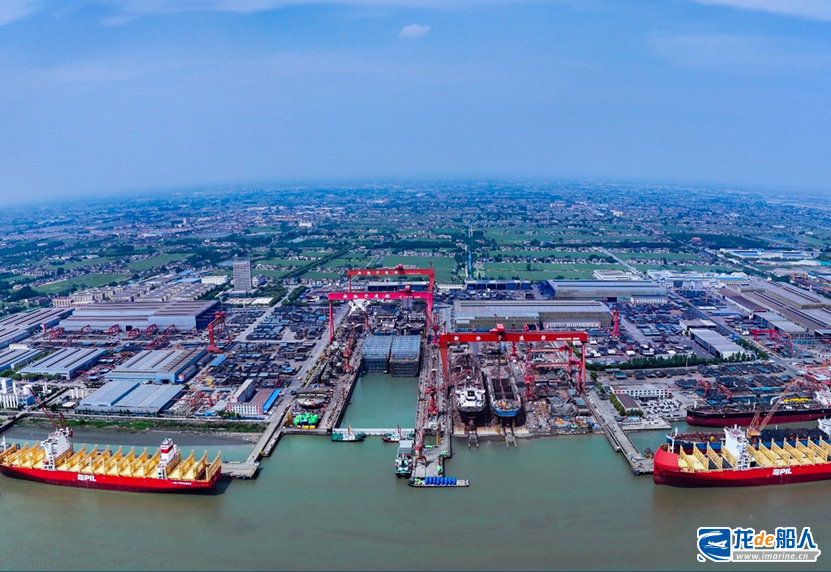
According to market reports, Seaspan Corporation, the world’s largest independent container shipowner and operator, has become the beneficial owner of two 210,000 DWT tri-fuel ore carriers. The new vessels will be built by Yangzijiang Shipbuilding; Japanese shipping giant Mitsui O.S.K. Lines (MOL) will charter the vessels on a bareboat basis to provide services to Brazilian mining giant Vale.
As early as October 2, MOL announced that MOL Ocean Bulk, its Singapore-based Capesize bulk carrier operating entity, had signed a 25-year contract with Vale to operate two 210,000 DWT ore carriers for the company. These new vessels will primarily transport Brazilian iron ore to China and other global destinations and are expected to be delivered and enter service starting in 2030.
MOL stated that this batch of new vessels represents the first 210,000 DWT-class ore carrier project to feature a tri-fuel configuration. With a length of 299.95 meters and a beam of 50 meters, the vessels belong to the Newcastlemax class. This vessel type is widely used on iron ore routes from Brazil to Asia and is equipped with various energy-saving devices designed to reduce fuel consumption.
In terms of fuel, the new vessels can run on ethanol, methanol, or conventional heavy fuel oil, and are designed with provisions for liquefied natural gas (LNG) or ammonia, allowing shipowners and charterers to adjust their fuel strategies in response to changes in fuel supply, regulations, and economic conditions. Compared to heavy fuel oil, ethanol can reduce full-lifecycle carbon emissions by up to 90 percent, depending on the fuel’s production pathway. Unlike some emerging fuels, ethanol is liquid at standard temperature and pressure, which may simplify loading, unloading, and refueling operations.
Reportedly, Seaspan is the world’s largest independent container shipowner. The delivery of these two 210,000 DWT tri-fuel ore carriers marks the company’s official entry into a new shipping sector and its formal entry into the Newcastlemax market.
Since the beginning of the year, Seaspan has significantly accelerated its business diversification efforts. Not only has the company entered the liquefied gas transport sector by placing an order with Jiangnan Shipyard for three 100,000 m³ Very Large Ethane Carriers (VLECs), but it has also placed an order with New Dayang Shipbuilding for four 65,200 DWT open-hatch, gantry crane-equipped multi-purpose vessels, marking its first foray into the multipurpose vessel market.
The recently announced orders for two 210,000 DWT tri-fuel ore carriers will further strengthen the long-standing partnership between Seaspan and Yangzijiang Shipbuilding, which have previously signed numerous contracts for the construction of container ships. Earlier this year, Yangzijiang Shipbuilding announced the completion of its acquisition of a 10% stake in Poseidon, Seaspan’s parent company, for a total consideration of $825.7 million.
HMM Announces Long-Term Shipping Contracts for 8 New Vessels
As for Vale, the mining giant recently signed a long-term shipping contract worth approximately $3.5 billion with South Korean shipping company HMM, with each vessel chartered for 25 years. HMM’s contract covers eight tri-fuel 210,000 DWT bulk carriers, which will also be built by Yangzijiang Shipbuilding and are scheduled for delivery in batches starting in 2030.
Based on information released by HMM, the unit price for each of the 210,000 DWT tri-fuel bulk carriers ordered from Yangzijiang Shipbuilding is $105 million, with the total value of the eight vessels amounting to $843 million. They will be equipped with eco-friendly equipment, such as rotary sails, to maximize energy savings and reduce emissions.
If the construction cost of MOL’s new vessels is on par with that of HMM’s newbuilding project, the total cost of Yangzijiang Shipbuilding’s 10 new tri-fuel vessels will exceed $1 billion (approximately 6.7 billion RMB).
It is worth noting that HMM’s order for a new tri-fuel vessel marks Yangzijiang Shipbuilding’s first Newcastlemax bulk carrier order in eight years; the shipbuilder’s previous Newcastlemax bulk carrier order dates back to 2018. As of the end of June 2026, Yangzijiang Shipbuilding’s bulk carrier order book consisted primarily of small- and medium-sized vessels, with capacities ranging from 32,000 to 83,000 deadweight tons.
Since launching long-term charter or contract of affreightment (COA) agreements for approximately 20 210,000 DWT triple-fuel Newcastlemax bulk carriers at the beginning of the year, Vale has signed charter agreements for several new vessels. According to incomplete statistics, in addition to the 10 new vessels from Yangzijiang Shipbuilding, these include four new vessels ordered by South Korea’s Wooyang Shipping from New Era Shipbuilding and four new vessels ordered by South Korea’s Polaris Shipping from Qingdao Beihai Shipbuilding.