


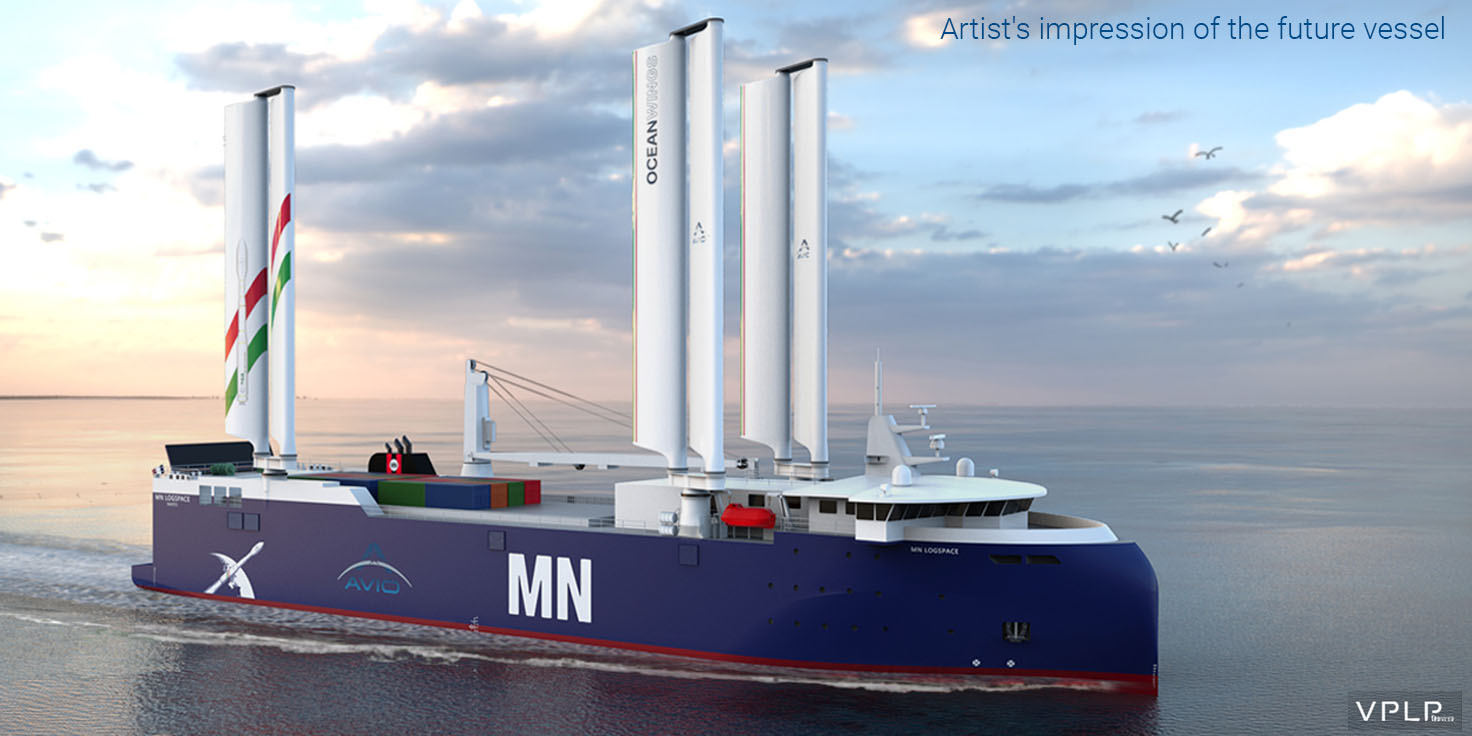
Compagnie Maritime Nantaise (MN), a subsidiary of the European Sogestran Group, announces the construction of a new hybrid-powered RoRo vessel combining conventional mechanical propulsion and wind-assisted propulsion, dedicated to the maritime transportation of cargoes for the space industry.
The shipbuilding contract was signed on 21 August 2026 with Guangzhou Shipyard International (GSI), following an extensive process involving consultations, technical evaluations, site visits and contractual negotiations.
This new industrial asset will strengthen the company’s transport capabilities and support the growth of the European space industry, particularly within the framework of its long-term partnership with Avio. The vessel is expected to enter service by 2030.
The new vessel has been primarily designed to meet the specific requirements associated with the maritime transportation of launch vehicles, satellites, related equipment and other sensitive industrial cargoes.
Its construction follows the strategic partnership announced in June 2026 between Avio and Compagnie Maritime Nantaise. Building on more than fifteen years of collaboration between the two companies in support of the European space industry, the vessel will notably support the increasing delivery rate of Avio’s Vega-C launch vehicles between Europe and the Guiana Space Centre. It will also enable the company to strengthen its position in the transportation of satellites and strategic equipment and, when required, carry oversized components of the Ariane 6 programme.
The vessel will feature several complementary cargo areas, including a large main RoRo deck, a dedicated compartment for space-related cargoes with controlled environmental conditions, and a flexible open deck.
The vessel’s propulsion system will combine conventional mechanical propulsion with a wind-assistance system consisting of three automated OceanWings rigid sails.
This technology was selected for its performance, ease of onboard integration, industrial maturity and suitability for the vessel’s operational profile.
The reduction of the vessel’s environmental footprint will rely on several complementary measures, including wind-assisted propulsion, an efficient mechanical propulsion system, optimised hull design, advanced weather routing, system automation and compatibility with biofuels.