


Capitalizing on the booming market for very large crude carriers (VLCCs), Frontline—a tanker operator owned by Norwegian shipping magnate John Fredriksen—has signed time-charter contracts for four VLCCs; the identities of the charterers have not been disclosed. Based on daily charter rates, the contracts for the four VLCCs—with the shortest charter periods—are valued at approximately $235 million.
Specifically, two newly built VLCCs owned by Frontline, scheduled for delivery on June 22 and July 3, 2026—have each been chartered under one-year contracts at a daily rate of $120,000 per vessel; two VLCCs built in 2016—both 10 years old—have signed one-year (average daily rent of $90,000) and three-year (average daily rent of $75,000) charter contracts, respectively, effective August 2026.
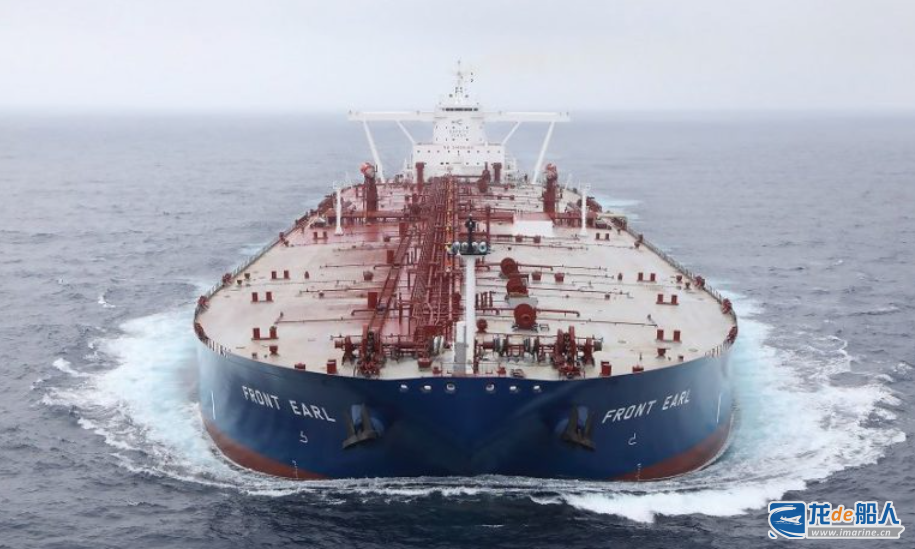
The signing of these four VLCC charter contracts once again underscores Frontline’s significant shift toward the time charter business this year. Earlier this year, the company signed one-year charter contracts for seven VLCCs with Sinokor Merchant Marine, a long-established South Korean shipowner, at an average daily rate of $76,900—a rate that was already at a level not seen in decades at the time.
The latest charter contract was concluded against a backdrop of stronger market conditions. In the second quarter of 2026, Frontline’s VLCC spot TCE (time charter equivalent) averaged $152,700 per day; in the third quarter, 86% of available VLCC vessel days have been booked at a daily rate of $156,900.
In line with its high-value charter contracts, Frontline posted strong results in the second quarter of 2026, with an operating profit of $659.2 million. At the same time, the company monetized assets by selling two VLCCs built in 2017 for $270 million; the vessels are expected to be delivered to their new owners in the third quarter of 2026.
Frontline’s official website states that the company is a major player in the crude oil and refined product shipping sector. The shipping company owns and operates one of the industry’s largest and most modern fleets, comprising a total of 75 vessels, including 38 VLCCs, 19 Suezmax tankers, and 18 LR2/Aframax tankers.