


South Korean media reports indicate that concerns are growing within the South Korean shipbuilding industry that the “liquefied natural gas (LNG) carrier market may be ceded to Chinese shipbuilders.”
Data from the “First Half of 2026 Market Report” published by the U.S. shipping analysis firm Besson Nautical reveals that, during the first half of 2026, a total of 90 new LNG carrier orders were placed globally. Chinese and South Korean shipbuilders secured 52 and 37 vessels respectively, capturing market shares of 57.8% and 41.1%. In the same period of 2025, Chinese and South Korean shipbuilders had secured 15 and 13 orders respectively—a time when South Korea lost the top spot in LNG carrier orders for the first time. Just one year later, the gap between the two has widened significantly.
Besson Nautical emphasizes that these statistics encompass the full range of vessel sizes, from large-scale LNG carriers to small vessels designed for inland waterways. Nevertheless, the figures underscore the growing competitiveness of Chinese shipbuilders in the LNG carrier sector.
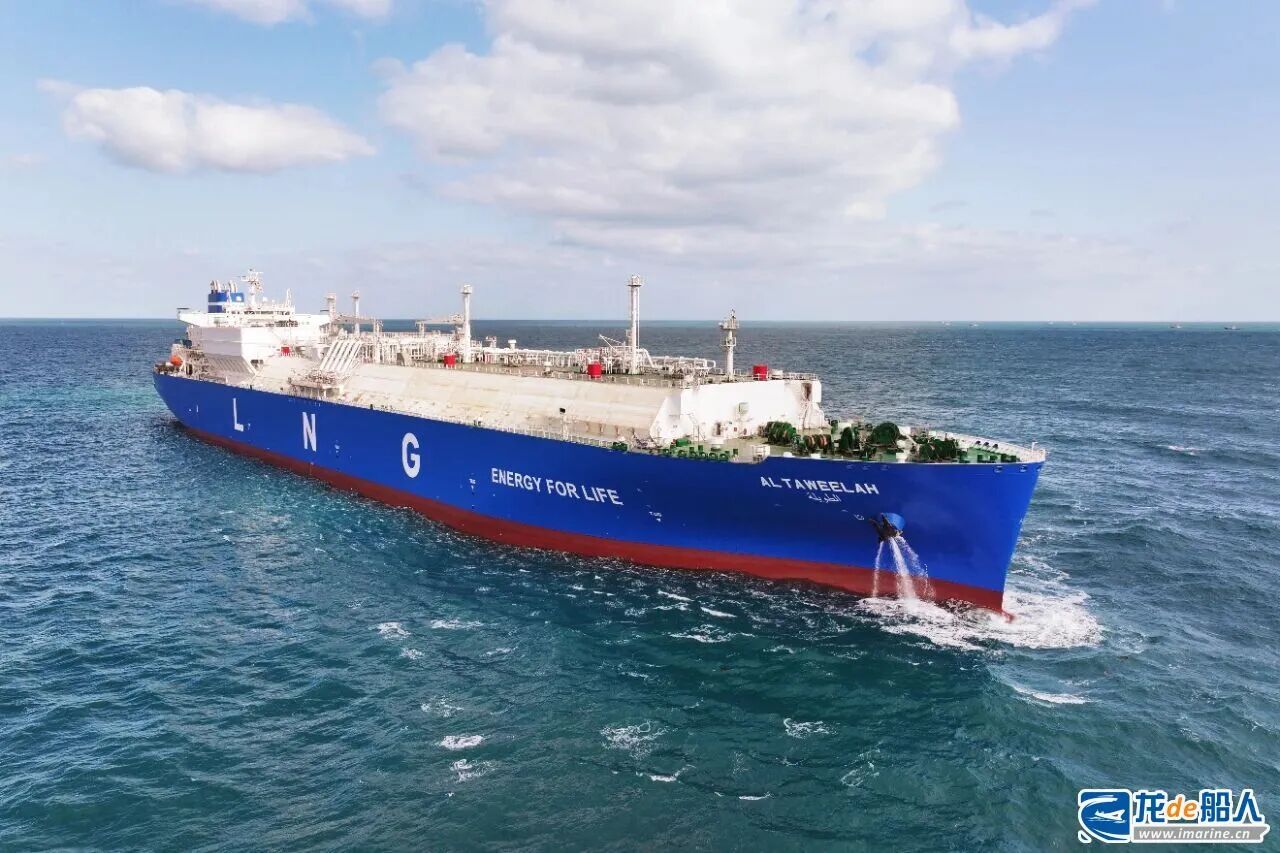
LNG carriers are specialized vessels designed to transport liquefied natural gas (LNG) at temperatures of -163°C. They demand exceptionally high technical standards—particularly regarding cargo containment systems, thermal insulation design, and stability during long-haul voyages—and are internationally recognized as high-tech, complex, and high-value-added vessels.
As a prime example of high-value-added shipbuilding, LNG carriers have long been a key battleground for the world’s leading shipbuilding nations. In recent years, the rankings for orders of this vessel type have undergone significant shifts.
From the mid-1980s to the early 2000s, Japanese shipbuilders leveraged their advanced technology to secure the vast majority of global orders for LNG carriers, primarily focusing on vessels equipped with Moss-type cargo containment systems.
In the mid-2000s, South Korean shipbuilders began investing heavily in the LNG carrier market. Bolstered by government support and price competitiveness, leading yards—such as HD Hyundai Heavy Industries, Hanwha Ocean, Samsung Heavy Industries, and HD Hyundai Samho—came to dominate the global market for these vessels.
A few years later, Chinese shipbuilders entered the high-end LNG carrier sector. Leveraging substantial capital and price competitiveness, they rapidly narrowed the gap with their South Korean counterparts. Hudong-Zhonghua Shipbuilding became the first Chinese yard to successfully deliver a large LNG carrier—the “Dapeng Sun”—in April 2008. This delivery not only filled a gap in China’s high-end shipbuilding capabilities but also broke the long-standing monopoly held by Japanese and South Korean shipbuilders, marking a milestone for the Chinese shipbuilding industry.
After more than two decades of development, five Chinese shipbuilders are currently building large LNG carriers: Hudong-Zhonghua, Jiangnan Shipyard, Dalian Shipbuilding Industry Corporation (DSIC), China Merchants Heavy Industries Haimen shipyard (CMHI Haimen shipyard), and Yangzijiang Shipbuilding. Among them, Hudong-Zhonghua Shipbuilding leads the domestic industry with a cumulative total of nearly 70 large LNG carriers delivered.
Additionally, in early 2025, Hengli Heavy Industries signed a patent cooperation agreement with GTT regarding membrane containment systems, positioning itself to become the sixth Chinese shipyard—and the second privately owned one—to build large LNG carriers.
While Chinese and South Korean shipbuilders aggressively vied for market share, Japanese shipbuilders—once the dominant players in this sector—quietly exited the market after delivering their final orders in 2019. Following a seven-year hiatus, Japan announced plans to resume LNG carrier construction in 2026.
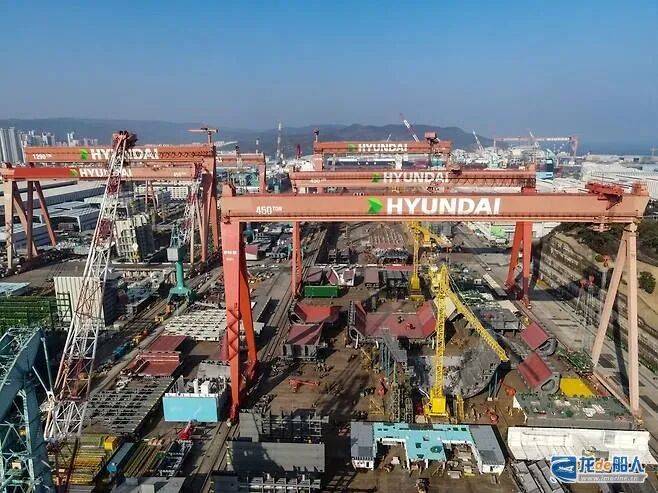
As Chinese shipbuilders gain ground in the LNG carrier market, South Korean media report that its shipbuilding industry has “sounded the alarm”: following the sector for standard commercial vessels, the market for high-value-added ships is now also at risk of being captured by China.
Data shows that over 70% of the LNG carriers currently in service worldwide were built by South Korea’s three shipbuilding giants (HD Hyundai Heavy Industries, Hanwha Ocean, and Samsung Heavy Industries). While South Korean firms still hold a lead over China in LNG carrier orders—thanks to their earlier entry into the market—they have long since fallen behind China in orders for standard commercial vessels such as bulk carriers, container ships, and oil tankers. China has ranked first globally in order volumes for standard commercial vessels for several consecutive years.
Beyond the erosion of their order-book advantage, South Korean shipbuilders are also grappling with capacity constraints amidst a global shipbuilding boom that has brought a surge of new orders.
With a shipbuilding boom underway for various vessel types—including crude oil tankers and container ships—major South Korean shipyards have largely filled their delivery schedules through 2029, with some orders extending into 2030. This implies that to meet future demand, South Korean shipbuilders must expand their production capacity; otherwise, they will lack the spare capacity to accept new orders.
However, the reality is that large-scale capacity expansion is difficult for these companies. Industry insiders point out that South Korean shipbuilders are constrained by limited land resources and an overwhelming order backlog, leaving them unable to take on additional orders for LNG carriers. Furthermore, given the shipbuilding industry’s pronounced cyclical nature, South Korea is reluctant to blindly expand LNG carrier capacity and risk bearing high fixed costs during industry downturns.
To alleviate this capacity crunch, South Korean shipbuilders are pursuing a strategy of establishing overseas shipbuilding bases while simultaneously consolidating their market share in LNG carriers and conventional commercial vessels.
Currently, South Korean shipbuilders such as HD Hyundai Heavy Industries and Samsung Heavy Industries are utilizing shipyards in Southeast Asian countries—where per-capita labor costs are lower, such as Vietnam and the Philippines—to handle orders for oil tankers and standard commercial vessels. Meanwhile, their domestic shipyards are focusing on high-value-added vessels, such as LNG carriers, as well as new business areas including the development of floating data centers (FDCs) and autonomous ships, and the construction of smart shipyards.
In contrast, Chinese shipbuilders are adopting a more aggressive approach to expanding production capacity. Hudong-Zhonghua, for instance, has recently launched a project to consolidate and enhance its capacity. Positioned as a world-leading base for large-scale final assembly and shipbuilding, the project involves constructing brand-new, specialized assembly lines and supporting facilities. It focuses on boosting capabilities for the mass, intelligent production of high-end vessels—such as large LNG carriers and ultra-large container ships—and establishing a coordinated dual-site production model to further increase Hudong-Zhonghua’s shipbuilding output.
Industry insiders in South Korea acknowledge the reality: compared to the past, Chinese shipbuilders are rapidly accumulating technical expertise and construction experience in LNG carriers, and the technological gap between China and South Korea in this segment is steadily narrowing. Consequently, South Korean shipbuilders can no longer rely solely on competing for order volumes; they must develop next-generation, high-value-added sectors beyond LNG carriers to maintain a significant competitive edge.