


On January 1, 2026, at Qingdao Port’s fully automated container terminal, the 366-meter-long “MSC Saudi Arabia” slowly approached the berth for mooring operations. The operation adopts the terminal’s vacuum-based automatic mooring system, which automatically identifies the vessel and precisely positions it. Utilizing powerful suction from its vacuum cups, the system securely anchors the vessel to the berth in under 30 seconds. This highly efficient and precise operation marks the official commissioning of China’s first vacuum automatic mooring system at Qingdao Port.
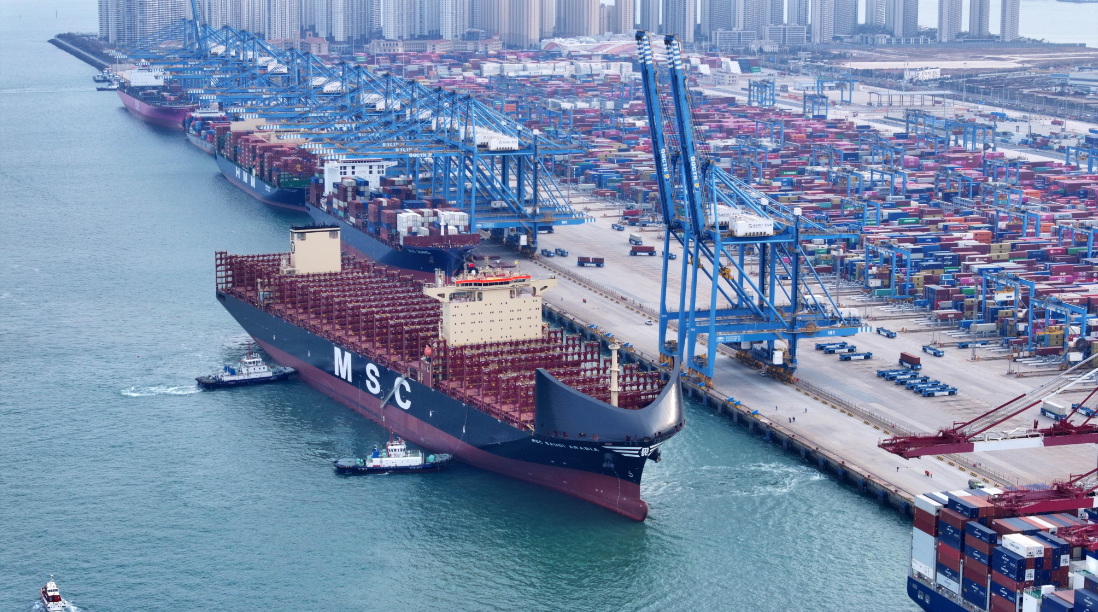
The vacuum automatic mooring system put into operation this time is a domestically pioneered, technologically leading core mooring system for vessels developed by Qingdao Port.Composed of 13 mooring units and installed along the quay berth line, the system innovatively adopts a three-level collaborative management and control architecture featuring remote centralized control, mobile terminals, and local standalone operation. It is precisely tailored to meet the automatic mooring requirements of container vessels exceeding 200 meters in length. Under normal circumstances, the simultaneous activation of all 13 mooring units can generate an adsorption force of 2,600 kilonewtons, which is sufficient to accommodate the automatic mooring needs of the world’s largest container vessels.
As a pioneering application in China’s port sector, this system integrates multi-sensor fusion perception with intelligent decision-making algorithms. It deeply combines hydraulic drive, high-vacuum suction technology, and real-time motion tracking capabilities to enable rapid vessel mooring and securing. The system captures real-time changes in environmental factors such as wind, waves, and currents, establishing a comprehensive environmental monitoring framework. It achieves two major technological innovations: automated vacuum-assisted vessel mooring and intelligent active berthing control.
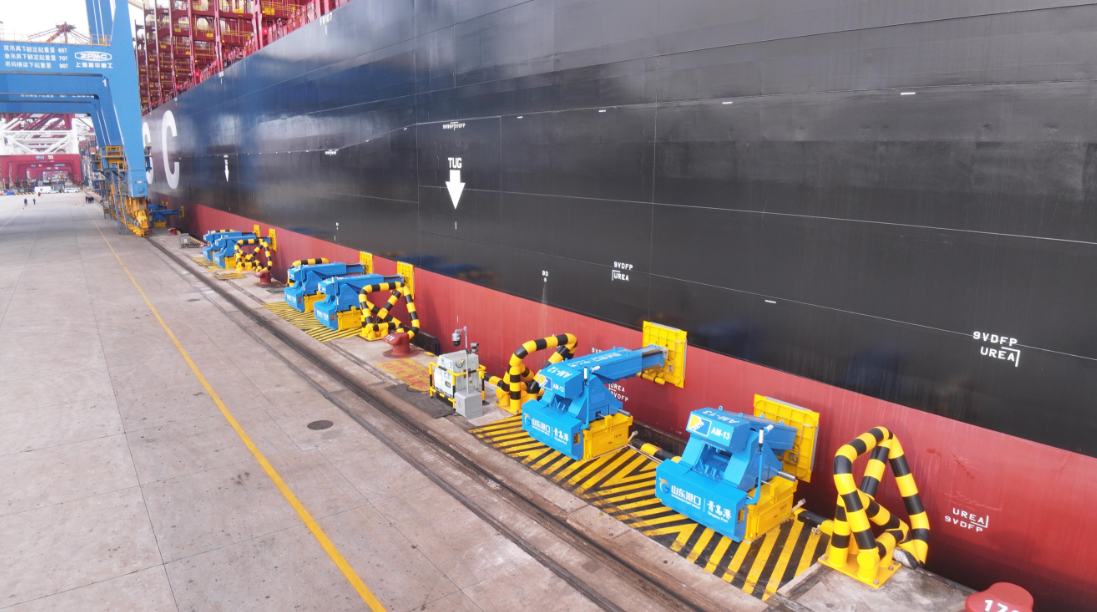
Following the system’s implementation, the port’s mooring and unmooring procedures underwent a complete overhaul. This further separated personnel from the hazardous cable breakage zone, reducing single-vessel mooring operations from the conventional 20-30 minutes to under 30 seconds. Annual berthing time is projected to decrease by over 200 hours, equivalent to adding the operational capacity of more than 10 additional vessels at a single berth throughout the year. This achievement synergistically enhances ecological, economic, and social benefits.
Over the years, Qingdao Port has consistently driven high-quality development through technological innovation and continuously fostered and expanded new productive forces. From developing China’s first fully autonomous and domestically engineered automated container terminal and independently researching and developing the Terminal Intelligent Operation System (A-TOS), to establishing the first artificial intelligence application pilot testing base in the port sector—and one of the first nationwide—and further achieving full-scenario, full-process, and full-equipment automation, Qingdao Port has gradually turned its blueprint for a smart port into reality, propelling China’s port technologies to evolve from “following the pace” to “taking the lead” on the global stage.
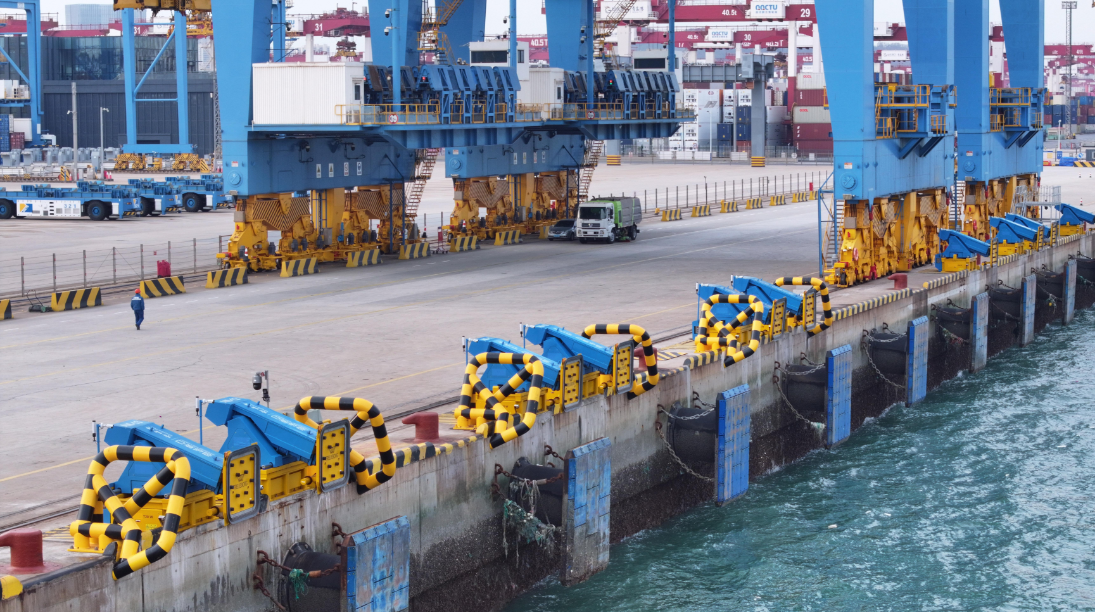
The launch of this system marks a significant breakthrough in Qingdao Port’s new year development, while also providing hinterland foreign trade enterprises with more efficient, secure, and green logistics services. This achievement demonstrates the robust confidence in the intelligent transformation and upgrading of China’s port industry.